New Delhi, India: In a significant move to overhaul India’s pilot training infrastructure, the Ministry of Civil Aviation (MoCA) has released the second phase of its Flying Training Organization (FTO) rankings. The assessment, introduced under the leadership of Union Civil Aviation Minister Shri Ram Mohan Naidu in October 2025, is aimed at strengthening transparency, improving safety standards, and encouraging healthy competition across the aviation training ecosystem.
The Directorate General of Civil Aviation (DGCA) has issued its bi-annual ranking of Flying Training Organizations for April 2026, marking the second evaluation since the framework was implemented in late 2025. The latest assessment reflects a major reshuffle across India’s pilot training ecosystem, with visible improvements among several institutes alongside a decline in performance for others.
Rankings Of Flying Training Organizations:
No Flying Training Organisation (FTO) achieved the top-tier A+ rankings in the second phase of its FTO rankings. The rankings are not sequential and classify FTOs into performance-based categories rather than assigning individual ranks.
| No | FTO | 2025 | 2026 |
|---|---|---|---|
| 1 | Avyanna Aviation Pvt. Ltd | NOT ELIGIBLE | A |
| 2 | Academy of Carver Aviation | C | B |
| 3 | FSTC Flying School Pvt. Ltd | B | B |
| 4 | National Flying Training Institute Pvt. Ltd | B | B |
| 5 | Indira Gandhi Rashtriya Uran Akademi | C | B |
| 6 | Flytech Aviation Academy | C | B |
| 7 | Skynex Aero Pvt Ltd | B | B |
| 8 | Garg Aviation Ltd | C | B |
| 9 | Chetak Aviation Pvt. Ltd | C | B |
| 10 | Chimes Aviation Academy | B | B |
| 11 | Dunes Aviation Academy | C | B |
| 12 | Ekvi Air Training Organization Pvt. Ltd | C | B |
| 13 | Jet Serve Aviation Pvt. Ltd | B | B |
| 14 | Alchemist Aviation Pvt. Ltd | C | B |
| 15 | Ambition Flying Club | C | B |
| 16 | Orient Flight Aviation Academy | B | B |
| 17 | The Bombay Flying Club | C | B |
| 18 | The Gujarat Flying Club | C | B |
| 19 | Sha Shib Flying Academy | C | C |
| 20 | Indian Flying Academy | C | C |
| 21 | The Madhya Pradesh Flying Club | C | C |
| 22 | Wings Aviation Pvt ltd | C | C |
| 23 | Asia Pacific Training Academy | C | C |
| 24 | Haryana Institute of Civil Aviation | B | C |
| 25 | Rajiv Gandhi Academy for Aviation Technology | B | C |
| 26 | Telangana State Aviation Academy | C | C |
| 27 | The Nagpur Flying Club | B | C |
| 28 | Banasthali Vidyapith Gliding & Flying Club | B | C |
| 29 | Bihar Flying Institute | B | C |
| 30 | Patiala Aviation Club | B | C |
| 31 | SVKM NMIMS Academy of Aviation | B | C |
| 32 | BlueRay Aviation Pvt Ltd | C | C |
| 33 | Pioneer Flying Club Academy Pvt Ltd | C | C |
| 34 | Govt. Aviation Training Institute | C | C |
| 35 | Redbird Flight Training Academy Pvt. Ltd | C | C |
The grading system is divided into four categories: A+ (85% and above), A (70%–84%), B (50%–69%), and C (below 50%). Those in Category C will be issued notices by the regulator, requiring them to conduct self-assessment and take corrective measures.
First Entry into Category ‘A’ Sets New Benchmark
For the first time since the ranking system was introduced, an FTO has entered the top performance bracket. Avyanna Aviation Pvt. Ltd has been placed in Category ‘A’, scoring between 70% and 85%. The institute was not included in the 2025 rankings due to its incomplete 18-month operational requirement. Its entry at the highest tier establishes a new benchmark for safety, compliance, and operational efficiency in the country’s flight training sector.
Strong Recovery: Multiple Institutes Climb from Category ‘C’
A key highlight of the 2026 rankings is the notable recovery of several institutes that were earlier placed in Category ‘C’ (below 50%) in 2025. Eleven FTOs have moved up to Category ‘B’ (50%–70%), indicating measurable improvement in training delivery, safety compliance, and operational consistency.
Among the major improvers are the Indira Gandhi Rashtriya Uran Akademi (IGRUA), the Bombay Flying Club, and several private academies including Academy of Carver Aviation, Flytech Aviation Academy, Garg Aviation Ltd, Chetak Aviation, Dunes Aviation Academy, Ekvi Air Training Organization, Alchemist Aviation, Ambition Flying Club, and Gujarat Flying Club.
The improvements align with the broader policy direction of “Train in India, Fly in India,” which, according to Minister Ram Mohan Naidu, was conceptualized through direct engagement with aspiring cadets and their families. He stated that the framework was designed “to institutionalize a system that brings clarity and conviction to their decision-making.”
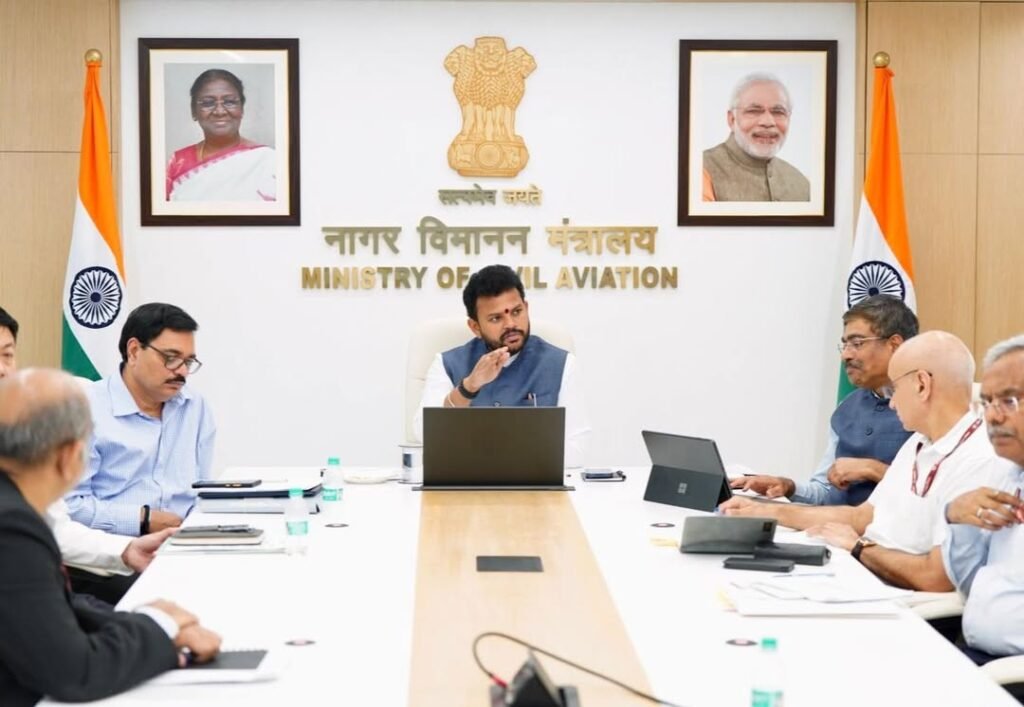
The Minister further noted that the initiative has already improved flying training efficiency, with average flying hours increasing from 32% to 50%, while also reducing the time required for cadets to obtain their Commercial Pilot License (CPL).
The Downturn: Leading Schools Slip to Category ‘C’
The latest evaluation also highlighted a decline in performance for several established institutions. Seven FTOs previously in Category ‘B’ have slipped to Category ‘C’, indicating deterioration in key operational and safety parameters.
These include the Haryana Institute of Civil Aviation, Rajiv Gandhi Academy for Aviation Technology, Nagpur Flying Club, Banasthali Vidyapith Gliding & Flying Club, Bihar Flying Institute, Patiala Aviation Club, and SVKM NMIMS Academy of Aviation. DGCA has directed these institutes to undertake formal self-assessment and corrective measures to address deficiencies.
Exclusions and Regulatory Strictness
The DGCA maintained strict eligibility criteria for the April 2026 rankings, excluding six organizations due to regulatory and operational conditions.
Four institutes were excluded under the mandatory 18-month operational rule: Vision Flying Training Institute, Aviation Connectivity Infrastructure Developers Pvt. Ltd, Jharkhand Flying Institute, and ARCA Global.
Additionally, the Government Flying Training School was excluded due to invalid FTO approval status as of February 28, 2026. Falcon Aviation Academy, previously in Category ‘C’ in 2025, was removed entirely from the list after being declared non-operational since February 2023.
Framework Based on Safety and Performance Metrics
The DGCA ranking framework is built on a weighted evaluation system designed to prioritize safety, efficiency, and student outcomes. Operational parameters carry 40% weight, followed by safety at 20%, performance at 20%, compliance at 10%, and student assistance at 10%.
Safety assessments include accident and incident tracking, while performance is measured through the average time taken to complete 175 flying hours. Compliance checks include regulatory adherence and safety violations, while student assistance evaluates grievance redressal mechanisms and placement support.
Minister Naidu also highlighted the broader aviation outlook, estimating a requirement of nearly 30,000 additional pilots over the next decade. This demand is driven by India’s expanding aviation sector, supported by the Prime Minister’s vision for regional connectivity and the modified UDAN scheme with a ₹29,000 crore allocation.
He further stated that India’s aviation landscape is poised for rapid expansion, with plans for 50 additional airports and the induction of around 500 new aircraft by Indian carriers in the next five years. To streamline pilot training, DGCA has also digitized CPL examinations and introduced a single-window clearance system for CPL and RTR licensing under the Bharatiya Vayuyan Adhiniyam.