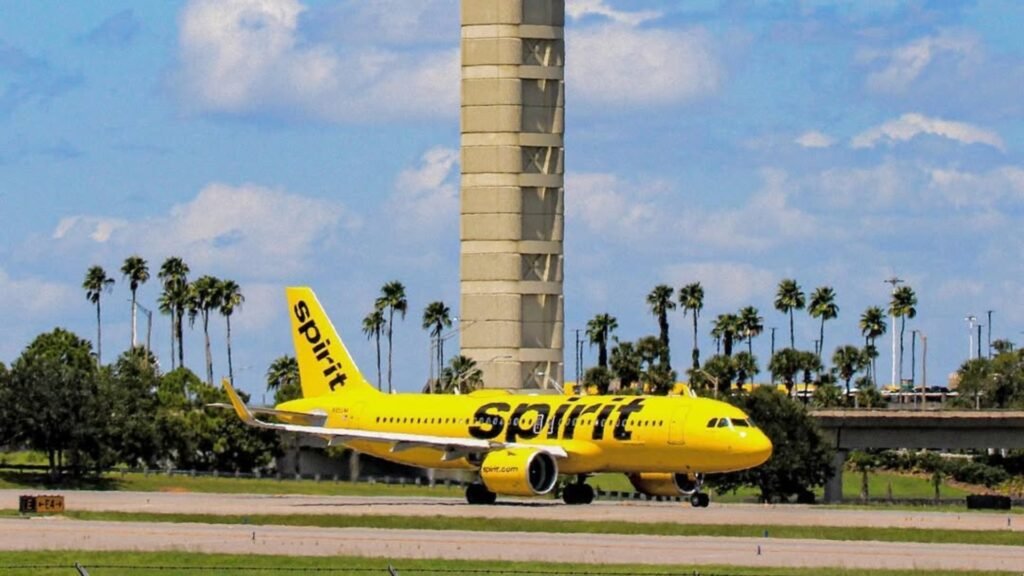
Washington, United States: The Spirit Airlines bailout debate has intensified after the Trump administration entered advanced negotiations to provide emergency financial support to the struggling ultra-low-cost carrier, which faces a severe liquidity crisis and potential liquidation.
According to court disclosures, Spirit is in advanced talks for a government-backed financing package of up to $500 million, aimed at stabilising operations during its ongoing restructuring under Chapter 11 bankruptcy protection.
The proposed structure would likely involve a loan convertible into long-term financing, alongside warrants that could give the U.S. government up to a 90% equity stake, effectively placing the airline under substantial federal control.
U.S. President Donald Trump has publicly indicated that the government could temporarily take over Spirit Airlines, stabilise it, and later sell it at a profit once fuel prices decline.
“They have some good aircraft and valuable slots… when oil prices go down, we’ll sell it for a profit,” Trump said, emphasising both asset value and job preservation.
The administration has also suggested that a private operator could eventually be brought in to run the airline, with Trump stating he has “a smart person” in mind to lead its turnaround.
Spirit’s financial distress stems from a combination of long-standing structural challenges and recent external shocks:
- A sharp surge in jet fuel prices linked to geopolitical tensions involving Iran, significantly increasing operating costs
- Persistent losses and heavy debt burden, weakening its turnaround efforts
- Two Chapter 11 bankruptcy filings within a year reflecting deep financial instability
- The collapse of the $3.8 billion JetBlue merger, blocked on antitrust grounds, removing a key survival pathway
The airline’s ultra-low-cost model has also faced increasing scrutiny, with analysts and competitors arguing that its business fundamentals remain unsustainable even with government intervention.
The bailout, if approved, could protect more than 17,000 jobs and preserve a key low-cost competitor in the U.S. aviation market.
Industry stakeholders warn that Spirit’s collapse could:
- Reduce domestic airline capacity
- Lead to higher airfares due to reduced low-cost competition
Labour unions, including pilot and flight attendant groups, have backed the proposal, stressing the importance of safeguarding frontline jobs and maintaining affordable travel options.
Despite potential economic benefits, the bailout faces significant political resistance across party lines.
Republican Senator Ted Cruz called the proposal a “terrible idea,” questioning the government’s ability to run a failing airline.
Transportation Secretary Sean Duffy warned against “putting good money after bad,” raising doubts about Spirit’s long-term viability.
Democratic Senator Elizabeth Warren questioned the value to taxpayers and linked the airline’s fuel cost crisis to broader geopolitical decisions.
Negotiations remain ongoing, with no final agreement confirmed. Court hearings in the coming days are expected to play a crucial role in determining whether the bailout proceeds.