News
Civil Aviation
Pilot Training
Flight School Analysis
Aviation Jobs
Training
Services
About Us
Contact Us

Air Canada CEO To Step Down After English-Only Video Backlash After New York Collision

Picture of Aviation Today News Desk

Aviation Today News Desk

Air Canada CEO To Step Down After English-Only Video Backlash After New York Collision SEO DES: Over 2,000 complaints filed with Canada’s Official Languages Commissioner, as Quebec’s Assembly demanded his resignation & a parliamentary panel summoned him SOCIAL: Michael Rousseau will step down as CEO of Air Canada after backlash over an English-only condolence video following a fatal runway collision at LaGuardia Airport involving Air Canada Express Flight 8646 that killed two pilots and injured 41 people. The video, lacking French despite Canada’s bilingual requirements under the Official Languages Act, sparked outrage in Quebec, drew criticism from Mark Carney and François Legault, and led to over 2,000 complaints, a Quebec Assembly motion, and a parliamentary summons. Rousseau apologised, admitting the issue overshadowed the tragedy, but the incident along with past criticism over not speaking French ultimately led to his planned exit by late 2026, with Air Canada now prioritising bilingual leadership. Montreal, Canada: Michael Rousseau, President and Chief Executive Officer of Air Canada, will step down later this year following intense backlash over an English-only condolence video issued after a fatal runway collision involving an Air Canada Express flight at LaGuardia Airport. The airline confirmed that Rousseau will retire by the end of the third quarter of 2026, a move widely viewed as directly linked to the controversy despite being officially described as part of a succession plan. The controversy stems from the March 22 accident involving Air Canada Express Flight 8646, which had departed Montreal and collided with an airport fire truck after landing in New York. The crash killed both pilots identified as Antoine Forest and Mackenzie Gunther and left 41 people injured. Investigations are being led by U.S. authorities with support from Canadian agencies, as scrutiny intensifies around runway safety and ground coordination. In the aftermath, Rousseau released a video expressing what he described as his “deepest sorrow for everyone affected.” However, the message was delivered almost entirely in English, with only two French words “bonjour” and “merci” while French subtitles were provided. The response triggered widespread outrage in Quebec and across French-speaking Canada, where language remains a politically and culturally sensitive issue. The fallout quickly escalated into a political issue. Canadian Prime Minister Mark Carney criticised the message, calling it a lack of “judgment” and “compassion.” Quebec Premier François Legault and other leaders also condemned the video, with calls for Rousseau’s resignation intensifying. Over 2,000 complaints filed with Canada’s Official Languages Commissioner. A unanimous motion in Quebec’s National Assembly demanding his resignation and a parliamentary committee summoning Rousseau to testify in Ottawa. The incident reignited long-standing tensions around bilingualism and corporate responsibility in Canada, particularly in Quebec. Air Canada, despite being a publicly traded company, is subject to Canada’s Official Languages Act, which requires it to communicate in both English and French. The airline’s failure to meet these expectations in a moment of national mourning drew sharp criticism, with observers noting that language in Canada is closely tied to identity and political history. Facing mounting criticism, Rousseau issued a formal apology, stating he was “deeply saddened” that his inability to speak French had diverted attention from the victims and their families. He acknowledged that the controversy overshadowed the tragedy and affected public trust in the airline’s leadership. The incident also revived scrutiny over Rousseau’s past remarks and leadership record. In 2021, shortly after becoming CEO, he drew backlash for delivering speeches in English in Montreal and stating he had lived in the city for years without learning French. These earlier comments contributed to perceptions that the latest controversy reflected a broader pattern rather than an isolated misstep. While Air Canada stated that Rousseau’s departure is part of a planned retirement and succession process, the timing has drawn clear links to the crisis. The airline has confirmed that Rousseau will remain until late 2026 and the search for a successor will prioritise bilingual leadership. The company also faced short-term reputational and market pressure, including a temporary dip in its stock following the announcement.
Image: CNN

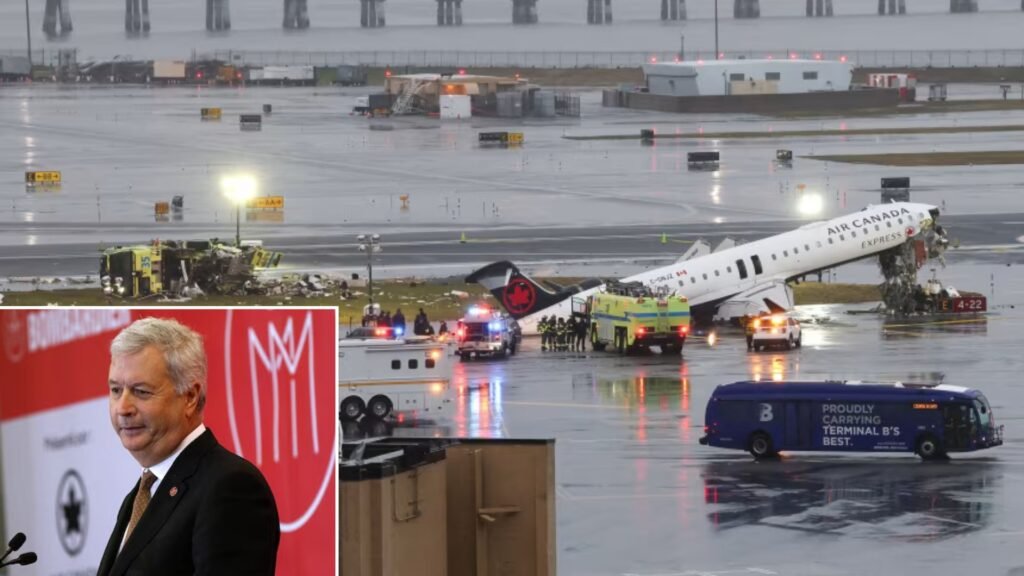
Montreal, Canada: Michael Rousseau, President and Chief Executive Officer of Air Canada, will step down later this year following intense backlash over an English-only condolence video issued after a fatal runway collision involving an Air Canada Express flight at LaGuardia Airport.

The airline confirmed that Rousseau will retire by the end of the third quarter of 2026, a move widely viewed as directly linked to the controversy despite being officially described as part of a succession plan.

The controversy stems from the March 22 accident involving Air Canada Express Flight 8646, which had departed Montreal and collided with an airport fire truck after landing in New York.

The crash killed both pilots identified as Antoine Forest and Mackenzie Gunther and left 41 people injured.

Investigations are being led by U.S. authorities with support from Canadian agencies, as scrutiny intensifies around runway safety and ground coordination.

In the aftermath, Rousseau released a video expressing what he described as his “deepest sorrow for everyone affected.”

However, the message was delivered almost entirely in English, with only two French words “bonjour” and “merci” while French subtitles were provided.

The response triggered widespread outrage in Quebec and across French-speaking Canada, where language remains a politically and culturally sensitive issue.

The fallout quickly escalated into a political issue. Canadian Prime Minister Mark Carney criticised the message, calling it a lack of “judgment” and “compassion.”

Quebec Premier François Legault and other leaders also condemned the video, with calls for Rousseau’s resignation intensifying.

Over 2,000 complaints filed with Canada’s Official Languages Commissioner. A unanimous motion in Quebec’s National Assembly demanding his resignation and a parliamentary committee summoning Rousseau to testify in Ottawa. 

The incident reignited long-standing tensions around bilingualism and corporate responsibility in Canada, particularly in Quebec.

Air Canada, despite being a publicly traded company, is subject to Canada’s Official Languages Act, which requires it to communicate in both English and French.

The airline’s failure to meet these expectations in a moment of national mourning drew sharp criticism, with observers noting that language in Canada is closely tied to identity and political history.

Facing mounting criticism, Rousseau issued a formal apology, stating he was “deeply saddened” that his inability to speak French had diverted attention from the victims and their families.

He acknowledged that the controversy overshadowed the tragedy and affected public trust in the airline’s leadership. The incident also revived scrutiny over Rousseau’s past remarks and leadership record. In 2021, shortly after becoming CEO, he drew backlash for delivering speeches in English in Montreal and stating he had lived in the city for years without learning French. 

These earlier comments contributed to perceptions that the latest controversy reflected a broader pattern rather than an isolated misstep.

While Air Canada stated that Rousseau’s departure is part of a planned retirement and succession process, the timing has drawn clear links to the crisis.

The airline has confirmed that Rousseau will remain until late 2026 and the search for a successor will prioritise bilingual leadership. The company also faced short-term reputational and market pressure, including a temporary dip in its stock following the announcement.

Leave a Comment

Subscribe to our Newsletter

Recent News