News
Civil Aviation
Pilot Training
Flight School Analysis
Aviation Jobs
Training
Services
About Us
Contact Us

Parliamentary Panel Flags Undervalued Transfer Of ISRO Technologies To Private Firms

Picture of Aviation Today News Desk

Aviation Today News Desk

Parliamentary Panel Flags Undervalued Transfer Of ISRO Technologies To Private Firms SEO DES: The panel flagged some ISRO tech transfers were free, highlighted underutilised budgets and noted 2,383 staff vacancies across the department SOCIAL: A Parliamentary panel flagged that the Indian Space Research Organisation has transferred several technologies to private firms at very low prices, with nearly 70 out of ~100 deals under ₹10 lakh($10,650 USD) and some as low as ₹6,000($64 USD) or free. The committee cited the lack of a proper pricing framework and urged market-linked valuation and stronger oversight. It also showcased underutilised budgets and 2,383 staff vacancies, warning that India risks undervaluing taxpayer-funded space technologies while expanding private sector participation. New Delhi, India: A Parliamentary Standing Committee has raised concerns over the pricing of technologies developed by the Indian Space Research Organisation (ISRO), stating that several transfers to private companies have been executed at rates that do not reflect their true commercial value, potentially limiting returns on publicly funded innovation. The observations were made in the 410th report of the Department-related Parliamentary Standing Committee on Science and Technology, Environment, Forests and Climate Change, tabled in Parliament on March 25, 2026. The panel examined the functioning, financial management, and commercialisation practices of the Department of Space. The committee noted that ISRO has signed around 100 technology transfer agreements with private entities in recent years. However, a significant portion of these deals were executed at relatively low prices. According to data reviewed by the panel, nearly 70 technologies were transferred for less than ₹10 lakh($10,650 USD), with some agreements reportedly priced as low as ₹6,000($64 USD) or offered free of cost. The panel flagged that such pricing structures raise concerns about whether the government is adequately monetising high-value research and development outputs. Highlighting systemic gaps, the committee observed that there is currently no standardised valuation framework or market-linked pricing mechanism governing these transfers. This lack of structured pricing has resulted in inconsistencies across agreements and increases the risk of undervaluation. The panel cautioned that private firms could potentially generate significant commercial gains using these technologies, while public institutions receive only limited financial returns. The report recommended the introduction of a market-driven pricing model, along with transparent valuation guidelines and independent auditing mechanisms to ensure fairness and accountability. It also called for stronger post-transfer monitoring systems to assess how transferred technologies are utilised and whether they deliver broader public benefit. Beyond technology transfer concerns, the committee highlighted issues related to budget allocation and utilisation within the Department of Space. For the financial year 2026–27, the department projected an outlay of ₹15,604.80 crore($1.66 billion USD), of which the government approved ₹13,705.63 crore($1.46 billion USD), or 87.82% of the proposed amount. The panel noted that budgetary allocations have been impacted by underutilisation in previous years. As of January 2026, the Department of Space had utilised ₹9,739.72 crore($1.04 billion USD) out of the allocated funds for the ongoing financial year 2025–26, indicating slower expenditure progress. Several institutions under the department reportedly failed to utilise even 75% of their allocated budgets, prompting the committee to call for stricter financial oversight and periodic expenditure reviews. The report also pointed to a persistent shortage of human resources within the department. Vacancies have been accumulating since 2020–21, and the government has set a target to fill 2,383 vacant positions by December 2026. The panel emphasised that addressing staffing gaps is essential for sustaining mission timelines and operational efficiency. While acknowledging India’s push to expand private participation in the space sector, the committee stressed the need to strike a balance between ecosystem development and safeguarding the value of taxpayer-funded innovations. It noted that ISRO’s technologies play a critical role in national infrastructure, communications, and strategic capabilities, making their fair valuation and controlled commercialisation a matter of national importance. The findings come at a time when India is actively opening its space sector to private players through institutional mechanisms such as NewSpace India Limited and IN-SPACe, aimed at promoting industry participation and accelerating growth. The committee concluded that without reforms in pricing, monitoring, and financial management, India risks undervaluing critical space technologies even as it seeks to build a globally competitive private space ecosystem.

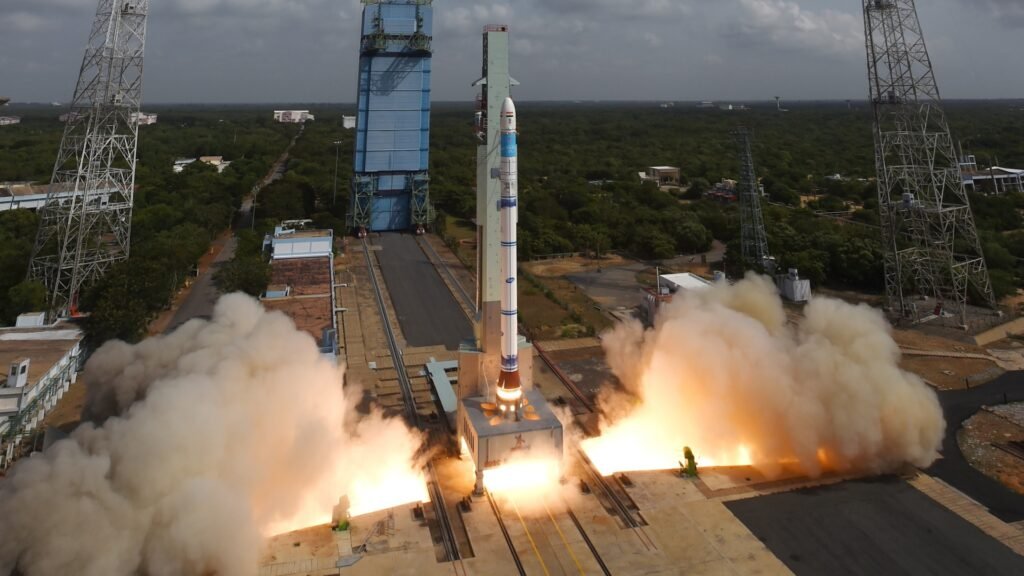
Image: ISRO

New Delhi, India: A Parliamentary Standing Committee has raised concerns over the pricing of technologies developed by the Indian Space Research Organisation (ISRO), stating that several transfers to private companies have been executed at rates that do not reflect their true commercial value, potentially limiting returns on publicly funded innovation.

The observations were made in the 410th report of the Department-related Parliamentary Standing Committee on Science and Technology, Environment, Forests and Climate Change, tabled in Parliament on March 25, 2026. The panel examined the functioning, financial management, and commercialisation practices of the Department of Space.

The committee noted that ISRO has signed around 100 technology transfer agreements with private entities in recent years. However, a significant portion of these deals were executed at relatively low prices. According to data reviewed by the panel, nearly 70 technologies were transferred for less than ₹10 lakh($10,650 USD), with some agreements reportedly priced as low as ₹6,000($64 USD) or offered free of cost. The panel flagged that such pricing structures raise concerns about whether the government is adequately monetising high-value research and development outputs.

Highlighting systemic gaps, the committee observed that there is currently no standardised valuation framework or market-linked pricing mechanism governing these transfers. This lack of structured pricing has resulted in inconsistencies across agreements and increases the risk of undervaluation. The panel cautioned that private firms could potentially generate significant commercial gains using these technologies, while public institutions receive only limited financial returns.

The report recommended the introduction of a market-driven pricing model, along with transparent valuation guidelines and independent auditing mechanisms to ensure fairness and accountability. It also called for stronger post-transfer monitoring systems to assess how transferred technologies are utilised and whether they deliver broader public benefit.

Beyond technology transfer concerns, the committee highlighted issues related to budget allocation and utilisation within the Department of Space. For the financial year 2026–27, the department projected an outlay of ₹15,604.80 crore($1.66 billion USD), of which the government approved ₹13,705.63 crore($1.46 billion USD), or 87.82% of the proposed amount. The panel noted that budgetary allocations have been impacted by underutilisation in previous years.

As of January 2026, the Department of Space had utilised ₹9,739.72 crore($1.04 billion USD) out of the allocated funds for the ongoing financial year 2025–26, indicating slower expenditure progress. Several institutions under the department reportedly failed to utilise even 75% of their allocated budgets, prompting the committee to call for stricter financial oversight and periodic expenditure reviews.

The report also pointed to a persistent shortage of human resources within the department. Vacancies have been accumulating since 2020–21, and the government has set a target to fill 2,383 vacant positions by December 2026. The panel emphasised that addressing staffing gaps is essential for sustaining mission timelines and operational efficiency.

While acknowledging India’s push to expand private participation in the space sector, the committee stressed the need to strike a balance between ecosystem development and safeguarding the value of taxpayer-funded innovations. 

It noted that ISRO’s technologies play a critical role in national infrastructure, communications, and strategic capabilities, making their fair valuation and controlled commercialisation a matter of national importance.

The findings come at a time when India is actively opening its space sector to private players through institutional mechanisms such as NewSpace India Limited and IN-SPACe, aimed at promoting industry participation and accelerating growth.

The committee concluded that without reforms in pricing, monitoring, and financial management, India risks undervaluing critical space technologies even as it seeks to build a globally competitive private space ecosystem.


Leave a Comment

Subscribe to our Newsletter

Recent News