News
Civil Aviation
Pilot Training
Flight School Analysis
Aviation Jobs
Training
Services
About Us
Contact Us

Preliminary Report Links Engine Oil Pressure Loss To Fatal India One Air Accident

Picture of Aviation Today News Desk

Aviation Today News Desk

Preliminary Report Links Engine Oil Pressure Loss To Fatal India One Air Accident SEO DES: The crash killed one passenger and seriously injured three others, while the 48-year-old captain and 41-year-old first officer were also badly hurt SOCIAL: The Aircraft Accident Investigation Bureau (AAIB) has released its preliminary report on the January 10, 2026 crash of a Cessna Grand Caravan 208B EX operated by India One Air near Rourkela, Odisha. The aircraft experienced a drop in engine oil pressure about 30 nautical miles from destination, leading to engine shutdown and a Mayday call. While attempting a forced landing in an open field after abandoning a riverbed option, the aircraft struck a treetop and a high-tension power line before impact. One passenger died and three others were seriously injured, along with both pilots. Investigators found signs of oil leakage, and CVR/FDR data along with engine components are under detailed examination. The findings remain preliminary. Rourkela, India: India’s aviation accident regulator has released its preliminary findings into the crash of an India One Air Cessna Caravan aircraft near Rourkela last month, confirming that low engine oil pressure led to an emergency landing attempt that ended in a fatal accident. According to the Aircraft Accident Investigation Bureau (AAIB), the accident occurred on January 10, 2026, at 0747 UTC when a Cessna Grand Caravan 208B EX, registration VT-KSS, operating a scheduled Bhubaneswar–Rourkela service, was forced to land in an open field near Jalda village in Odisha. The aircraft, operated by India One Air, had departed from Biju Patnaik International Airport and was approaching Rourkela Airport when the crew observed a drop in engine oil pressure approximately 30 nautical miles from destination. The report states that the oil pressure showed a downward trend accompanied by reduced engine power. Following standard non-normal checklist procedures, the pilots shut down the engine and declared a Mayday with Rourkela Air Traffic Control, indicating their intention to attempt an emergency landing at the nearest suitable site. Investigators said the crew initially considered landing on a dry riverbed but abandoned the attempt due to insufficient altitude. They then selected an alternate open field that appeared free of major obstacles. However, during final approach, the aircraft struck a treetop and a high-tension power cable before impacting the ground. The impact caused substantial structural damage. The nose landing gear separated, the main landing gear deformed, and the forward fuselage suffered fragmentation. Investigators found oil stains along the fuselage belly extending toward the tail. No post-crash fire or smoke was observed. The accident resulted in the death of one passenger. Three other passengers sustained serious injuries. Both the pilot-in-command, aged 48, and the first officer, aged 41, also suffered serious injuries. The crew held valid commercial pilot licences, medical certificates, and were cleared by pre-flight breath analyser tests. Weather conditions at Rourkela at the time were reported as wind 060 degrees at 2 knots, visibility 7 km, no significant cloud, and QNH 1017 hPa. The Cockpit Voice Recorder (CVR) and Flight Data Recorder (FDR) data have been downloaded and are under analysis. The engine has been secured for detailed examination. The AAIB has appointed accredited representatives from the U.S. National Transportation Safety Board and the Transportation Safety Board of Canada to assist in the investigation. The bureau reiterated that the purpose of the investigation is the prevention of future accidents and not to apportion blame or liability. The findings remain preliminary and subject to change pending further technical analysis.
Image: AAIB

Rourkela, India: India’s aviation accident regulator has released its preliminary findings into the crash of an India One Air Cessna Caravan aircraft near Rourkela last month, confirming that low engine oil pressure led to an emergency landing attempt that ended in a fatal accident.

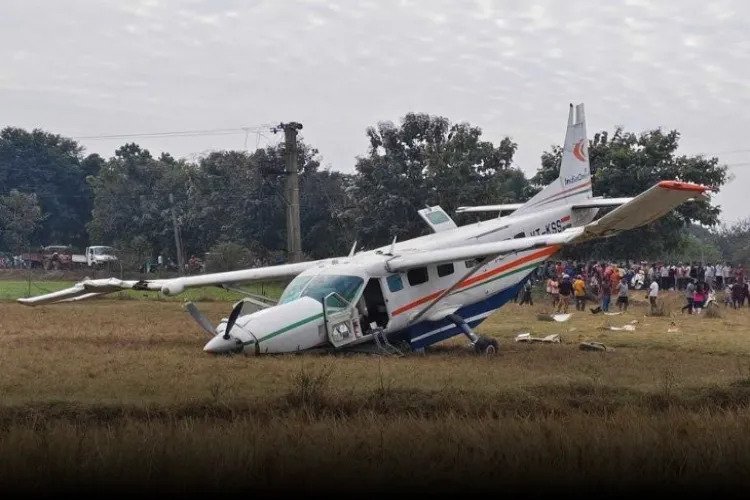
According to the Aircraft Accident Investigation Bureau (AAIB), the accident occurred on January 10, 2026, at 0747 UTC when a Cessna Grand Caravan 208B EX, registration VT-KSS, operating a scheduled Bhubaneswar–Rourkela service, was forced to land in an open field near Jalda village in Odisha.

The aircraft, operated by India One Air, had departed from Biju Patnaik International Airport and was approaching Rourkela Airport when the crew observed a drop in engine oil pressure approximately 30 nautical miles from destination.

The report states that the oil pressure showed a downward trend accompanied by reduced engine power. Following standard non-normal checklist procedures, the pilots shut down the engine and declared a Mayday with Rourkela Air Traffic Control, indicating their intention to attempt an emergency landing at the nearest suitable site.

Investigators said the crew initially considered landing on a dry riverbed but abandoned the attempt due to insufficient altitude. They then selected an alternate open field that appeared free of major obstacles. However, during final approach, the aircraft struck a treetop and a high-tension power cable before impacting the ground.

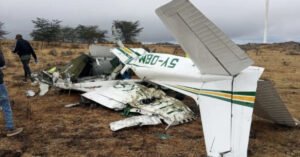
The impact caused substantial structural damage. The nose landing gear separated, the main landing gear deformed, and the forward fuselage suffered fragmentation. Investigators found oil stains along the fuselage belly extending toward the tail. No post-crash fire or smoke was observed.

The accident resulted in the death of one passenger. Three other passengers sustained serious injuries. Both the pilot-in-command, aged 48, and the first officer, aged 41, also suffered serious injuries. The crew held valid commercial pilot licences, medical certificates, and were cleared by pre-flight breath analyser tests.

Weather conditions at Rourkela at the time were reported as wind 060 degrees at 2 knots, visibility 7 km, no significant cloud, and QNH 1017 hPa.

The Cockpit Voice Recorder (CVR) and Flight Data Recorder (FDR) data have been downloaded and are under analysis. The engine has been secured for detailed examination. The AAIB has appointed accredited representatives from the U.S. National Transportation Safety Board and the Transportation Safety Board of Canada to assist in the investigation.

The bureau reiterated that the purpose of the investigation is the prevention of future accidents and not to apportion blame or liability. The findings remain preliminary and subject to change pending further technical analysis.

Leave a Comment

Subscribe to our Newsletter

Recent News

error: Unauthorized copying is not permitted