Washington, United States: June 2026 has emerged as one of the most troubling months for U.S. aviation in recent years, with a series of accidents involving military aircraft, business jets, helicopters, skydiving aircraft and general aviation flights drawing renewed attention to aviation safety across the country.
While the incidents occurred across different sectors of aviation and involved aircraft operating under vastly different conditions, the concentration of accidents within a matter of days has intensified scrutiny from regulators, investigators and industry observers.
The National Transportation Safety Board (NTSB), the Federal Aviation Administration (FAA), the U.S. Air Force and other agencies are now conducting multiple parallel investigations to determine whether the accidents share any common factors or merely represent an unusual cluster of unrelated events.
B-52 Test Flight Crash in California killed 8 Onboard
The month’s deadliest aviation accident occurred on June 15 when a U.S. Air Force Boeing B-52 Stratofortress crashed shortly after takeoff from Edwards Air Force Base in California.
The aircraft was conducting a test mission linked to a radar modernization program intended to extend the operational life of the B-52 fleet well into the coming decades. Witnesses reported seeing the bomber descend rapidly before impacting the ground and erupting into flames.
All eight people aboard were killed, including Air Force personnel, government employees and defense contractors participating in the flight-test program.
The Air Force immediately grounded portions of the test operation while investigators began examining flight data, maintenance records and wreckage evidence. Officials have cautioned that determining the cause could take several months.
The crash marked one of the deadliest U.S. military aviation accidents in recent years and raised concerns about risks associated with testing aging aircraft undergoing major upgrades.
Missouri Skydiving Plane Disaster Claims 12 Lives
Just a day before the B-52 crash, a skydiving aircraft crashed shortly after takeoff near Butler Memorial Airport in Missouri. The aircraft, identified in multiple reports as a Pacific Aerospace P750XL operating a skydiving flight, was carrying 11 skydivers and a pilot.
All 12 people aboard were killed. Witnesses reported seeing the aircraft descend rapidly before impact. Early reports suggested the pilot may have been attempting to return to the airport following a possible emergency, although investigators have not confirmed a cause.
The FAA and NTSB launched a full investigation. Investigators are examining maintenance records, pilot qualifications, weather conditions and the aircraft’s operational history. The tragedy became one of the deadliest civilian aviation accidents in the United States this year.
Training Flight Ends in Maryland Crash Resulted In 3 Fatalities
On June 20, a Piper PA-28 Cherokee believed to be conducting a training-related flight crashed into a wooded area near a residential neighborhood in Bowie, Maryland.
The aircraft had departed Ocean City, New Jersey, and was headed toward Montgomery County Airpark. All three occupants were killed. Investigators believe the flight was associated with a flight-training operation, although the circumstances surrounding the crash remain unclear.
The NTSB and FAA are examining aircraft performance, weather conditions and pilot actions before the accident. Residents reported hearing a loud impact shortly before emergency responders located the wreckage.
Florida Couple Killed After Experimental Plane Crashes After Takeoff
A Florida couple was killed after an experimental aircraft crashed into a farm in central Kentucky just minutes after departing Blue Grass Airport on Saturday, June 20, with federal investigators continuing to examine what caused the fatal accident.
The victims have been identified as Brian Tonner, 72, and Karen Tonner, 71, according to the Jessamine County Coroner’s Office. Coroner Michael Hughes said the married couple, both residents of Florida, were traveling home when the crash occurred.
Several other general aviation accidents were reported during the month, including crashes involving privately operated aircraft in Ohio, New Hampshire, New York and Massachusetts.
Most involved single-engine aircraft operating under general aviation rules. As is standard procedure, the FAA and NTSB opened investigations into the incidents, with investigators focusing on aircraft condition, pilot experience, operational factors and weather.
The FAA has reiterated that every significant aviation accident undergoes a thorough investigative process and has emphasized that accident clusters do not necessarily indicate a systemic safety issue.
The agency continues to work alongside the NTSB in gathering evidence, securing wreckage and supporting technical analysis.
Floatplane Crashes Into Columbia River After Striking Power Line, Two Killed
A single-engine floatplane crashed into the Columbia River near Kennewick, Washington, on June 24 after striking a high-voltage power line while flying at low altitude.
The impact caused widespread power outages affecting over 15,000 customers and sparked a small brush fire. The aircraft overturned into the river, killing both people on board.
Authorities identified the victims as 64-year-old pilot Randy J. Peterson and 50-year-old passenger Eric Wayne Houston, both from Sonoma, California. The U.S. The National Transportation Safety Board (NTSB) is investigating the cause of the accident.
Plane crash in Dominican Republic kills 2 U.S. pilots during emergency landing attempt
On June 7, 2026, two U.S. pilots were killed when their private Gulfstream G200 jet crashed while attempting an emergency landing shortly after takeoff from La Romana International Airport in the Dominican Republic.
The aircraft had departed Puerto Rico, stopped to refuel in the Dominican Republic, and was en route to Austin, Texas, to pick up former MLB star Yadier Molina, his family, and friends for a flight back to Puerto Rico. No passengers were on board at the time of the crash. Dominican aviation authorities are investigating the cause of the accident.
Kentucky plane crash kills 2 after small aircraft goes down on farm in Jessamine County
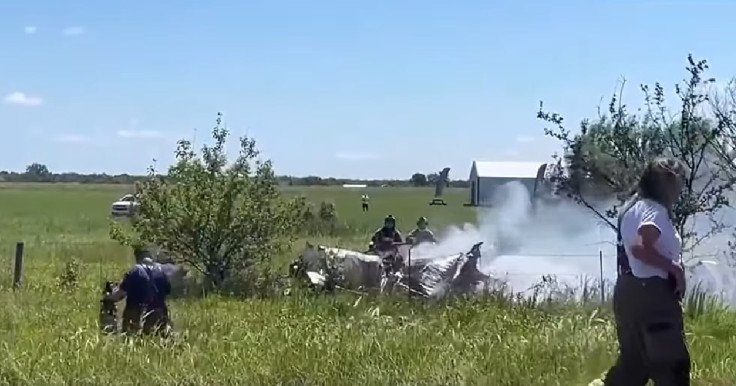
On June 20, 2026, two people were killed after a small aircraft crashed shortly after takeoff in Jessamine County, Kentucky, near Nicholasville. The crash was reported at approximately 8:45 a.m., prompting multiple 911 calls about a possible aircraft down between U.S. 27 and U.S. 68.
Emergency crews located the wreckage in a farm field off Kentucky Highway 169, where both occupants were pronounced dead at the scene. Authorities have not yet released the victims’ identities.
The cause of the crash remains unknown, and the Federal Aviation Administration (FAA) and the National Transportation Safety Board (NTSB) are investigating the accident.
1 Pilot Killed After Single-Engine Aircraft Crashes in Georgia’s Tattnall County
A single-engine aircraft crash in Tattnall County, Georgia, killed one pilot, identified as Tony Zorn, on Wednesday, June 24, 2026, just before 6:00 p.m. He was the only person on board the aircraft. According to Tattnall County Sheriff Kyle Sapp, the aircraft went down in a rural area, prompting a response from multiple emergency agencies. Zorn was pronounced dead at the scene. Authorities have not yet released the cause of the crash, and an investigation is underway.
Local residents remembered Zorn as “just a good old fellow” and said he was well known in the community for frequently flying along the nearby river. Witnesses recalled seeing him perform low passes over the water, where people on sandbars would often cheer as he flew by.
NetJets Business Jet Crashes on Texas Highway Kills 1, Others Survive
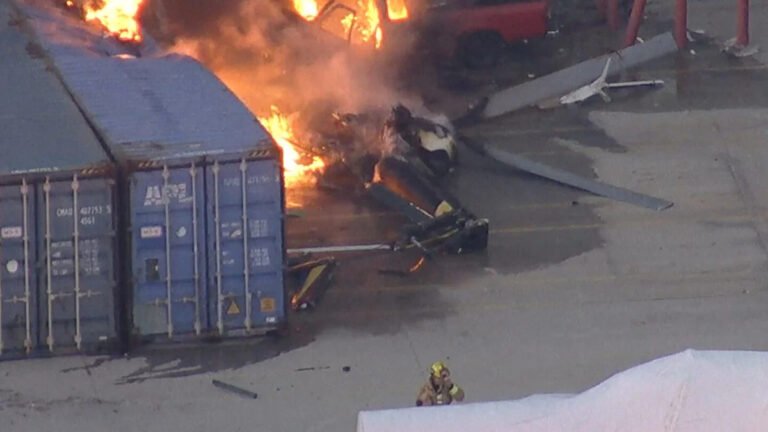
On June 16, a NetJets-operated Cessna Citation Latitude crashed while attempting an emergency landing in Laredo, Texas. The aircraft had been flying from San Jose del Cabo, Mexico, to Austin when the crew reported difficulties and diverted toward Laredo International Airport.
The jet failed to reach the runway and crashed onto Loop 20 highway, striking a vehicle. One occupant aboard the aircraft died while five others survived with injuries. The driver of the vehicle was also injured, and several first responders required treatment for smoke inhalation.
Investigators have recovered the cockpit voice recorder and flight data recorder. The NTSB has stated that no definitive cause has yet been identified and that analysis remains in its early stages.
The accident renewed focus on emergency landing procedures and decision-making during critical phases of flight.
Coast Guard Helicopter Crash Leaves Four Injured
A U.S. Coast Guard MH-60 Jayhawk helicopter crashed during a routine training mission near Sitka, Alaska, on June 22.
Unlike several other accidents during the month, all four crew members survived. Rescue teams reached the remote crash site quickly and transported the injured personnel to a medical facility. Authorities described the injuries as minor.
The Coast Guard has opened an investigation into the circumstances surrounding the training accident. Although non-fatal, the crash added to growing concerns about the number of military and government aircraft mishaps recorded during June.
Officials have cautioned against drawing conclusions before investigations are completed.
The NTSB is currently examining several recurring areas across the month’s accidents:
• Mechanical failures and maintenance histories.
• Pilot decision-making during emergencies.
• Aircraft performance during takeoff and climb phases.
• Flight-test and training-flight risks.
• Operational procedures for specialized missions such as skydiving and military testing.
In nearly every major June accident, investigators have stated that it is too early to determine a probable cause.
While commercial airline travel in the United States remains among the safest forms of transportation, the concentration of aviation accidents during June has generated significant public attention. The events have prompted renewed discussion about pilot training, aging aircraft fleets, maintenance oversight and operational risk management. For regulators and investigators, the coming months will be critical as evidence is analyzed and preliminary findings begin to emerge.