News
Civil Aviation
Pilot Training
Flight School Analysis
Aviation Jobs
Training
Services
About Us
Contact Us

UK Launches £219 Million Fund To Boost Sustainable Aviation Fuel Production Growth

Picture of Aviation Today News Desk

Aviation Today News Desk

London, United Kingdom: The UK government has unveiled a new £219 million Low Carbon Fuels Fund (LCFF) aimed at accelerating domestic sustainable aviation fuel (SAF) production, supporting economic growth, creating thousands of skilled jobs and strengthening the country's position as a global hub for low-carbon aviation fuels. Announced on June 16 by the Department for Transport, the funding programme will provide targeted support to companies developing low-carbon fuels, with £93 million set to be made available during the next two years. Applications are scheduled to open in mid-July 2026, with priority given to projects closest to commercial-scale production. The government said the initiative forms part of its wider strategy to decarbonise aviation while enabling continued sector growth. The new fund builds on £198 million already invested through the Advanced Fuels Fund (AFF) since 2022 to support cleaner aviation technologies. According to government estimates, domestic low-carbon fuel production could contribute up to £5 billion to the UK economy by 2050 while supporting approximately 15,000 jobs nationwide. Officials believe the investment will help attract private capital into new fuel production facilities and establish a stronger domestic SAF supply chain. Announcing the programme, Aviation, Maritime and Decarbonisation Minister Keir Mather said: "This £219 million is the next chapter in Britain's green aviation revolution. We're backing brilliant British innovation, creating thousands of high-skilled jobs and making sure the UK leads the world in the fuels that will power the future of flight. "This kind of investment is exactly how we kickstart economic growth, open up exciting new opportunities for young people and make our holidays greener and cleaner." The government described sustainable aviation fuel as one of the aviation sector's most important decarbonisation technologies. SAF can be used as an alternative to conventional fossil-based jet fuel and is estimated to reduce greenhouse gas emissions by an average of 70% on a lifecycle basis. Officials said expanding domestic production will provide confidence for investors considering new SAF plants across the country while generating employment opportunities in engineering, manufacturing, science, construction and fuel production. The announcement also highlights the government's objective of ensuring that aviation growth remains compatible with the UK's net-zero commitments. SAF is expected to play a central role in enabling future aviation expansion while reducing the industry's environmental impact. Alongside the funding announcement, the Department for Transport launched a Call for Evidence on the UK's Sustainable Aviation Fuel Mandate. The mandate requires an increasing proportion of jet fuel supplied in the UK to come from sustainable sources, beginning at 2% in 2025, rising to 10% by 2030 and reaching 22% by 2040. The government said the consultation will examine global supply projections for different sustainable fuel pathways and assess their implications for achieving future SAF mandate targets. Officials stressed that overall SAF mandate targets are not being considered for reduction. Instead, the review is intended to help ensure the policy remains effective and responsive as the global sustainable fuel market develops. Industry representatives welcomed the latest funding package. British Sugar, which previously received support through the Advanced Fuels Fund, said the company is exploring the development of a demonstration SAF production facility through its British BioJet project at the Wissington site. In a statement, the company said, "We are very pleased to see the launch of the DfT's low carbon fuels fund and the clear commitment to further development of homegrown sustainable aviation fuel in the UK. At British Sugar, following a grant from the advanced fuels fund, the British BioJet project at our Wissington site is exploring the development of a sizable demonstration plant. "It will utilise our existing waste feedstocks with ethanol-to-jet technology to produce 1,500 tonnes of SAF supporting the growth in cleaner, greener jobs and investment. We welcome this next phase of funding to develop SAF, and look forward to making an application so that we can continue supporting the government's ambition for net-zero aviation." The new Low Carbon Fuels Fund is expected to launch later this summer, with government officials positioning the initiative as a key component of the UK's long-term aviation decarbonisation strategy and industrial growth agenda.
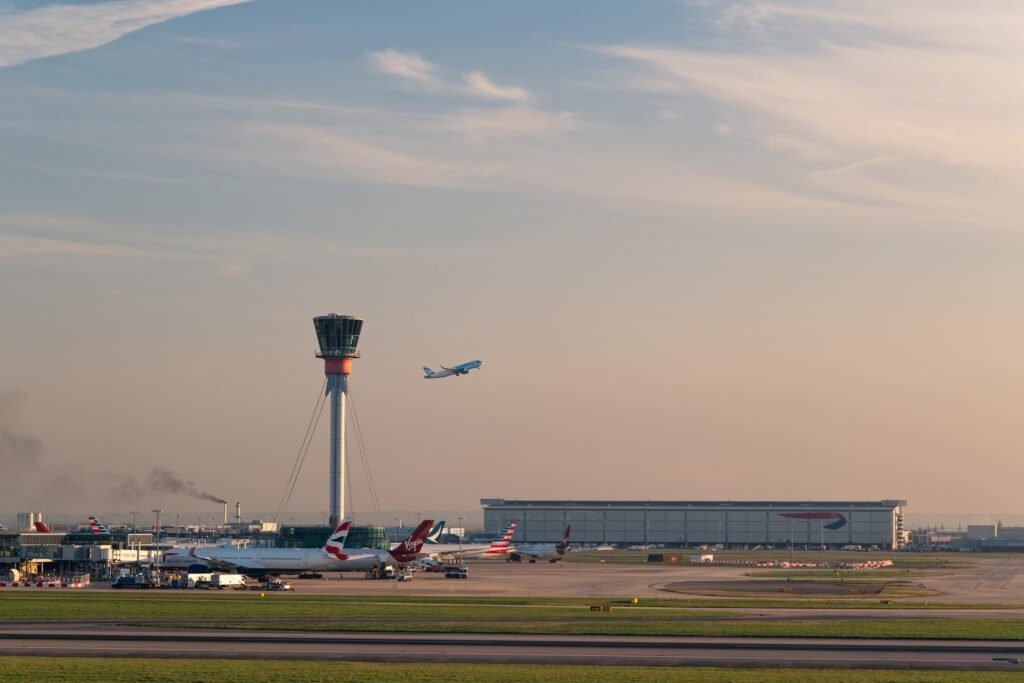
Image: London Heathrow

London, United Kingdom: The UK government has unveiled a new £219 million Low Carbon Fuels Fund (LCFF) aimed at accelerating domestic sustainable aviation fuel (SAF) production, supporting economic growth, creating thousands of skilled jobs and strengthening the country’s position as a global hub for low-carbon aviation fuels.

Announced on June 16 by the Department for Transport, the funding programme will provide targeted support to companies developing low-carbon fuels, with £93 million set to be made available during the next two years. Applications are scheduled to open in mid-July 2026, with priority given to projects closest to commercial-scale production.

The government said the initiative forms part of its wider strategy to decarbonise aviation while enabling continued sector growth. The new fund builds on £198 million already invested through the Advanced Fuels Fund (AFF) since 2022 to support cleaner aviation technologies.

According to government estimates, domestic low-carbon fuel production could contribute up to £5 billion to the UK economy by 2050 while supporting approximately 15,000 jobs nationwide. Officials believe the investment will help attract private capital into new fuel production facilities and establish a stronger domestic SAF supply chain.

Announcing the programme, Aviation, Maritime and Decarbonisation Minister Keir Mather said:

“This £219 million is the next chapter in Britain’s green aviation revolution. We’re backing brilliant British innovation, creating thousands of high-skilled jobs and making sure the UK leads the world in the fuels that will power the future of flight.

“This kind of investment is exactly how we kickstart economic growth, open up exciting new opportunities for young people and make our holidays greener and cleaner.”

The government described sustainable aviation fuel as one of the aviation sector’s most important decarbonisation technologies. SAF can be used as an alternative to conventional fossil-based jet fuel and is estimated to reduce greenhouse gas emissions by an average of 70% on a lifecycle basis.

Officials said expanding domestic production will provide confidence for investors considering new SAF plants across the country while generating employment opportunities in engineering, manufacturing, science, construction and fuel production.

The announcement also highlights the government’s objective of ensuring that aviation growth remains compatible with the UK’s net-zero commitments. SAF is expected to play a central role in enabling future aviation expansion while reducing the industry’s environmental impact.

Alongside the funding announcement, the Department for Transport launched a Call for Evidence on the UK’s Sustainable Aviation Fuel Mandate. The mandate requires an increasing proportion of jet fuel supplied in the UK to come from sustainable sources, beginning at 2% in 2025, rising to 10% by 2030 and reaching 22% by 2040.

The government said the consultation will examine global supply projections for different sustainable fuel pathways and assess their implications for achieving future SAF mandate targets.

Officials stressed that overall SAF mandate targets are not being considered for reduction. Instead, the review is intended to help ensure the policy remains effective and responsive as the global sustainable fuel market develops.

Industry representatives welcomed the latest funding package. British Sugar, which previously received support through the Advanced Fuels Fund, said the company is exploring the development of a demonstration SAF production facility through its British BioJet project at the Wissington site.

In a statement, the company said, “We are very pleased to see the launch of the DfT’s low carbon fuels fund and the clear commitment to further development of homegrown sustainable aviation fuel in the UK. At British Sugar, following a grant from the advanced fuels fund, the British BioJet project at our Wissington site is exploring the development of a sizable demonstration plant.

“It will utilise our existing waste feedstocks with ethanol-to-jet technology to produce 1,500 tonnes of SAF supporting the growth in cleaner, greener jobs and investment. We welcome this next phase of funding to develop SAF, and look forward to making an application so that we can continue supporting the government’s ambition for net-zero aviation.”

The new Low Carbon Fuels Fund is expected to launch later this summer, with government officials positioning the initiative as a key component of the UK’s long-term aviation decarbonisation strategy and industrial growth agenda.

Leave a Comment

Subscribe to our Newsletter

Recent News