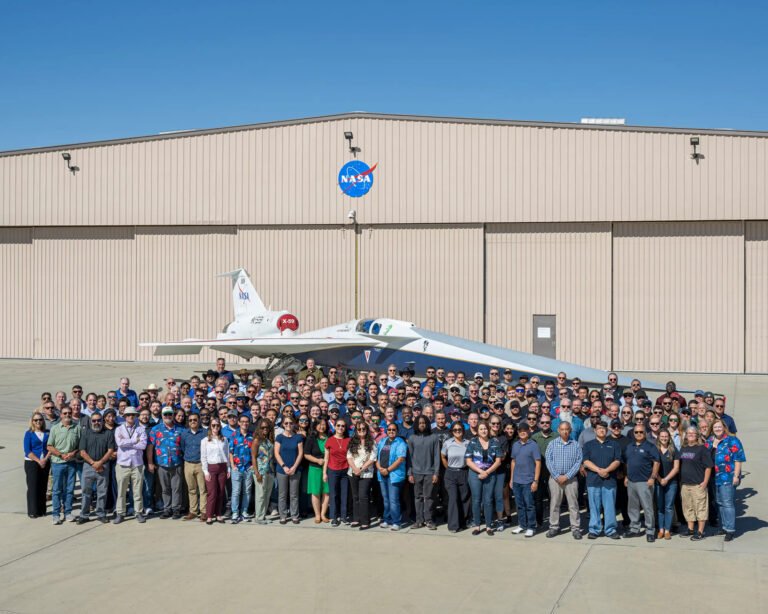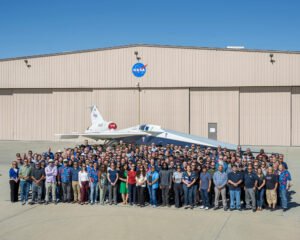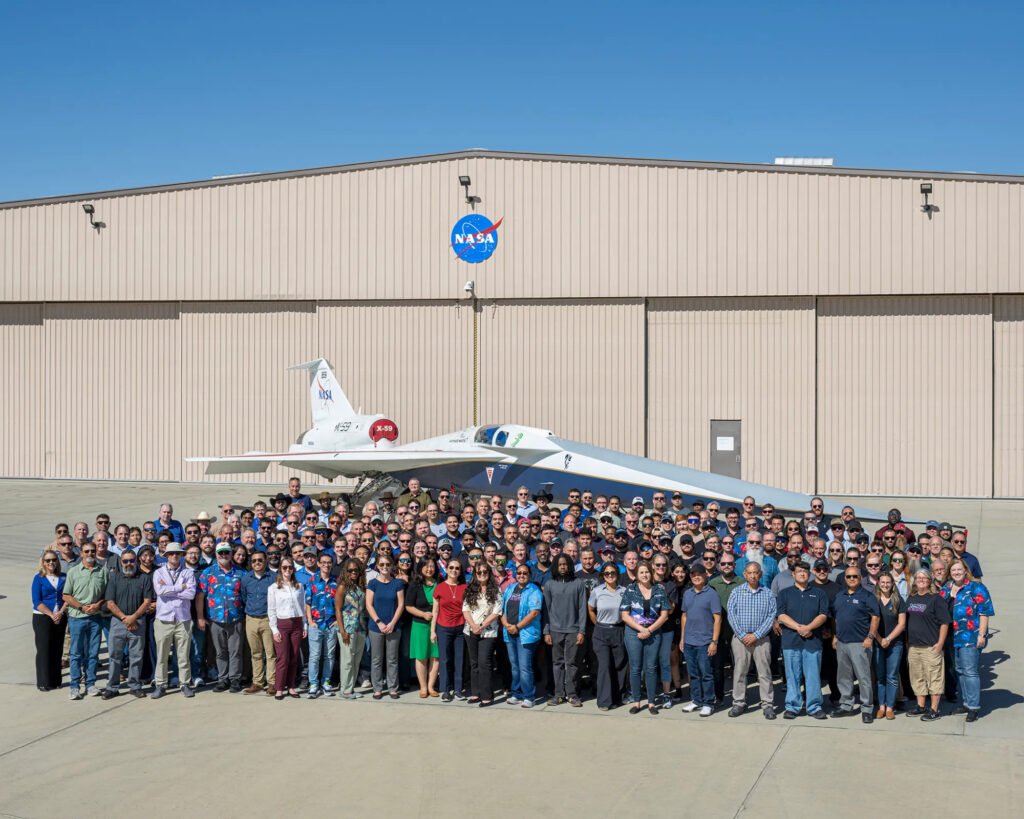
Washington, United States: NASA has officially taken ownership of its X-59 quiet supersonic research aircraft from contractor Lockheed Martin Skunk Works, marking a new milestone in the agency’s Quesst mission. The transfer took place on November 18, 2026, as the aircraft continued its flight-testing programme at NASA’s Armstrong Flight Research Center in Edwards, California. NASA published the announcement on November 23, 2026.
NASA selected Lockheed Martin to collaborate on the X-59’s design and lead the aircraft’s construction and testing for the Quesst mission. The experimental aircraft is designed to fly faster than the speed of sound while reducing the traditionally loud sonic boom to a quieter “sonic thump.”
The X-59 completed its first flight on October 28, 2025, departing from Lockheed Martin Skunk Works’ facility in Palmdale, California, before flying to NASA’s Armstrong Flight Research Center in Edwards, California. The centre has served as the aircraft’s home base since its arrival.
Although flight testing continued from Armstrong, Lockheed Martin retained official ownership of the aircraft while working with NASA to complete an aircraft acceptance review, a key requirement in closing out the contract. Following the completion of this process, NASA formally assumed ownership. Lockheed Martin will continue to provide additional support on an as-needed basis as flight testing progresses under NASA’s ownership.
Commenting on the ownership transfer, Cathy Bahm, Low Boom Flight Demonstrator project manager, described the development as a significant milestone for the programme. “This is another big moment for NASA’s X-59,” Bahm said, highlighting the progress made by the teams and the work completed towards demonstrating the aircraft’s capabilities. She added that the programme is moving closer to providing the data needed to potentially make commercial supersonic flight over land a reality.
NASA said the X-59 forms part of its broader commitment to advancing US leadership in aviation through experimental aircraft and X-plane programmes. The agency is also expanding its experimental aircraft capabilities, with the newly announced X-70 joining the X-59 in its growing and revitalised X-plane portfolio.
Through these projects, NASA aims to strengthen its capacity to conduct experimental flight research, accelerate emerging technologies and capabilities, and advance future generations of American aviation.
The Quesst mission is supported by NASA’s Aeronautics Research Mission Directorate. Under the programme, the agency plans to demonstrate supersonic flight technology that reduces the noise generated by conventional sonic booms. NASA will subsequently survey public reactions as the X-59 flies overhead and share the findings with national and international regulators.
The collected responses to the quieter sonic thumps are intended to help regulators establish new, data-driven acceptable noise thresholds for future commercial supersonic flights over land.