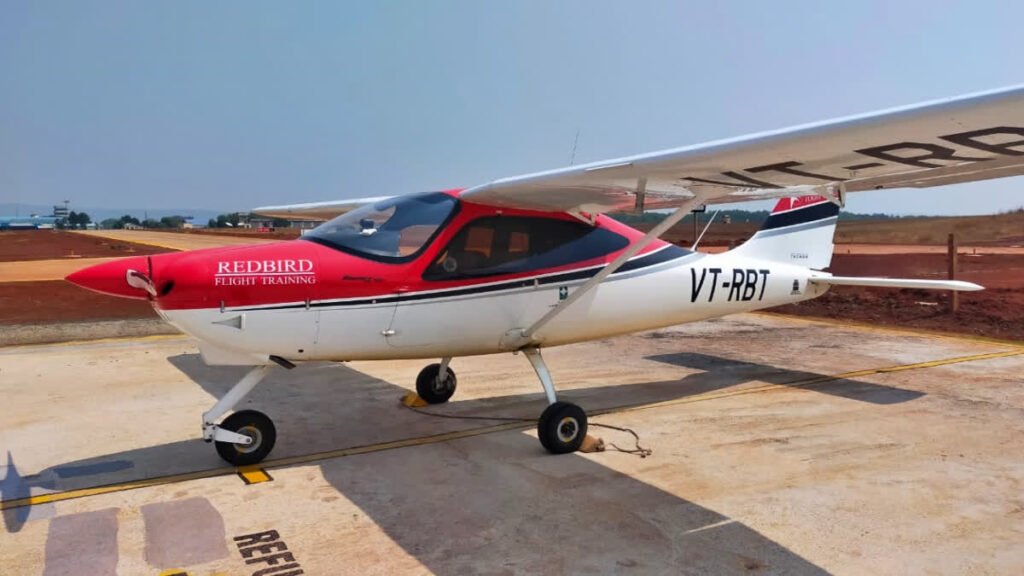
New Delhi, India: The Directorate General of Civil Aviation (DGCA) has prohibited Redbird Flight Training Academy, regarded as South Asia’s largest flight training organisation, from admitting fresh students into its pilot training programmes until August 31, 2027, citing multiple regulatory violations, prolonged training delays, fee-related disputes, and findings from a recent inspection.
The order, issued on July 16, 2026, follows an enforcement process initiated under the Civil Aviation Requirements (CAR), Section 7, Series D, Part I. According to the regulator, the action was prompted by multiple complaints received from trainee pilots and the findings of a DGCA inspection conducted at the academy’s facilities on July 8.
Redbird Flight Training Academy operates training bases at Baramati in Maharashtra, Kalaburagi and Belagavi in Karnataka, Lilabari in Assam, and Seoni in Madhya Pradesh. The academy is widely recognised as South Asia’s largest flight training organisation and has played a significant role in training commercial pilots for India’s rapidly expanding aviation sector.
According to the DGCA order, regulatory action was initiated against the academy for five primary reasons. These include prolonged delays in completing flight training, unilateral revision of flying charges to ₹3,000 per flying hour citing increased aviation fuel costs, inadequate and disproportionate refund of fees to trainees, execution of revised agreements imposing additional financial obligations on students, and the alleged denial of access to training facilities for trainees who refused to accept the revised contractual terms.
During the spot inspection on July 8, DGCA officials also identified multiple discrepancies in the academy’s operations. Based on the findings and complaints received, the regulator concluded that immediate corrective measures were necessary to safeguard the interests of trainee pilots and ensure compliance with applicable aviation training regulations.
The order states that Redbird currently has 435 active trainee pilots and 92 inactive trainees enrolled across its training network. Under existing DGCA norms governing Flight Training Organisations, the number of trainee pilots should not exceed 10 students per aircraft, ensuring adequate aircraft availability and timely completion of training.
While imposing the admission ban, the DGCA directed the academy to prioritise the completion of training for existing students. As part of the order, Redbird has been instructed to allocate flying hours in a 70:30 ratio, with 70% of available flying hours reserved for students enrolled up to 2024 and the remaining 30% allocated to students admitted during 2025 and later. The regulator said this measure is intended to address the backlog of trainees whose programmes have experienced significant delays.
The latest enforcement action marks the second major regulatory intervention against Redbird in less than three years. In October 2023, the DGCA suspended the academy’s flying operations for two months after it was linked to five aviation safety incidents within a six-month period. That suspension required the academy to undertake corrective measures before resuming operations.
Responding to the latest order, Karan Mann, Senior Manager at Redbird Flight Training Academy, confirmed that the academy had received the DGCA directive.
“We have more than 500 students presently and have 43 aircraft. We had placed an order for ten more aircraft and they are expected to arrive shortly. Due to global tensions, they have been delayed. We have plans for the future, including opening new bases across India shortly, including in Uttar Pradesh,” Mann said.
The academy indicated that fleet expansion remains part of its long-term growth strategy despite the admission restriction. However, until the DGCA lifts the prohibition or the specified period expires, Redbird will not be permitted to admit any new students into its pilot training programmes.
The order reflects the regulator’s increasing focus on ensuring that India’s rapidly growing flight training sector maintains adequate infrastructure, transparent fee practices, and sufficient aircraft capacity as demand for commercial pilot training continues to rise.
With Indian airlines collectively placing orders for hundreds of new aircraft and requiring thousands of additional pilots over the coming years, the DGCA has intensified oversight of Flight Training Organisations to ensure training standards and student welfare are not compromised.