News
Civil Aviation
Pilot Training
Flight School Analysis
Aviation Jobs
Training
Services
About Us
Contact Us

DGCA Dismisses Four IndiGo Inspectors And Summons CEO As Flight Disruptions Continue

Picture of Aviation Today News Desk

Aviation Today News Desk

New Delhi, India: India’s Civil Aviation regulator, the Directorate General of Civil Aviation (DGCA), has dismissed four senior flight operations inspectors amid ongoing operational disruptions at IndiGo, the country’s largest airline, underscoring heightened regulatory scrutiny in the wake of a pilot staffing crisis that has triggered widespread flight cancellations across the domestic network. The DGCA acted on Friday after concluding that the inspectors tasked with monitoring safety and compliance at IndiGo failed to adequately oversee the airline’s preparedness, particularly in ensuring sufficient cockpit crew in line with newly implemented duty and rest norms. In a related move, DGCA teams have been deployed to IndiGo’s headquarters in Gurugram, where officials are monitoring daily operations including crew deployment, flight cancellations, unplanned pilot leave and passenger refunds. These teams are required to submit daily reports to the regulator as the investigation continues. The regulatory action follows a series of disruptions that began in early December, when IndiGo began cancelling large numbers of flights reportedly thousands nationwide after tighter Flight Duty Time Limitation (FDTL) rules came into full effect on November 1. These rules, designed to extend mandatory rest periods and limit duty hours for pilots, significantly reduced the number of permissible night landings and imposed greater rest requirements. Parliamentary data indicates IndiGo’s pilot count dropped to approximately 5,085 by early December, down from around 5,463 in March 2025, exacerbating the strain on flight operations as rest norms tightened. Industry and pilot association sources have criticised IndiGo’s staffing strategy, arguing that the airline did not hire sufficient pilots or adjust crew rostering in anticipation of the FDTL rules, despite a two‑year preparatory window. The Federation of Indian Pilots (FIP) described the airline’s approach as a “prolonged and unorthodox lean manpower strategy,” contending it worsened the impact of the new norms. Earlier in a significant regulatory intervention, the Directorate General of Civil Aviation (DGCA) has ordered IndiGo to cut approximately 10 % of its winter flight schedule, a move that could result in more than 200 fewer daily operations for India’s largest carrier as it grapples with widespread cancellations and pilot staffing shortfalls. The directive comes after an intensive review of the airline’s ability to operate the winter schedule safely and reliably amid ongoing disruptions that began in early December, with regulators finding that IndiGo had “not demonstrated an ability to operate these schedules efficiently.” Under the new order, the airline has been instructed to revise its winter roster and scale down services, particularly on routes where alternative options exist, in a bid to stabilise operations through the winter period that runs until late March 2026. The reduction is part of broader oversight action by DGCA, which has also deployed monitoring teams and summoned the airline’s senior management to explain its operational planning. In a further escalation, the DGCA has summoned IndiGo CEO Pieter Elbers to appear before an investigative panel on December 12 to explain the airline’s planning and management of its flight operations during the crisis. Elbers previously appeared before the panel, which is also examining manpower planning, rostering systems and compliance readiness under the FDTL framework. To address the pilot shortage, IndiGo has submitted a comprehensive manpower plan to the regulator, outlining targets to expand its flight crew through both domestic recruitment and the hiring of expatriate pilots. The airline aims to recruit several hundred additional captains and first officers by early 2026. Civil Aviation Minister K. Ram Mohan Naidu has publicly rejected claims that regulatory oversight lapses caused the disruptions, placing primary responsibility on IndiGo’s internal management and rostering failures. He also highlighted the need for broader structural reforms in India’s aviation sector to prevent over‑reliance on a single major carrier. The crisis has intensified debate over airline preparedness, regulatory implementation and passenger rights, with government officials, industry analysts and pilots weighing in on both operational planning failures and the challenges posed by the new safety‑oriented duty norms.
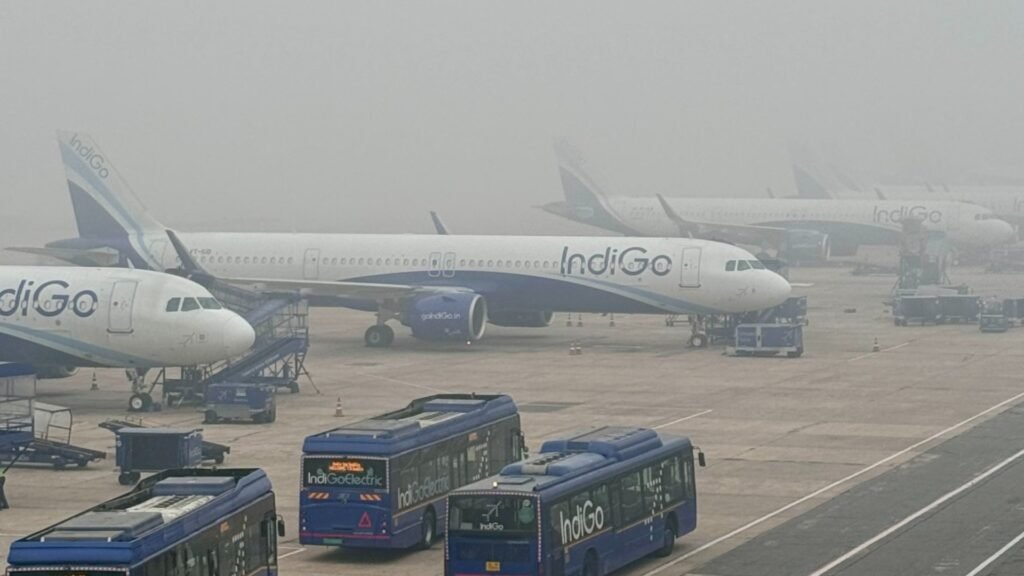
Image: IndiGo

New Delhi, India: India’s Civil Aviation regulator, the Directorate General of Civil Aviation (DGCA), has dismissed four senior flight operations inspectors amid ongoing operational disruptions at IndiGo, the country’s largest airline, underscoring heightened regulatory scrutiny in the wake of a pilot staffing crisis that has triggered widespread flight cancellations across the domestic network. 

The DGCA acted on Friday after concluding that the inspectors tasked with monitoring safety and compliance at IndiGo failed to adequately oversee the airline’s preparedness, particularly in ensuring sufficient cockpit crew in line with newly implemented duty and rest norms. 

In a related move, DGCA teams have been deployed to IndiGo’s headquarters in Gurugram, where officials are monitoring daily operations including crew deployment, flight cancellations, unplanned pilot leave and passenger refunds. These teams are required to submit daily reports to the regulator as the investigation continues. 

The regulatory action follows a series of disruptions that began in early December, when IndiGo began cancelling large numbers of flights reportedly thousands nationwide after tighter Flight Duty Time Limitation (FDTL) rules came into full effect on November 1. These rules, designed to extend mandatory rest periods and limit duty hours for pilots, significantly reduced the number of permissible night landings and imposed greater rest requirements. 

Parliamentary data indicates IndiGo’s pilot count dropped to approximately 5,085 by early December, down from around 5,463 in March 2025, exacerbating the strain on flight operations as rest norms tightened. 

Industry and pilot association sources have criticised IndiGo’s staffing strategy, arguing that the airline did not hire sufficient pilots or adjust crew rostering in anticipation of the FDTL rules, despite a two‑year preparatory window. The Federation of Indian Pilots (FIP) described the airline’s approach as a “prolonged and unorthodox lean manpower strategy,” contending it worsened the impact of the new norms.

Earlier in a significant regulatory intervention, the Directorate General of Civil Aviation (DGCA) has ordered IndiGo to cut approximately 10 % of its winter flight schedule, a move that could result in more than 200 fewer daily operations for India’s largest carrier as it grapples with widespread cancellations and pilot staffing shortfalls. The directive comes after an intensive review of the airline’s ability to operate the winter schedule safely and reliably amid ongoing disruptions that began in early December, with regulators finding that IndiGo had “not demonstrated an ability to operate these schedules efficiently.” 

Under the new order, the airline has been instructed to revise its winter roster and scale down services, particularly on routes where alternative options exist, in a bid to stabilise operations through the winter period that runs until late March 2026. The reduction is part of broader oversight action by DGCA, which has also deployed monitoring teams and summoned the airline’s senior management to explain its operational planning. 

In a further escalation, the DGCA has summoned IndiGo CEO Pieter Elbers to appear before an investigative panel on December 12 to explain the airline’s planning and management of its flight operations during the crisis. Elbers previously appeared before the panel, which is also examining manpower planning, rostering systems and compliance readiness under the FDTL framework. 

To address the pilot shortage, IndiGo has submitted a comprehensive manpower plan to the regulator, outlining targets to expand its flight crew through both domestic recruitment and the hiring of expatriate pilots. The airline aims to recruit several hundred additional captains and first officers by early 2026. 

Civil Aviation Minister K. Ram Mohan Naidu has publicly rejected claims that regulatory oversight lapses caused the disruptions, placing primary responsibility on IndiGo’s internal management and rostering failures. He also highlighted the need for broader structural reforms in India’s aviation sector to prevent over‑reliance on a single major carrier. 

The crisis has intensified debate over airline preparedness, regulatory implementation and passenger rights, with government officials, industry analysts and pilots weighing in on both operational planning failures and the challenges posed by the new safety‑oriented duty norms.


Leave a Comment

Subscribe to our Newsletter

Recent News