News
Civil Aviation
Pilot Training
Flight School Analysis
Aviation Jobs
Training
Services
About Us
Contact Us

US Operations Against Iran Cost $38 Billion As CBO Says Spending Could Rise Further

Picture of Aviation Today News Desk

Aviation Today News Desk

Washington, United States: The latest US Congressional Budget Office (CBO) assessment has estimated that the United States spent about $38 billion on combat operations against Iran through 1 August 2026, covering munitions, aircraft operations, equipment losses, fuel and other operational costs. The new figure follows a US Department of War Inspector General report, which estimated $33.4 billion in costs for Operation Epic Fury through 29 June 2026. The Pentagon figure included $22.3 billion in expended munitions, $7.4 billion in incremental operational costs and $3.7 billion in equipment losses. The Inspector General said the expenditure had “resulted in strategic inventory shortfalls and revealed industrial base bottlenecks for munitions resupply.” The Pentagon report also detailed significant aircraft losses. It recorded four F-15E fighters destroyed, one F-35A damaged, one A-10 destroyed, seven KC-135 tankers damaged or destroyed, one E-3 damaged, one HH-60W damaged, one MQ-4C crashed, four AH-6 helicopters destroyed, one AH-64 shot down, one MH-60 crashed and as many as 30 MQ-9 drones destroyed. Iranian attacks also damaged or destroyed hundreds of buildings and structures at U.S. military facilities across Kuwait, Bahrain, Qatar, the UAE, Saudi Arabia, Iraq, Oman and Jordan. The Inspector General recorded 417 U.S. personnel wounded in action, along with seven killed in action and seven killed in non-hostile incidents through 30 June. The conflict began on 28 February 2026, when the United States launched Operation Epic Fury alongside Israel against Iran. Washington said the operation was aimed at destroying Iran's military capabilities, including its ballistic-missile forces, missile production, naval assets, air defences and nuclear-related capabilities. US Secretary of War Pete Hegseth said the mission was to “destroy Iranian offensive missiles, destroy Iranian missile production, destroy their navy and other security infrastructure, and they will never have nuclear weapons.” The operation followed the US Operation Midnight Hammer strikes against Iranian nuclear facilities in June 2025. The 2026 campaign subsequently involved thousands of U.S. personnel, combat aircraft, tankers, drones and missile-defence systems across the Middle East. The CBO said the cost could continue rising as operations continue. It separately estimated that replacing expended munitions accounted for about $21.7 billion through 1 August, including roughly $13.1 billion for missile-defence interceptors and $7.3 billion for land-attack cruise missiles. The CBO and Pentagon figures cover different periods and use different methodologies; therefore, $38 billion is the latest available CBO estimate through 1 August, while $33.4 billion is the Pentagon Inspector General's figure through 29 June.
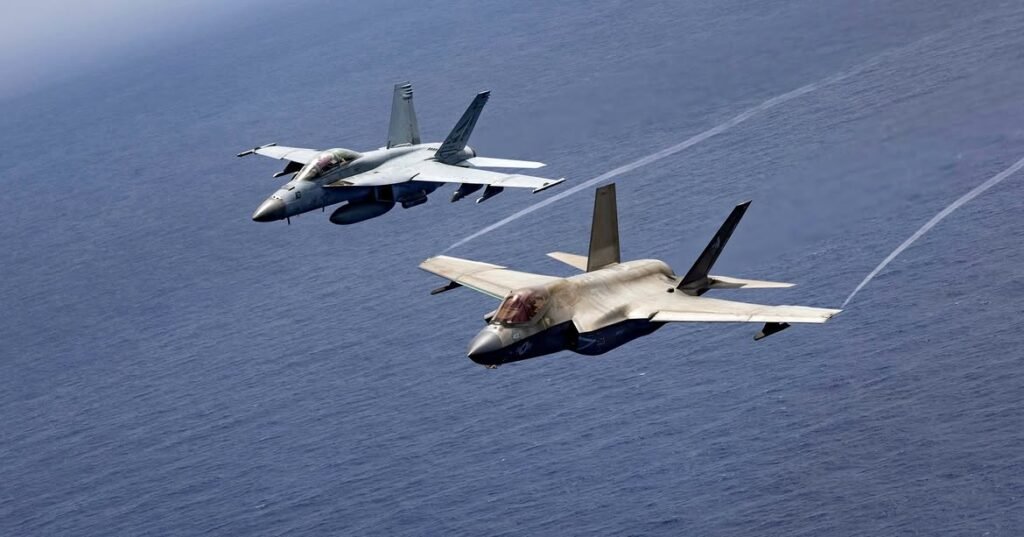
Image: Department Of War

Washington, United States: The latest US Congressional Budget Office (CBO) assessment has estimated that the United States spent about $38 billion on combat operations against Iran through 1 August 2026, covering munitions, aircraft operations, equipment losses, fuel and other operational costs.

The new figure follows a US Department of War Inspector General report, which estimated $33.4 billion in costs for Operation Epic Fury through 29 June 2026. The Pentagon figure included $22.3 billion in expended munitions, $7.4 billion in incremental operational costs and $3.7 billion in equipment losses. The Inspector General said the expenditure had “resulted in strategic inventory shortfalls and revealed industrial base bottlenecks for munitions resupply.”

The Pentagon report also detailed significant aircraft losses. It recorded four F-15E fighters destroyed, one F-35A damaged, one A-10 destroyed, seven KC-135 tankers damaged or destroyed, one E-3 damaged, one HH-60W damaged, one MQ-4C crashed, four AH-6 helicopters destroyed, one AH-64 shot down, one MH-60 crashed and as many as 30 MQ-9 drones destroyed.

Iranian attacks also damaged or destroyed hundreds of buildings and structures at U.S. military facilities across Kuwait, Bahrain, Qatar, the UAE, Saudi Arabia, Iraq, Oman and Jordan. The Inspector General recorded 417 U.S. personnel wounded in action, along with seven killed in action and seven killed in non-hostile incidents through 30 June.

The conflict began on 28 February 2026, when the United States launched Operation Epic Fury alongside Israel against Iran. Washington said the operation was aimed at destroying Iran’s military capabilities, including its ballistic-missile forces, missile production, naval assets, air defences and nuclear-related capabilities.

US Secretary of War Pete Hegseth said the mission was to “destroy Iranian offensive missiles, destroy Iranian missile production, destroy their navy and other security infrastructure, and they will never have nuclear weapons.”

The operation followed the US Operation Midnight Hammer strikes against Iranian nuclear facilities in June 2025. The 2026 campaign subsequently involved thousands of U.S. personnel, combat aircraft, tankers, drones and missile-defence systems across the Middle East.

The CBO said the cost could continue rising as operations continue. It separately estimated that replacing expended munitions accounted for about $21.7 billion through 1 August, including roughly $13.1 billion for missile-defence interceptors and $7.3 billion for land-attack cruise missiles.

The CBO and Pentagon figures cover different periods and use different methodologies; therefore, $38 billion is the latest available CBO estimate through 1 August, while $33.4 billion is the Pentagon Inspector General’s figure through 29 June.

Leave a Comment

Subscribe to our Newsletter

Recent News

Aviation Today Perspectives