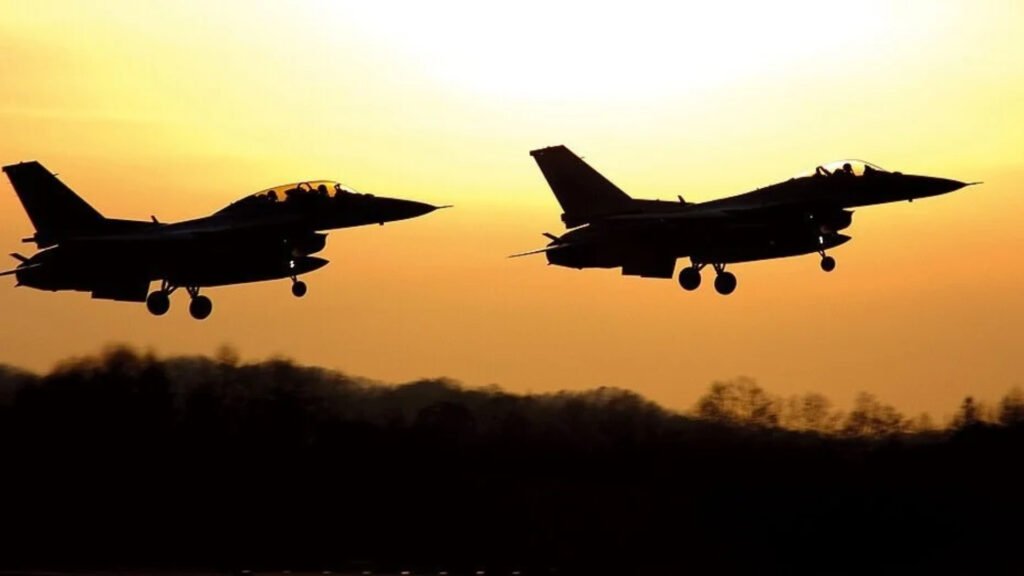
Seoul, South Korea: South Korean prosecutors have indicted five people over an alleged scheme to supply counterfeit identification-friend-or-foe (IFF) system components for Republic of Korea Air Force KF-16 fighter aircraft, securing approximately ₩12.8 billion ($8.9 million) in maintenance payments from the country’s Defense Acquisition Program Administration (DAPA).
The Daejeon District Prosecution Service’s Nonsan Branch announced the charges on 8 October, 2026. Three defendants were taken into custody and indicted, while two others were indicted without detention. The accused face charges under South Korea’s special law concerning crimes involving military supplies. The allegations have yet to be established in court.
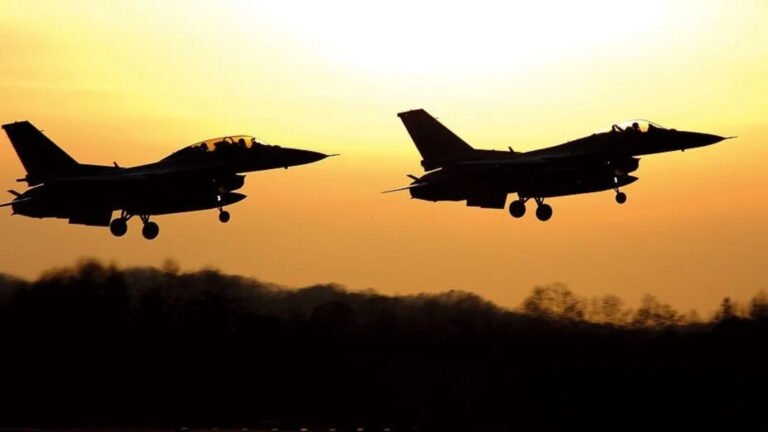
According to prosecutors, the alleged scheme ran from 2014 until February 2025 and centred on counterfeit down-converters used in the KF-16’s IFF system, which enables aircraft to be identified by friendly forces.
Investigators allege that the 70-year-old head of an aircraft-parts manufacturing and distribution company produced counterfeit down-converters in South Korea, copying the appearance of genuine components and marking them with product numbers intended to make them appear authentic.
The parts were then exported to the United States and subsequently reimported into South Korea through a US-based partner company. Prosecutors allege that this reverse-import arrangement was designed to make the counterfeit components appear to be genuine American-made products when supplied for military aircraft maintenance.
The company head reportedly held approximately 90% of the US partner company’s shares, having established the business to facilitate distribution of the counterfeit parts.
Prosecutors said each counterfeit unit cost approximately ₩1.2 million (US$830) to manufacture but was imported through the distribution chain at around ₩100 million (US$69,700). The alleged scheme resulted in maintenance payments totalling approximately ₩12.8 billion (US$8.9 million) from DAPA.
Under the applicable maintenance requirements, replacement down-converters had to be genuine components certified to the original US manufacturer’s specifications or alternative components approved in advance by the Republic of Korea Air Force.
The prosecution alleges that the counterfeit components were presented as compliant replacements, allowing payments to be obtained for maintenance that did not meet those requirements.
The five defendants comprise an aircraft-parts company chief, a subcontracted maintenance technician, the head of a subcontracted maintenance company, and two additional personnel from that maintenance contractor.
The 70-year-old parts-company chief and the 67-year-old subcontracted maintenance technician were among the three defendants indicted while in custody. The third detained defendant was the 62-year-old head of the subcontracted maintenance company.
The remaining two defendants, identified in reports as an employee responsible for process quality assurance and a maintenance technician, were indicted without detention. Korean reports identify the defendants using initials rather than publishing their full names.
Prosecutors allege that the maintenance technician misled Air Force quality inspectors overseeing fighter maintenance by installing counterfeit components as though they were genuine. The subcontractor’s chief and two employees allegedly knew the parts were counterfeit but continued participating to ensure that maintenance payments kept coming.
The investigation also uncovered a separate alleged maintenance-payment fraud involving the subcontracted maintenance company’s chief and two employees.
According to prosecutors, the three allegedly removed 15 modules and components from six transceivers that had been declared unrepairable. They then reused those parts in equipment associated with aircraft of the same model, a practice described in Korean reporting as component recycling or parts swapping.
Prosecutors allege that this arrangement generated approximately ₩850 million (US$592,000) in additional maintenance payments from DAPA.
The defendants also allegedly submitted falsified documents with altered delivery dates to obtain the return of approximately ₩50 million (US$35,000) in delay penalties.
These allegations form an additional part of the case and are distinct from the principal counterfeit down-converter scheme.
Prosecutors said they had identified purchases of a personal yacht and a private aircraft made by the head of the aircraft-parts company using proceeds allegedly generated by the scheme.
The prosecution said it intended to request further investigation to pursue the recovery of criminal proceeds.
In its statement, the prosecution described the case as a serious matter that had fundamentally undermined “national defence and security, and the reliability and safety of the Air Force’s operational capabilities.”
It added that investigators had uncovered the mechanics of a maintenance-payment fraud that had evolved to involve counterfeit parts manufactured domestically and routed through a US partner company before being imported back into South Korea.
The down-converter is part of the KF-16’s identification-friend-or-foe system, which supports the identification of friendly aircraft by compatible military systems. The alleged use of counterfeit components raises questions about compliance with military maintenance and parts-authentication requirements.
However, the prosecution announcement and the news reports reviewed did not identify a specific flight incident or operational failure caused by the alleged counterfeit components. They also did not establish how many KF-16 aircraft received the parts.
The case now proceeds through the judicial process. The allegations against all five defendants remain subject to court determination.