News
Civil Aviation
Pilot Training
Flight School Analysis
Aviation Jobs
Training
Services
About Us
Contact Us

UK Opens Door To Germany Joining GCAP Fighter Programme After FCAS Collapse

Picture of Aviation Today News Desk

Aviation Today News Desk

Berlin, Germany: British Prime Minister Andy Burnham said on 8 October 2026 that the United Kingdom was open to Germany joining the Global Combat Air Programme (GCAP), a UK-Italy-Japan initiative to develop a sixth-generation stealth fighter targeted to enter service in 2035. Burnham raised the prospect with German Chancellor Friedrich Merz during his first official visit to Berlin as prime minister, opening a potential new direction for European combat-air cooperation following the collapse of the Franco-German fighter project in June 2026. Speaking at a press conference after meeting Merz at the German Chancellery, Burnham said: “I've indicated to the Chancellor our openness to Germany joining GCAP.” He added: “That is something that we seek to progress in the coming period, working with our other partners, Italy and Japan.” His remarks indicated Britain's willingness to explore German participation, rather than confirming an invitation, an agreement or Germany's entry into the programme. The UK government subsequently confirmed that the two leaders had discussed the prospect of German participation and agreed that their teams would engage further. Its official readout stated that “closer collaboration on defence supports the interests of both countries, as well as our allies”, confirming that the subject had moved beyond public speculation to further bilateral discussions. Berlin has not committed to joining GCAP or any alternative next-generation fighter programme. A German official told Reuters that the government remained at an early stage of reviewing its options, saying: “We're in a very early stage with the re-evaluation of our options.” The official added: “Germany hasn't taken a fixed decision, it's looking in various directions.” The official also reiterated Merz's preference for a European solution rather than Germany pursuing a fighter programme independently. The position leaves open several possibilities, including participation in GCAP, a different European industrial arrangement or a broader approach to future combat-air capabilities. The discussions follow the breakdown of the Future Combat Air System (FCAS), the approximately €100 billion programme involving France, Germany and Spain. On 8 June 2026, reports said Merz and French President Emmanuel Macron had concluded that the project could not proceed in its original form because Dassault Aviation and Airbus had failed to resolve their industrial disagreements over the next-generation fighter. Germany's search for alternatives has consequently intensified interest in GCAP. GCAP brings together the UK, Italy and Japan to develop a next-generation combat aircraft intended to combine stealth, advanced sensors, artificial intelligence and integrated combat systems. The programme is designed to deliver an aircraft capable of maintaining air superiority against future threats, including increasingly sophisticated capabilities being developed by Russia and China. The industrial programme is led by BAE Systems in the UK, Leonardo in Italy and Mitsubishi Heavy Industries in Japan through the international development structure. Its target is to bring the aircraft into service in 2035. Japan has a particularly strong incentive to maintain that timeline because its F-2 fighter fleet is due to begin retirement around the middle of the next decade, while Tokyo is increasingly concerned about China's military expansion. Germany could offer significant industrial expertise, additional investment and a larger market for the programme. It already cooperates with the UK and Italy on the Eurofighter Typhoon, providing an established foundation for defence-industrial collaboration. For Britain, bringing in another partner could also help distribute development costs as defence budgets face competing demands. However, a German role would require agreement among the existing partners. Japan's focus on the 2035 deadline makes the timing and scope of any expansion particularly sensitive. Reuters reported that some industry executives had warned that bringing additional countries into the programme could create delays, although the extent of any effect would depend on the terms of participation. Canada provides a precedent for wider participation: GCAP's structure allows countries to engage at different levels, rather than requiring every participant to enter the programme on identical terms. On 21 July 2026, the UK, Italy and Japan welcomed Canada as the programme's first observer nation following discussions in London attended by UK Defence Secretary Wes Streeting, Italian Defence Minister Guido Crosetto, Japanese Defence Minister Shinjiro Koizumi and Canadian Defence Minister David J. McGuinty. The official joint statement said observer status would give Canada greater insight into GCAP's governance, capabilities, industrial framework and security requirements, as well as potential future partnership opportunities. It did not make Canada a full development partner or establish that Germany would receive equivalent terms. Saudi Arabia has also been discussed as a possible future participant, according to Reuters. Any further expansion would need to balance the advantages of shared funding and wider industrial participation against the complexity of integrating additional national requirements. Wider UK-Germany security cooperation: The fighter discussion formed part of a broader programme of defence and security cooperation during Burnham's Berlin visit on 8 October 2026. The two leaders reaffirmed the UK-Germany partnership under the Kensington Treaty and agreed to pursue deeper cooperation on European security, countering hybrid threats, supporting Ukraine and addressing illegal migration. The UK government said Burnham expressed solidarity with Germany following an attempted Russian drone attack at Leipzig airport. The leaders agreed on the need for a collective European response to Russia's hybrid threats and welcomed a new bilateral partnership intended to strengthen information-sharing, contingency planning and crisis response. They also discussed countering malicious misinformation and maintaining pressure on Russia through the winter. Ahead of the visit, Burnham described the threat posed by attacks on critical infrastructure, businesses and democratic institutions. As reported by Al Jazeera, he said: “Attacks on our infrastructure, our businesses and our democracies are not a distant threat. They reach into people's homes and workplaces and they are designed to make us weaker and more divided.” The Kensington Treaty, signed in July 2025, provides the wider framework for closer UK-Germany cooperation in science, technology, defence, security and economic growth. The leaders also discussed the need for stronger cooperation between British and European industries and agreed to continue work on the priorities raised during their meeting. The immediate next step is further engagement between British and German officials on the prospect of GCAP participation, in coordination with Italy and Japan. No formal German accession decision, agreed industrial workshare or confirmed financial contribution had been announced as of 9 October 2026. For GCAP, Germany could bring additional funding, technical capability and industrial scale at a time when Europe is reconsidering how to develop its future combat-air systems. But the opportunity comes with unresolved questions about governance, technology-sharing, industrial responsibilities and the risk of disrupting the programme's 2035 target. Burnham's statement therefore marks a significant political opening, not a completed expansion of GCAP. Whether Germany joins will depend on the outcome of discussions with Berlin and the programme's existing partners, and on whether an arrangement can meet Germany's industrial ambitions without compromising the aircraft's development schedule.
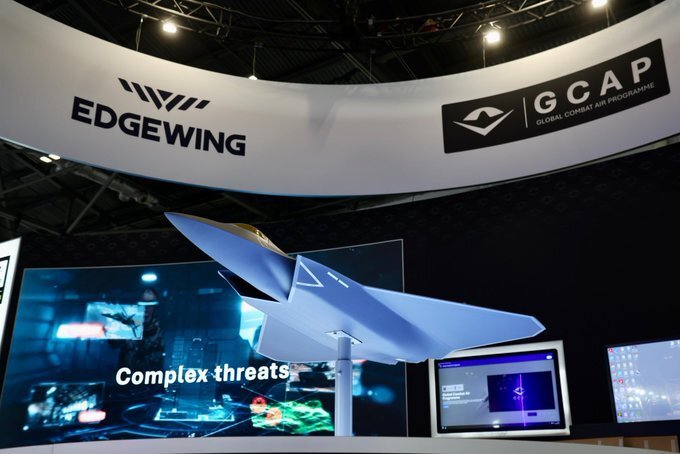
Image: CGAP

Berlin, Germany: British Prime Minister Andy Burnham said on 8 October 2026 that the United Kingdom was open to Germany joining the Global Combat Air Programme (GCAP), a UK-Italy-Japan initiative to develop a sixth-generation stealth fighter targeted to enter service in 2035. Burnham raised the prospect with German Chancellor Friedrich Merz during his first official visit to Berlin as prime minister, opening a potential new direction for European combat-air cooperation following the collapse of the Franco-German fighter project in June 2026.

Speaking at a press conference after meeting Merz at the German Chancellery, Burnham said: “I’ve indicated to the Chancellor our openness to Germany joining GCAP.” He added: “That is something that we seek to progress in the coming period, working with our other partners, Italy and Japan.” His remarks indicated Britain’s willingness to explore German participation, rather than confirming an invitation, an agreement or Germany’s entry into the programme.

The UK government subsequently confirmed that the two leaders had discussed the prospect of German participation and agreed that their teams would engage further. Its official readout stated that “closer collaboration on defence supports the interests of both countries, as well as our allies”, confirming that the subject had moved beyond public speculation to further bilateral discussions.

Berlin has not committed to joining GCAP or any alternative next-generation fighter programme. A German official told Reuters that the government remained at an early stage of reviewing its options, saying: “We’re in a very early stage with the re-evaluation of our options.” The official added: “Germany hasn’t taken a fixed decision, it’s looking in various directions.”

The official also reiterated Merz’s preference for a European solution rather than Germany pursuing a fighter programme independently. The position leaves open several possibilities, including participation in GCAP, a different European industrial arrangement or a broader approach to future combat-air capabilities.

The discussions follow the breakdown of the Future Combat Air System (FCAS), the approximately €100 billion programme involving France, Germany and Spain. On 8 June 2026, reports said Merz and French President Emmanuel Macron had concluded that the project could not proceed in its original form because Dassault Aviation and Airbus had failed to resolve their industrial disagreements over the next-generation fighter. Germany’s search for alternatives has consequently intensified interest in GCAP.

GCAP brings together the UK, Italy and Japan to develop a next-generation combat aircraft intended to combine stealth, advanced sensors, artificial intelligence and integrated combat systems. The programme is designed to deliver an aircraft capable of maintaining air superiority against future threats, including increasingly sophisticated capabilities being developed by Russia and China.

The industrial programme is led by BAE Systems in the UK, Leonardo in Italy and Mitsubishi Heavy Industries in Japan through the international development structure. Its target is to bring the aircraft into service in 2035. Japan has a particularly strong incentive to maintain that timeline because its F-2 fighter fleet is due to begin retirement around the middle of the next decade, while Tokyo is increasingly concerned about China’s military expansion.

Germany could offer significant industrial expertise, additional investment and a larger market for the programme. It already cooperates with the UK and Italy on the Eurofighter Typhoon, providing an established foundation for defence-industrial collaboration. For Britain, bringing in another partner could also help distribute development costs as defence budgets face competing demands.

However, a German role would require agreement among the existing partners. Japan’s focus on the 2035 deadline makes the timing and scope of any expansion particularly sensitive. Reuters reported that some industry executives had warned that bringing additional countries into the programme could create delays, although the extent of any effect would depend on the terms of participation.

Canada provides a precedent for wider participation:

GCAP’s structure allows countries to engage at different levels, rather than requiring every participant to enter the programme on identical terms. On 21 July 2026, the UK, Italy and Japan welcomed Canada as the programme’s first observer nation following discussions in London attended by UK Defence Secretary Wes Streeting, Italian Defence Minister Guido Crosetto, Japanese Defence Minister Shinjiro Koizumi and Canadian Defence Minister David J. McGuinty.

The official joint statement said observer status would give Canada greater insight into GCAP’s governance, capabilities, industrial framework and security requirements, as well as potential future partnership opportunities. It did not make Canada a full development partner or establish that Germany would receive equivalent terms.

Saudi Arabia has also been discussed as a possible future participant, according to Reuters. Any further expansion would need to balance the advantages of shared funding and wider industrial participation against the complexity of integrating additional national requirements.

Wider UK-Germany security cooperation:

The fighter discussion formed part of a broader programme of defence and security cooperation during Burnham’s Berlin visit on 8 October 2026. The two leaders reaffirmed the UK-Germany partnership under the Kensington Treaty and agreed to pursue deeper cooperation on European security, countering hybrid threats, supporting Ukraine and addressing illegal migration.

The UK government said Burnham expressed solidarity with Germany following an attempted Russian drone attack at Leipzig airport. The leaders agreed on the need for a collective European response to Russia’s hybrid threats and welcomed a new bilateral partnership intended to strengthen information-sharing, contingency planning and crisis response. They also discussed countering malicious misinformation and maintaining pressure on Russia through the winter.

Ahead of the visit, Burnham described the threat posed by attacks on critical infrastructure, businesses and democratic institutions. As reported by Al Jazeera, he said: “Attacks on our infrastructure, our businesses and our democracies are not a distant threat. They reach into people’s homes and workplaces and they are designed to make us weaker and more divided.”

The Kensington Treaty, signed in July 2025, provides the wider framework for closer UK-Germany cooperation in science, technology, defence, security and economic growth. The leaders also discussed the need for stronger cooperation between British and European industries and agreed to continue work on the priorities raised during their meeting.

The immediate next step is further engagement between British and German officials on the prospect of GCAP participation, in coordination with Italy and Japan. No formal German accession decision, agreed industrial workshare or confirmed financial contribution had been announced as of 9 October 2026.

For GCAP, Germany could bring additional funding, technical capability and industrial scale at a time when Europe is reconsidering how to develop its future combat-air systems. But the opportunity comes with unresolved questions about governance, technology-sharing, industrial responsibilities and the risk of disrupting the programme’s 2035 target.

Burnham’s statement therefore marks a significant political opening, not a completed expansion of GCAP. Whether Germany joins will depend on the outcome of discussions with Berlin and the programme’s existing partners, and on whether an arrangement can meet Germany’s industrial ambitions without compromising the aircraft’s development schedule.

Leave a Comment

Subscribe to our Newsletter

Recent News

Aviation Today Perspectives