Canberra, Australia: Australia’s Productivity Commission (PC) has found that regional and remote airfares were, on average, 13% higher per kilometre than fares on major city routes between 2023 and 2025, with the higher cost of operating services identified as the primary reason. The findings are contained in its 133-page interim report, Determinants of Regional Airfares, released on 11 November 2026, which examines the factors driving regional airfares, airline competition, service availability and the financial sustainability of regional aviation across Australia.
The inquiry was commissioned by Australian Treasurer Jim Chalmers on 27 October 2025 under the Productivity Commission Act 1998. It followed concerns raised during the development of Australia’s Aviation White Paper about the cost, frequency and reliability of regional air services. The Treasurer asked the Commission to examine the factors influencing regional airfares and recommend policy settings that could support a competitive, reliable and affordable passenger aviation network outside the country’s major cities. For the inquiry, regional aviation covers passenger flights to and from regional, rural and remote areas outside Australia’s major cities.
The Commission’s investigation examines airline operating costs, passenger demand, airport charges, service frequency, competition, regulatory requirements and the role of government assistance. It also considers how regional air services affect tourism, migration, regional productivity, access to healthcare and essential public services. The report draws on confidential airline cost and revenue data, alongside consultations, community visits, surveys and submissions.
Commissioner Catherine de Fontenay said, “Many regional communities are frustrated by the high cost of flights. Previous government inquiries have looked at the issue, but until now we haven’t had the data or the evidence to understand what really sets the prices.”
She added, “For the first time, we’ve been given access to confidential cost and revenue data from the airlines. We now have a much better idea of what it costs to provide air services in the regions and the factors driving the high fares experienced by many communities.”
Regional airfares and operating costs
The Commission found that regional and remote airfares were 11% higher per passenger and 13% higher per kilometre than major city fares during 2023–2025. However, the differences vary considerably by route category. On short regional routes, fares were 9% lower per passenger but 173% higher per kilometre than major city routes. Fares per kilometre were 120% higher on short remote routes and 102% higher on mining routes. Meanwhile, fares per passenger on mining and long regional and long remote routes were approximately 70% higher than on major city routes. Regional tourism fares were generally similar to or lower than those on major city routes.
The report identifies operating costs as the principal contributor to higher regional fares. On average, operating costs accounted for approximately 91% of fares on regional and remote routes, compared with 89% on major city routes. Profit margins averaged about 9% on regional and remote routes, broadly comparable with major city operations.
Fuel accounted for 22% of regional and remote airline costs, followed by airport charges at 15%, crew at 12%, engineering and maintenance at 11%, aircraft and depreciation at 11%, overheads at 14% and other costs at 14%. Air navigation, safety and firefighting fees accounted for approximately 3% of total costs.
Commissioner Martin Stokie said, “The data shows that the main reason regional flights are more expensive is because they cost more to operate.”
He further explained, “Half of regional and remote routes operate 10 or fewer flights per week and more than a third of their seats are empty. When operators have to spread the costs of running flights across a small number of passengers, they’re often choosing between charging higher fares or running at a loss.”
The Commission found that half of regional and remote routes carried fewer than 15,000 passengers annually, operated 10 or fewer flights each week and recorded load factors below 65%. Smaller passenger markets, lower aircraft utilisation and the need to operate smaller aircraft contribute to higher costs per passenger. The report also highlights the trade-off between flight frequency and aircraft capacity, as more frequent services can improve convenience for passengers but increase operating costs when aircraft carry fewer passengers.
The Commission noted that airport charges per passenger were, on average, 17% higher on regional and remote routes than on major city routes. Maintenance costs per revenue passenger kilometre on short regional and short remote routes were more than six times those on major city routes, reflecting the use of smaller and often older aircraft.
Profitability differs significantly between routes
Despite higher fares, the Commission cautioned that regional airfares do not necessarily translate into higher airline profits. Average profit margins were approximately 9%, but profitability varied significantly depending on route demand and operating conditions.
Many short regional and short remote routes recorded profit margins below 5%, leaving them vulnerable to increases in operating costs or reductions in passenger demand. In contrast, mining routes were the most profitable regional category, with average profit margins exceeding 20%. Mining routes accounted for approximately 14% of regional passenger travel in 2025, with a median annual passenger volume of around 70,000. Some routes carried close to 500,000 passengers annually.
Regional tourism routes accounted for 58% of regional passenger travel and had a median annual passenger volume exceeding 150,000. Higher demand supports larger aircraft, stronger load factors and lower unit costs, resulting in fares generally comparable to or below those on major city routes.
Short remote routes faced particularly difficult operating conditions. In 2025, half of these routes carried fewer than 5,200 passengers, while half of short regional routes carried fewer than 26,400 passengers. The Commission said some remote communities, including islands and seasonally isolated locations, have few practical alternatives to air travel. Approximately 50% of short remote routes, and 30% of all routes carrying fewer than 50,000 passengers annually, were regulated through exclusive operating rights, direct subsidies or a combination of both.
Limited airline competition and market barriers
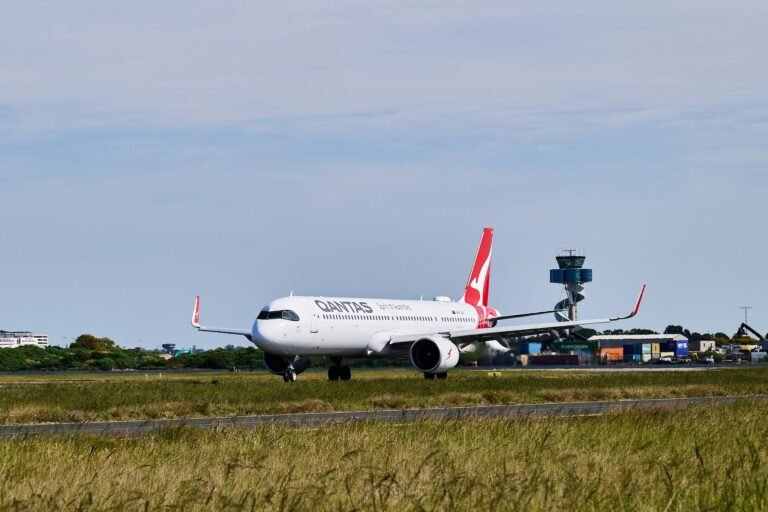
The report identified limited competition as another major characteristic of Australia’s regional aviation sector. More than 90% of passengers travelling on regional and remote routes flew with either Qantas Group or Virgin Australia in 2025, while 72% of routes were served by only one carrier.
The Commission found that many regional routes lack sufficient passenger demand to sustain multiple airlines. On routes carrying fewer than 50,000 passengers annually, 80% were operated by a single airline. On routes carrying between 50,000 and 150,000 passengers, 60% had only one operator, while 80% had a single dominant operator. Competition was more common on higher-volume routes, with more than 95% of routes carrying over 300,000 passengers annually served by at least two airlines.
The report also identified significant barriers preventing new airlines from entering or expanding in regional markets. These include economies of scale, established airline networks, corporate travel relationships, brand loyalty and access to airport slots. Qantas, including its QantasLink regional brand, operated 111 domestic routes in October 2025, followed by Jetstar with 65, Virgin Australia with 60 and Rex with 31.
The Commission said government assistance to individual airlines could weaken competition and protect inefficient operations. Its proposed reform direction is to focus support on maintaining regional services rather than supporting particular carriers, with assistance delivered through contestable mechanisms that encourage long-term competition and service sustainability.
Commissioner de Fontenay said, “There is no single regional aviation market. The challenges facing a remote island community are very different to those facing a large regional tourism destination or a mining centre.”
Government support and access to essential services
The Commission said government assistance should be directed towards communities and passengers who depend most on regional air travel rather than attempting to reduce fares across all routes. It highlighted the importance of aviation for healthcare, education, employment, government services, tourism and family connections, particularly in remote communities where alternative transport options are limited.
Commissioner Stokie said, “We spoke to people in communities all around Australia who told us how important air travel is for them. Government policy should focus on maintaining important connections and ensuring people can access essential services.”
The report recommends strengthening state and territory patient assisted travel schemes (PATS), which provide assistance to eligible residents who must travel for specialist consultations, diagnostic tests, medical procedures and other healthcare services unavailable in their communities. The Commission called for improvements to eligibility, coverage and access, including more consistent standards and arrangements that reduce upfront financial costs for patients.
It also proposed a transparent framework for government support of regional routes. Governments should consider subsidies or regulated operating arrangements where there is demonstrated demand, aviation is the most practical and efficient means of providing connectivity, and the market cannot deliver services at a price or service level that meets community needs. Where route regulation is necessary, the Commission proposed reverse auctions to encourage competition and identify the minimum subsidy required to deliver the specified service.
The report further recommended better targeting existing general airfare subsidy schemes towards people who would otherwise be unable to afford necessary travel. Governments should monitor these arrangements and publish information on subsidy payments to improve transparency and accountability.
Commissioner de Fontenay said, “Government assistance should focus on keeping communities connected, rather than supporting particular airlines.”
Regional airport infrastructure and funding
The Commission also examined the financial sustainability of regional airports and the way governments allocate infrastructure funding. It found that regional airports support passenger transport, healthcare, emergency response, freight and other essential services, but lower passenger volumes make it difficult for some facilities to recover operating, maintenance and infrastructure costs.
Since 2019, Australian, state and territory governments have committed more than AUD 580 million towards regional airport infrastructure. However, the Commission said existing funding arrangements are largely project-based and do not provide a clear system-wide framework for comparing airport requirements and directing investment towards the greatest public benefit.
Financial performance also varies significantly between airports. For 2024–25, Karratha Airport recorded an operating margin of 53%, followed by Gladstone at 29%, Albury at 9%, Ballina at 8%, Mildura at -5%, Dubbo at -15%, Tamworth at -26%, Broken Hill at -30% and Wagga Wagga at -39%.
The Commission recommended prioritising the minimum airport infrastructure required to preserve community connectivity and essential public functions, including aeromedical services and emergency management. Airports with sufficient passenger demand and commercial opportunities should fund their own infrastructure, while governments should coordinate contributions where responsibilities overlap.
Commissioner Stokie said, “Too often governments consider support for airports on a case-by-case basis which risks giving too much funding to some airports and not enough to others.”
The report also raised questions about the costs regional airports incur to comply with Australian Government aviation regulations, including Part 139 of the Civil Aviation Safety Regulations 1998 and the Part 139 (Aerodromes) Manual of Standards 2019. The Commission is seeking further evidence on operating and capital expenditure associated with regulatory compliance, including inspections, staffing, safety management, emergency planning and infrastructure upgrades.
Further consultation before the final report
The interim report is intended to support further public consultation and is not the Commission’s final position. It includes requests for additional information on patient assisted travel schemes, government procurement of air services, airport charges for aeromedical and government services, infrastructure funding, regulatory compliance and security screening costs.
The Commission is inviting individuals and organisations to provide further submissions by 22 December 2026. Public hearings are scheduled to take place online on 27 November, 30 November and 2 December 2026. A public webinar featuring Commissioners Catherine de Fontenay and Martin Stokie is scheduled for 17 November 2026 at 12 pm AEDT.
The Productivity Commission’s final report is due to be delivered to the Australian Government by 27 April 2027, following consideration of further submissions, public hearings and additional analysis.