News
Civil Aviation
Pilot Training
Flight School Analysis
Aviation Jobs
Training
Services
About Us
Contact Us

TSB Report Reveals Training Gaps Behind Fatal Chilliwack Flight Crash That Killed 2

Picture of Aviation Today News Desk

Aviation Today News Desk

TSB Report Reveals Training Gaps Behind Fatal Chilliwack Flight Crash That Killed 2 SEO DES: The instructor’s limited mountain flying preparation and procedural lapses, including failure to file a flight plan or flight following, were key factors SOCIAL: A fatal training flight crash near Chilliwack, British Columbia, on April 5, 2025, that killed an instructor and student has been linked to inadequate mountain flying practices, according to a final report by the Transportation Safety Board of Canada. The Cessna 172S, operated by Chinook Helicopters (1982) Ltd., deviated from its planned instrument training route and entered mountainous terrain, where it attempted a low-speed turn in a confined valley. Investigators found the aircraft failed to maintain safe altitude, slowed below stall speed, and did not use flaps during the manoeuvre, leading to a loss of control and terrain impact. The instructor’s limited mountain flying preparation, along with procedural lapses such as failure to file a flight plan and lack of flight following, were key factors. The TSB also highlighted the absence of mandatory mountain flying training requirements in Canada as a broader safety concern. Abbotsford, Canada: A fatal training flight crash near Chilliwack, British Columbia, that claimed the lives of two pilots has been linked to inadequate mountain flying practices and gaps in preparation, according to a final investigation report released by the Transportation Safety Board of Canada. The accident occurred on April 5, 2025, when a Cessna 172S (registration C-GHCC) operated by Chinook Helicopters (1982) Ltd., a flight training school based in Abbotsford, departed Abbotsford Airport for what was planned as an instrument training flight. The aircraft was carrying one instructor and one student on board, both of whom lost their lives when the aircraft crashed into mountainous terrain. According to the final investigation report, the flight departed at approximately 12:28 PM local time and initially proceeded toward the Sumas practice area, commonly used by the flight school for training. However, instead of remaining within the designated training zone, the aircraft continued significantly farther east and south into mountainous terrain near Chilliwack Lake. Investigators were unable to determine why the flight deviated from its planned instrument training profile, noting that no portion of the flight was consistent with the intended instrument exercises discussed during the pre-flight briefing. As the aircraft entered a valley surrounded by rising terrain, it continued climbing but failed to achieve a safe altitude relative to the terrain ahead. Flight data showed that the aircraft slowed while maneuvering in the confined space and initiated a turning maneuver at low airspeed. During this turn, the aircraft’s speed decreased further, dropping below the stall threshold before it entered a descending turn and collided with terrain at approximately 4,000 feet above sea level around 1:00 PM. The impact forces were severe, and the crash was not survivable. The investigation found no evidence of mechanical failure. The aircraft, manufactured in 2007 and powered by a Lycoming engine, had undergone a recent inspection just days before the accident, and post-crash examination confirmed that all systems were functioning normally prior to impact. Weather conditions were also ruled out as a contributing factor. Instead, the Transportation Safety Board of Canada identified several critical shortcomings related to mountain flying techniques and operational decision-making. The aircraft was flown along the middle of the valley rather than maintaining a position along one side, a standard safety practice intended to preserve an escape route. When the crew attempted a course reversal commonly referred to as a canyon turn they did not use the full width of the valley, further reducing the margin for manoeuvring. In addition, the turn was initiated at a relatively low airspeed, which continued to decrease during the manoeuvre. Investigators determined that the aircraft’s speed fell below its stall speed, leading to a loss of control. The report also noted that the aircraft’s flaps remained retracted during the turn, despite their potential to reduce stall speed and improve turning performance in confined terrain. A significant factor highlighted in the report was the instructor’s limited mountain flying preparation. While the instructor had accumulated over 1,600 hours of flight experience, including extensive time on the aircraft type, his exposure to mountain flying was minimal and incomplete. The investigation found no evidence that he had received practical training for performing course reversals in actual mountainous terrain. Previous familiarization flights conducted years earlier did not constitute a full mountain flying qualification. The student, meanwhile, was an experienced helicopter pilot undergoing instrument rating training and had limited experience flying fixed-wing aircraft. This flight was intended to be the final fixed-wing component of that training. The report noted no issues related to medical condition or fatigue for either occupant. Beyond the in-flight factors, the investigation also identified procedural lapses. No flight plan or flight itinerary had been filed for the flight, despite regulatory requirements for operations beyond 25 nautical miles from the departure airport. The dispatch entry for the flight was incomplete, and no dedicated flight-following personnel were assigned on the day of the occurrence, as it was a weekend. These gaps reduced oversight and delayed situational awareness regarding the aircraft’s movements. The aircraft’s emergency locator transmitter activated as designed following the crash, enabling search and rescue teams to locate the wreckage approximately two hours and forty-one minutes later. However, due to the severity of the impact, there were no survivors. In response to the accident, Chinook Helicopters (1982) Ltd. has implemented several safety measures, including enhanced dispatch procedures, mandatory documentation of routes for flights into mountainous areas, simulator-based mountain flying training for instructors, and organization-wide safety briefings. The TSB emphasized a broader safety concern in its report, noting that there is no regulatory requirement in Canada for pilots to undergo formal mountain flying training. As a result, the responsibility falls on individual pilots and operators to ensure adequate preparation. Without such training, pilots may not fully understand the risks associated with confined-area manoeuvres in mountainous terrain or possess the skills required to execute them safely.
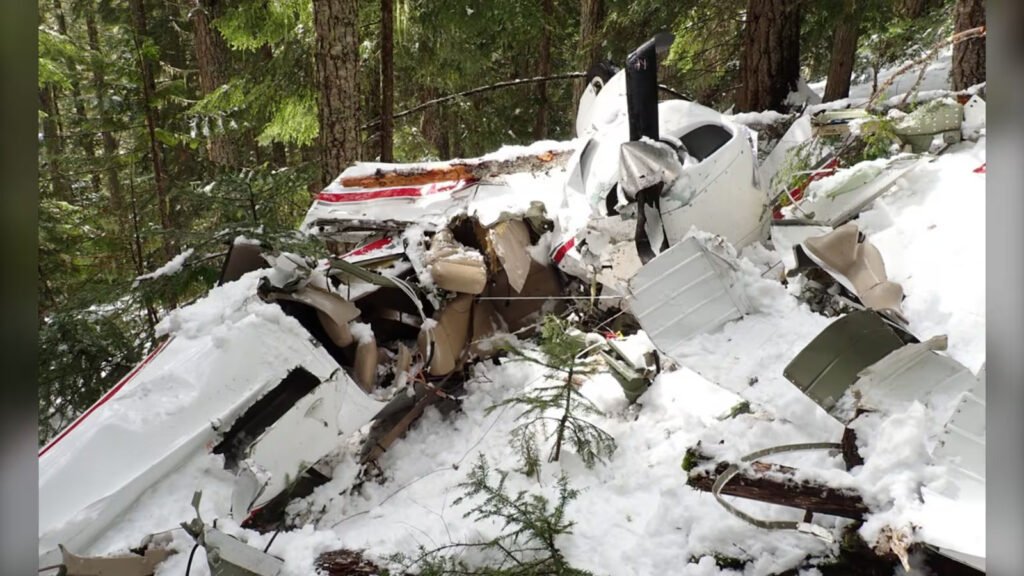
Image: TSB

Abbotsford, Canada: A fatal training flight crash near Chilliwack, British Columbia, that claimed the lives of two pilots has been linked to inadequate mountain flying practices and gaps in preparation, according to a final investigation report released by the Transportation Safety Board of Canada.

The accident occurred on April 5, 2025, when a Cessna 172S (registration C-GHCC) operated by Chinook Helicopters (1982) Ltd., a flight training school based in Abbotsford, departed Abbotsford Airport for what was planned as an instrument training flight. The aircraft was carrying one instructor and one student on board, both of whom lost their lives when the aircraft crashed into mountainous terrain.

According to the final investigation report, the flight departed at approximately 12:28 PM local time and initially proceeded toward the Sumas practice area, commonly used by the flight school for training. However, instead of remaining within the designated training zone, the aircraft continued significantly farther east and south into mountainous terrain near Chilliwack Lake. Investigators were unable to determine why the flight deviated from its planned instrument training profile, noting that no portion of the flight was consistent with the intended instrument exercises discussed during the pre-flight briefing.
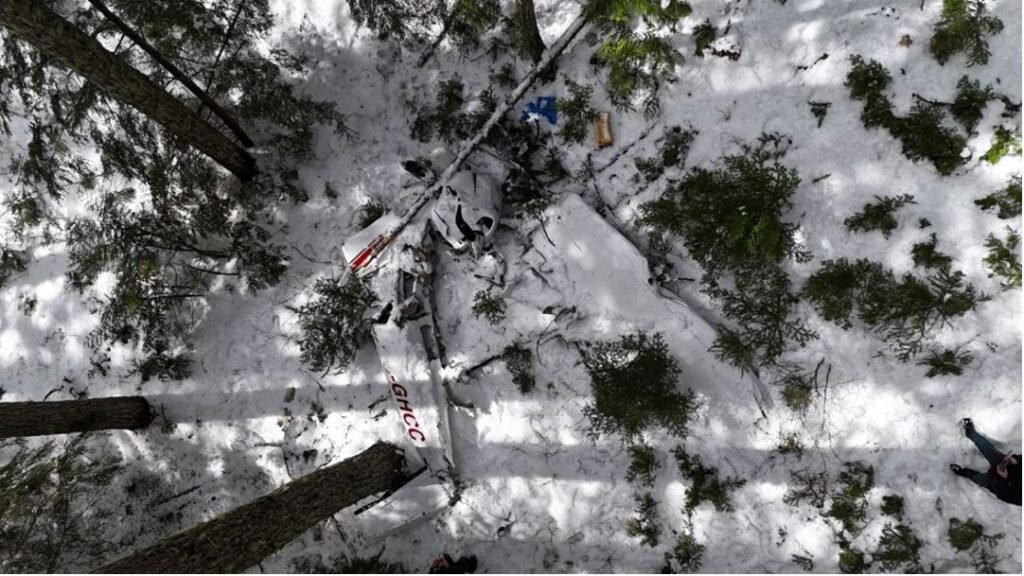
Image: TSB

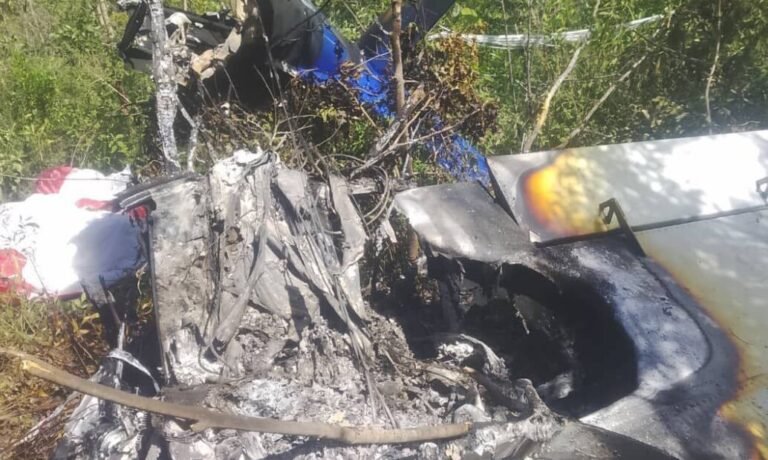
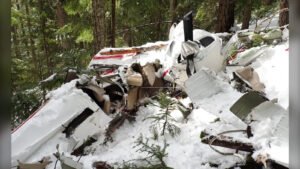
As the aircraft entered a valley surrounded by rising terrain, it continued climbing but failed to achieve a safe altitude relative to the terrain ahead. Flight data showed that the aircraft slowed while maneuvering in the confined space and initiated a turning maneuver at low airspeed. During this turn, the aircraft’s speed decreased further, dropping below the stall threshold before it entered a descending turn and collided with terrain at approximately 4,000 feet above sea level around 1:00 PM. The impact forces were severe, and the crash was not survivable.

The investigation found no evidence of mechanical failure. The aircraft, manufactured in 2007 and powered by a Lycoming engine, had undergone a recent inspection just days before the accident, and post-crash examination confirmed that all systems were functioning normally prior to impact. Weather conditions were also ruled out as a contributing factor.

Instead, the Transportation Safety Board of Canada identified several critical shortcomings related to mountain flying techniques and operational decision-making. The aircraft was flown along the middle of the valley rather than maintaining a position along one side, a standard safety practice intended to preserve an escape route. When the crew attempted a course reversal commonly referred to as a canyon turn they did not use the full width of the valley, further reducing the margin for manoeuvring.
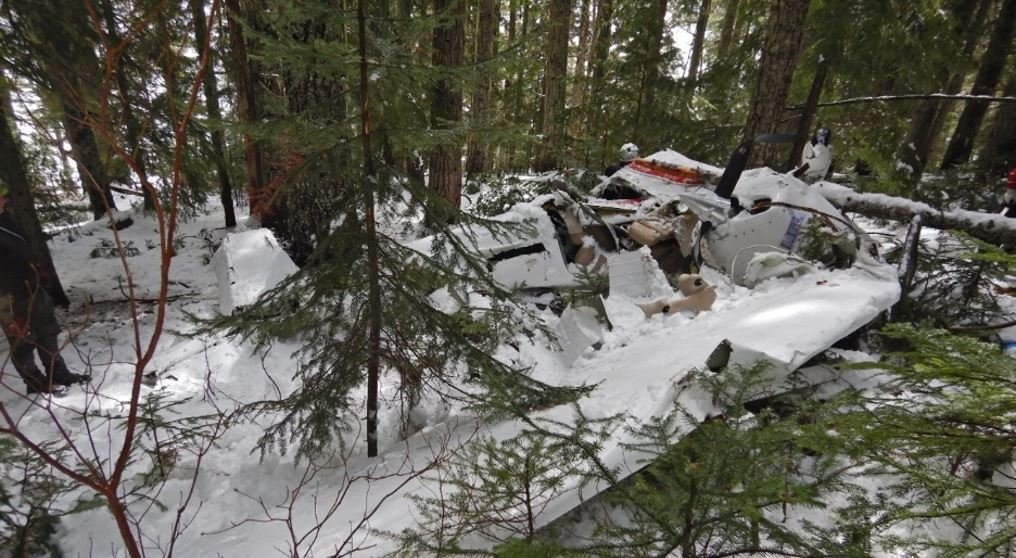
Image: TSB

In addition, the turn was initiated at a relatively low airspeed, which continued to decrease during the manoeuvre. Investigators determined that the aircraft’s speed fell below its stall speed, leading to a loss of control. The report also noted that the aircraft’s flaps remained retracted during the turn, despite their potential to reduce stall speed and improve turning performance in confined terrain.

A significant factor highlighted in the report was the instructor’s limited mountain flying preparation. While the instructor had accumulated over 1,600 hours of flight experience, including extensive time on the aircraft type, his exposure to mountain flying was minimal and incomplete. The investigation found no evidence that he had received practical training for performing course reversals in actual mountainous terrain. Previous familiarization flights conducted years earlier did not constitute a full mountain flying qualification.

The student, meanwhile, was an experienced helicopter pilot undergoing instrument rating training and had limited experience flying fixed-wing aircraft. This flight was intended to be the final fixed-wing component of that training. The report noted no issues related to medical condition or fatigue for either occupant.

Beyond the in-flight factors, the investigation also identified procedural lapses. No flight plan or flight itinerary had been filed for the flight, despite regulatory requirements for operations beyond 25 nautical miles from the departure airport. The dispatch entry for the flight was incomplete, and no dedicated flight-following personnel were assigned on the day of the occurrence, as it was a weekend. These gaps reduced oversight and delayed situational awareness regarding the aircraft’s movements.

The aircraft’s emergency locator transmitter activated as designed following the crash, enabling search and rescue teams to locate the wreckage approximately two hours and forty-one minutes later. However, due to the severity of the impact, there were no survivors.

In response to the accident, Chinook Helicopters (1982) Ltd. has implemented several safety measures, including enhanced dispatch procedures, mandatory documentation of routes for flights into mountainous areas, simulator-based mountain flying training for instructors, and organization-wide safety briefings.

The TSB emphasized a broader safety concern in its report, noting that there is no regulatory requirement in Canada for pilots to undergo formal mountain flying training. As a result, the responsibility falls on individual pilots and operators to ensure adequate preparation. Without such training, pilots may not fully understand the risks associated with confined-area manoeuvres in mountainous terrain or possess the skills required to execute them safely.
Leave a Comment

Subscribe to our Newsletter

Recent News

error: Unauthorized copying is not permitted