News
Civil Aviation
Pilot Training
Flight School Analysis
Aviation Jobs
Training
Services
About Us
Contact Us

NTSB Preliminary Report Finds Bird Strike Evidence In Fatal Hudson River Helicopter Crash

Picture of Aviation Today News Desk

Aviation Today News Desk

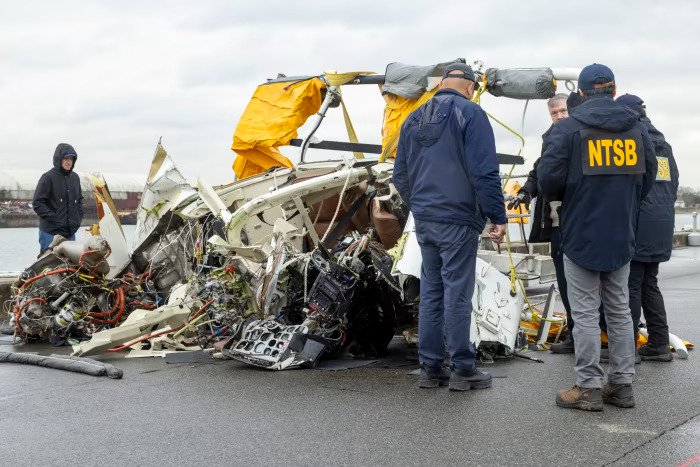
New Jersey, United States: The US National Transportation Safety Board (NTSB) has released its preliminary report into the fatal April 10, 2025 crash of a Bell 206L-4 helicopter (registration N216MH) that broke apart in flight before plunging into the Hudson River near Jersey City, New Jersey, killing all six people on board. The report, published by the NTSB on July 16, 2026, provides investigators' first official reconstruction of the accident while emphasizing that the findings are preliminary and subject to change. The accident involved a Part 91 aerial observation (air tour) flight that departed Downtown Manhattan/Wall Street Heliport (JRB) at about 2:58 p.m. EDT. The helicopter was destroyed, the pilot and five passengers were fatally injured, and investigators continue examining recovered wreckage to determine the cause of the in-flight breakup. According to the preliminary report, ADS-B flight tracking data showed the helicopter initially flew south of the Statue of Liberty in a teardrop pattern before proceeding north along Manhattan's east side of the Hudson River. It continued past the George Washington Bridge, performed a U-turn, and then headed south along the New Jersey side of the river toward Jersey City. During the helicopter's final minute of flight, it approached the Holland Tunnel ventilation towers near Jersey City while flying between 625 and 650 feet above mean sea level. Investigators said the aircraft briefly climbed to 675 feet before entering a rapid descent. ADS-B data ended at 3:14:54.5 p.m., with the helicopter's final recorded altitude at 125 feet. The report states that multiple witnesses heard several loud "bangs" before seeing the helicopter break apart. Investigators also reviewed surveillance video, which captured the aircraft flying south before it suddenly separated into three major sections: the fuselage, including the engine; the main rotor system, including both rotor blades, transmission and roof-beam structure; and the tail boom with the tail rotor. The helicopter then descended uncontrollably into the Hudson River. The Smithsonian Institution's Feather Identification Laboratory determined that a mixed flock of Brant and Canada geese struck the helicopter's rotor blades and rear section. Investigators also found that a Great Black-backed Gull was struck by debris from the helicopter's tail assembly with enough force to severely damage the bird, causing one of its wings to separate before landing on a rooftop alongside other wreckage. According to the laboratory's report, which forms part of the NTSB's investigation docket, specialists identified the bird remains through comparisons with preserved feather specimens, microscopic examination of distinctive feather characteristics, and DNA analysis. The six victims included the pilot and a family of five from Spain, two parents, both employed by Siemens, and their three children. Investigators documented where the wreckage came to rest. The fuselage was found inverted in approximately 6 feet of water north of the Holland Tunnel ventilation towers. The separated main rotor assembly and tail boom were recovered farther north in approximately 30 feet of water. Additional debris was located floating on the river and on the rooftop of a transit building in Hoboken, New Jersey. The NTSB reported that the Bell 206L-4 was not equipped with onboard video or flight-data recording devices. However, photographs taken before departure showed the pilot wearing computer-augmented smart glasses capable of recording video and audio. Those glasses were not recovered, meaning investigators were unable to obtain any potential recordings from them. The pilot held a commercial pilot certificate with rotorcraft-helicopter and instrument helicopter ratings and possessed a current FAA first-class medical certificate. Records showed he had accumulated 790.2 total flight hours, including 48.6 hours in the Bell 206L-4. The report noted that he had returned to work after 10 days off under a 10-days-on/10-days-off schedule. The accident flight was the eighth sightseeing flight operated by the same pilot that day. Maintenance records reviewed by investigators indicated the helicopter most recently underwent an Event 2 progressive 300-hour inspection and a 100-hour inspection on February 27, 2025. At that inspection, the airframe had accumulated 12,975 hours, while the engine had logged 23,305 hours. By the time of the accident, the helicopter had flown approximately 50 additional hours since that maintenance event. Weather was not considered adverse at the time of the accident. Conditions at Downtown Manhattan Heliport included 10 miles visibility, broken clouds at 7,500 feet, and winds from 150 degrees at 10 knots, gusting to 18 knots, although a peak gust of 36 knots had been recorded about 30 minutes earlier. The flight was conducted under visual meteorological conditions (VMC) without a filed flight plan. The NTSB said the wreckage has been recovered and retained for additional examination as investigators continue to determine what caused the helicopter to break apart in flight. The preliminary report does not identify a probable cause, stressing that the investigation remains ongoing and that the information is subject to revision as further evidence is analyzed. The investigation is being led by Investigator-in-Charge Leah Read with participation from the Federal Aviation Administration (FAA), Bell Helicopter, Rolls-Royce, and the Transportation Safety Board of Canada. The NTSB also confirmed that its investigators traveled to the accident scene. The NTSB's investigation docket, comprising more than 2,000 pages of factual material, does not identify the cause of the accident. The final report, which will include the official probable cause, is expected later this year.
Image: NTSB

New Jersey, United States: The US National Transportation Safety Board (NTSB) has released its preliminary report into the fatal April 10, 2025 crash of a Bell 206L-4 helicopter (registration N216MH) that broke apart in flight before plunging into the Hudson River near Jersey City, New Jersey, killing all six people on board. The report, published by the NTSB on July 16, 2026, provides investigators’ first official reconstruction of the accident while emphasizing that the findings are preliminary and subject to change.

The accident involved a Part 91 aerial observation (air tour) flight that departed Downtown Manhattan/Wall Street Heliport (JRB) at about 2:58 p.m. EDT. The helicopter was destroyed, the pilot and five passengers were fatally injured, and investigators continue examining recovered wreckage to determine the cause of the in-flight breakup.

According to the preliminary report, ADS-B flight tracking data showed the helicopter initially flew south of the Statue of Liberty in a teardrop pattern before proceeding north along Manhattan’s east side of the Hudson River. It continued past the George Washington Bridge, performed a U-turn, and then headed south along the New Jersey side of the river toward Jersey City.

During the helicopter’s final minute of flight, it approached the Holland Tunnel ventilation towers near Jersey City while flying between 625 and 650 feet above mean sea level. Investigators said the aircraft briefly climbed to 675 feet before entering a rapid descent. ADS-B data ended at 3:14:54.5 p.m., with the helicopter’s final recorded altitude at 125 feet.

The report states that multiple witnesses heard several loud “bangs” before seeing the helicopter break apart. Investigators also reviewed surveillance video, which captured the aircraft flying south before it suddenly separated into three major sections: the fuselage, including the engine; the main rotor system, including both rotor blades, transmission and roof-beam structure; and the tail boom with the tail rotor. The helicopter then descended uncontrollably into the Hudson River.

The Smithsonian Institution’s Feather Identification Laboratory determined that a mixed flock of Brant and Canada geese struck the helicopter’s rotor blades and rear section. Investigators also found that a Great Black-backed Gull was struck by debris from the helicopter’s tail assembly with enough force to severely damage the bird, causing one of its wings to separate before landing on a rooftop alongside other wreckage.

According to the laboratory’s report, which forms part of the NTSB’s investigation docket, specialists identified the bird remains through comparisons with preserved feather specimens, microscopic examination of distinctive feather characteristics, and DNA analysis.

The six victims included the pilot and a family of five from Spain, two parents, both employed by Siemens, and their three children.

Investigators documented where the wreckage came to rest. The fuselage was found inverted in approximately 6 feet of water north of the Holland Tunnel ventilation towers. The separated main rotor assembly and tail boom were recovered farther north in approximately 30 feet of water. Additional debris was located floating on the river and on the rooftop of a transit building in Hoboken, New Jersey.

The NTSB reported that the Bell 206L-4 was not equipped with onboard video or flight-data recording devices. However, photographs taken before departure showed the pilot wearing computer-augmented smart glasses capable of recording video and audio. Those glasses were not recovered, meaning investigators were unable to obtain any potential recordings from them.

The pilot held a commercial pilot certificate with rotorcraft-helicopter and instrument helicopter ratings and possessed a current FAA first-class medical certificate. Records showed he had accumulated 790.2 total flight hours, including 48.6 hours in the Bell 206L-4. The report noted that he had returned to work after 10 days off under a 10-days-on/10-days-off schedule. The accident flight was the eighth sightseeing flight operated by the same pilot that day.

Maintenance records reviewed by investigators indicated the helicopter most recently underwent an Event 2 progressive 300-hour inspection and a 100-hour inspection on February 27, 2025. At that inspection, the airframe had accumulated 12,975 hours, while the engine had logged 23,305 hours. By the time of the accident, the helicopter had flown approximately 50 additional hours since that maintenance event.

Weather was not considered adverse at the time of the accident. Conditions at Downtown Manhattan Heliport included 10 miles visibility, broken clouds at 7,500 feet, and winds from 150 degrees at 10 knots, gusting to 18 knots, although a peak gust of 36 knots had been recorded about 30 minutes earlier. The flight was conducted under visual meteorological conditions (VMC) without a filed flight plan.

The NTSB said the wreckage has been recovered and retained for additional examination as investigators continue to determine what caused the helicopter to break apart in flight. The preliminary report does not identify a probable cause, stressing that the investigation remains ongoing and that the information is subject to revision as further evidence is analyzed.

The investigation is being led by Investigator-in-Charge Leah Read with participation from the Federal Aviation Administration (FAA), Bell Helicopter, Rolls-Royce, and the Transportation Safety Board of Canada. The NTSB also confirmed that its investigators traveled to the accident scene.

The NTSB’s investigation docket, comprising more than 2,000 pages of factual material, does not identify the cause of the accident. The final report, which will include the official probable cause, is expected later this year.

Leave a Comment

Subscribe to our Newsletter

Recent News

Aviation Today Perspectives