News
Civil Aviation
Pilot Training
Flight School Analysis
Aviation Jobs
Training
Services
About Us
Contact Us

ATSB Finds Fractured Landing Gear Component In Fatal DA42 Training Aircraft Crash

Picture of Aviation Today News Desk

Aviation Today News Desk

Adelaide, Australia: A fractured nose landing gear actuator has emerged as a significant focus of the Australian Transport Safety Bureau's (ATSB) investigation into the fatal Diamond DA42 training aircraft crash at Parafield Airport, South Australia, which killed two pilots and injured nine people on the ground. The findings were released on June 23, 2026, in a preliminary report into the April 29 accident involving Diamond DA42 Twin Star aircraft VH-YQP, operated by Flight Training Adelaide (FTA). The ATSB emphasized that the report is preliminary and does not determine the final cause of the accident. The aircraft departed Runway 03 Left at Parafield Airport at approximately 2:08 p.m. local time while conducting a training flight involving simulated engine-failure exercises. On board were a 24-year-old pilot under instruction and 29-year-old flight instructor Robert Hoyle. According to investigators, the aircraft initially climbed normally before CCTV footage showed it deviating left of the runway centerline. The aircraft was briefly realigned before veering left again. During the climb, the main landing gear retracted, but the nose landing gear remained extended. Approximately 27 seconds after takeoff, at about 115 feet above ground level, the instructor transmitted an "engine failure" radio call. No further transmissions were received. The aircraft continued climbing and reached a maximum recorded altitude of approximately 161 feet above ground level before entering a loss-of-control sequence. Investigators said the aircraft subsequently pitched up, rolled left, and descended steeply before colliding with a Flight Training Adelaide classroom and hangar complex. The impact triggered a major fire that destroyed the aircraft and damaged several others on the ground. Both occupants were fatally injured. Nine people on the ground sustained injuries, including several who required hospitalization. A key discovery during the wreckage examination was a fractured nose landing gear actuator rod end. ATSB investigators determined that the component had separated from the landing gear assembly. Preliminary examination found evidence of progressive fatigue cracking before the final fracture occurred. "The circumstances of the accident were consistent with pre-accident fracture of the rod end, resulting in the nose landing gear being observed down while the main gear was retracted," the ATSB stated. Investigators are examining whether the detached actuator may have interfered with the aircraft's steering and rudder control systems. The ATSB noted that Diamond Aircraft Industries had previously identified similar failures and issued mandatory service bulletins in 2013 and 2019 following other nose landing gear actuator fractures in DA42 aircraft. One previously documented occurrence described by the manufacturer involved a fractured actuator moving out of position and interacting with rudder controls, causing an uncommanded left rudder deflection. In that case, the pilot regained control after extending the landing gear. ATSB Chief Commissioner Angus Mitchell highlighted the significance of that earlier event. "In the DA42, re-extending the landing gear after take-off may not be a usual action considered by pilots, but as noted in the manufacturer's service bulletin explanation of a previous incident, this action allowed the pilot to regain aircraft control," Mitchell said. As a result of the findings, the ATSB has issued Safety Advisory Notice AO-2026-074-SAN-001 to alert DA42 operators to the increased risk of uncommanded left rudder deflection following a nose landing gear actuator fracture. The investigation is also focusing on the aircraft's engines. Examination of the wreckage found that the left engine showed no indications of producing power at impact, while the left propeller was found in the feathered position. Investigators have not yet determined whether the engine issue was genuine, simulated as part of the training exercise, or developed during the flight. The ATSB stated that multiple scenarios remain under consideration. The preliminary report also highlighted that Flight Training Adelaide's procedures required simulated engine-failure exercises after takeoff to be conducted no lower than 400 feet above ground level. The accident aircraft never exceeded 161 feet. To date, investigators have examined the wreckage, reviewed maintenance and operational records, obtained air traffic control data, analyzed ADS-B flight tracking information, collected CCTV footage, and interviewed witnesses. Further work will include detailed metallurgical examination of the fractured actuator component, engine analysis, review of recorded data, maintenance documentation, operational procedures, survivability considerations, and comparisons with related occurrences. The ATSB stressed that its role is to improve transport safety rather than assign blame. "The ATSB is also considering other scenarios to explain the accident sequence," the bureau said. The investigation remains active, and a final report is expected following completion of the technical analysis. The ATSB said any critical safety issues identified before then will be communicated immediately to relevant parties so corrective action can be taken.
Image: ATSB

Adelaide, Australia: A fractured nose landing gear actuator has emerged as a significant focus of the Australian Transport Safety Bureau’s (ATSB) investigation into the fatal Diamond DA42 training aircraft crash at Parafield Airport, South Australia, which killed two pilots and injured nine people on the ground.

The findings were released on June 23, 2026, in a preliminary report into the April 29 accident involving Diamond DA42 Twin Star aircraft VH-YQP, operated by Flight Training Adelaide (FTA). The ATSB emphasized that the report is preliminary and does not determine the final cause of the accident.

The aircraft departed Runway 03 Left at Parafield Airport at approximately 2:08 p.m. local time while conducting a training flight involving simulated engine-failure exercises. On board were a 24-year-old pilot under instruction and 29-year-old flight instructor Robert Hoyle.

According to investigators, the aircraft initially climbed normally before CCTV footage showed it deviating left of the runway centerline. The aircraft was briefly realigned before veering left again. During the climb, the main landing gear retracted, but the nose landing gear remained extended.

Approximately 27 seconds after takeoff, at about 115 feet above ground level, the instructor transmitted an “engine failure” radio call. No further transmissions were received.

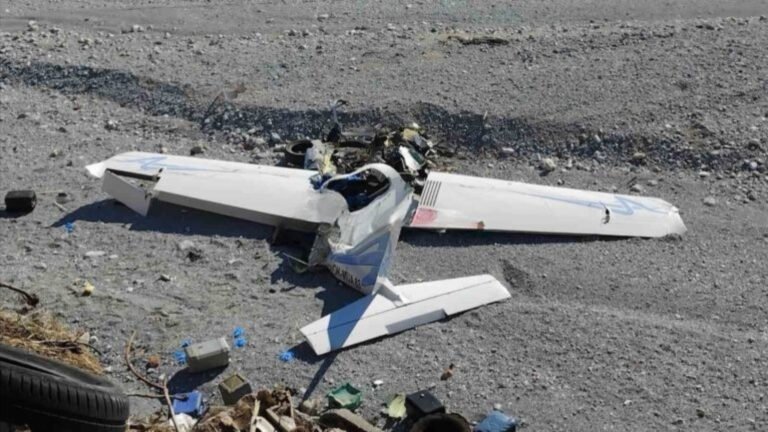
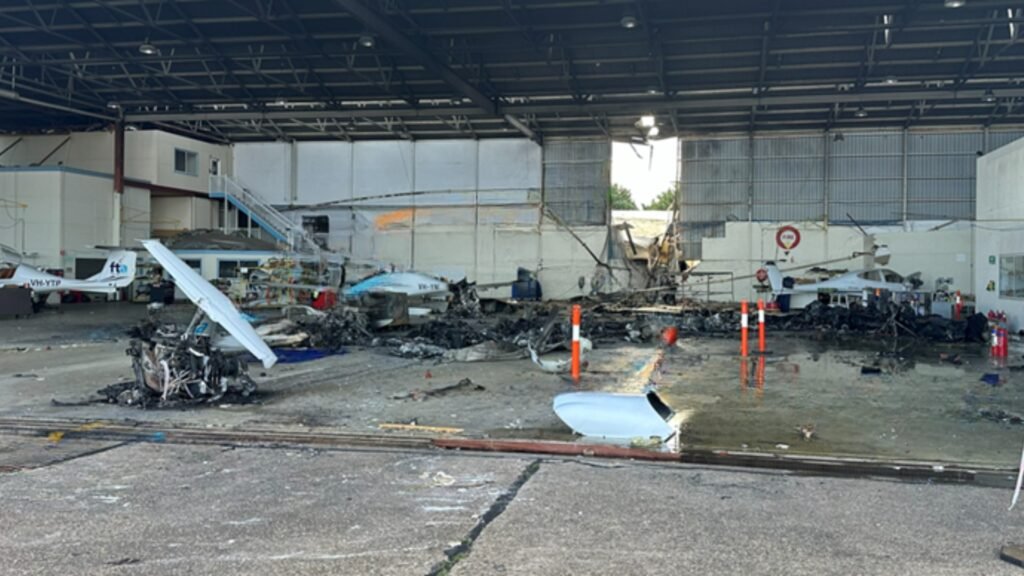
The aircraft continued climbing and reached a maximum recorded altitude of approximately 161 feet above ground level before entering a loss-of-control sequence. Investigators said the aircraft subsequently pitched up, rolled left, and descended steeply before colliding with a Flight Training Adelaide classroom and hangar complex. The impact triggered a major fire that destroyed the aircraft and damaged several others on the ground.

Both occupants were fatally injured. Nine people on the ground sustained injuries, including several who required hospitalization.

A key discovery during the wreckage examination was a fractured nose landing gear actuator rod end. ATSB investigators determined that the component had separated from the landing gear assembly. Preliminary examination found evidence of progressive fatigue cracking before the final fracture occurred.

“The circumstances of the accident were consistent with pre-accident fracture of the rod end, resulting in the nose landing gear being observed down while the main gear was retracted,” the ATSB stated.

Investigators are examining whether the detached actuator may have interfered with the aircraft’s steering and rudder control systems.

The ATSB noted that Diamond Aircraft Industries had previously identified similar failures and issued mandatory service bulletins in 2013 and 2019 following other nose landing gear actuator fractures in DA42 aircraft.

One previously documented occurrence described by the manufacturer involved a fractured actuator moving out of position and interacting with rudder controls, causing an uncommanded left rudder deflection. In that case, the pilot regained control after extending the landing gear.

ATSB Chief Commissioner Angus Mitchell highlighted the significance of that earlier event.

“In the DA42, re-extending the landing gear after take-off may not be a usual action considered by pilots, but as noted in the manufacturer’s service bulletin explanation of a previous incident, this action allowed the pilot to regain aircraft control,” Mitchell said.

As a result of the findings, the ATSB has issued Safety Advisory Notice AO-2026-074-SAN-001 to alert DA42 operators to the increased risk of uncommanded left rudder deflection following a nose landing gear actuator fracture.

The investigation is also focusing on the aircraft’s engines. Examination of the wreckage found that the left engine showed no indications of producing power at impact, while the left propeller was found in the feathered position.

Investigators have not yet determined whether the engine issue was genuine, simulated as part of the training exercise, or developed during the flight. The ATSB stated that multiple scenarios remain under consideration.

The preliminary report also highlighted that Flight Training Adelaide’s procedures required simulated engine-failure exercises after takeoff to be conducted no lower than 400 feet above ground level. The accident aircraft never exceeded 161 feet.

To date, investigators have examined the wreckage, reviewed maintenance and operational records, obtained air traffic control data, analyzed ADS-B flight tracking information, collected CCTV footage, and interviewed witnesses.

Further work will include detailed metallurgical examination of the fractured actuator component, engine analysis, review of recorded data, maintenance documentation, operational procedures, survivability considerations, and comparisons with related occurrences.

The ATSB stressed that its role is to improve transport safety rather than assign blame. “The ATSB is also considering other scenarios to explain the accident sequence,” the bureau said.

The investigation remains active, and a final report is expected following completion of the technical analysis. The ATSB said any critical safety issues identified before then will be communicated immediately to relevant parties so corrective action can be taken.

Leave a Comment

Subscribe to our Newsletter

Recent News