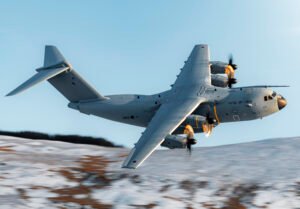
New Delhi, India: India is targeting its first Made-in-India civilian aircraft within two years through a joint venture, Civil Aviation Minister K Rammohan Naidu said on October 6, 2026, while also holding discussions with airlines and oil marketing companies over rising aviation turbine fuel (ATF) prices.
Speaking at an Indian Foundation for Quality Management (IQFM) symposium in New Delhi, Naidu said India’s rapidly expanding aviation market provides an opportunity to build a stronger domestic aircraft manufacturing ecosystem. “Within two years, we will be able to have Made-In-India civilian aircraft” through a joint venture, he said.
Naidu did not disclose the proposed joint-venture partner, aircraft type, investment, manufacturing location or production programme. The government is expected to work on creating an enabling policy framework, while industry will need to develop the required technology, materials, skilled workforce and manufacturing capabilities.
The proposed programme comes as Indian airlines continue to expand their fleets. Indian carriers have more than 1,600 aircraft on order worth about $100 billion, while the country’s airlines currently operate around 850 aircraft. India has about 165 airports, with more than 100 additional airports expected to be developed over the next decade.
The government is also seeking to move India’s aerospace industry further up the global value chain. Airbus and Boeing currently source about $4 billion worth of components and services from India, and the government wants this to reach $10 billion by the end of the decade. Naidu said global manufacturers are increasingly working with Indian MSMEs, creating opportunities for greater domestic participation in aircraft production and aerospace supply chains.
Naidu also said India is examining the possibility of manufacturing civil aircraft engines domestically, although he acknowledged that engine development would take considerable time. The broader objective is to move beyond component manufacturing towards higher-value aircraft and propulsion capabilities.
The two-year target therefore represents a significant shift in India’s civil aviation ambitions, although the programme remains at an early stage, with key details such as the aircraft design, joint-venture partner, certification pathway, production scale and financing yet to be announced.
Separately, Naidu said the government is discussing the sharp rise in ATF prices with airlines and Oil Marketing Companies amid the West Asia crisis. “One of the most important things is how the West Asia crisis is putting a big burden on ATF prices. We are in discussions with airlines and OMCs,” he said.
The Federation of Indian Airlines, representing Air India, IndiGo and SpiceJet, has separately sought changes to ATF pricing and tax structures, along with relief on airport charges. The government is also examining whether to revive the ₹10,000-crore ATF Price Stabilisation Fund approved earlier this year.
The immediate fuel-cost discussions come alongside the longer-term manufacturing push, as India seeks to expand its aviation infrastructure and fleet while building a domestic aircraft industry capable of producing civilian aircraft.