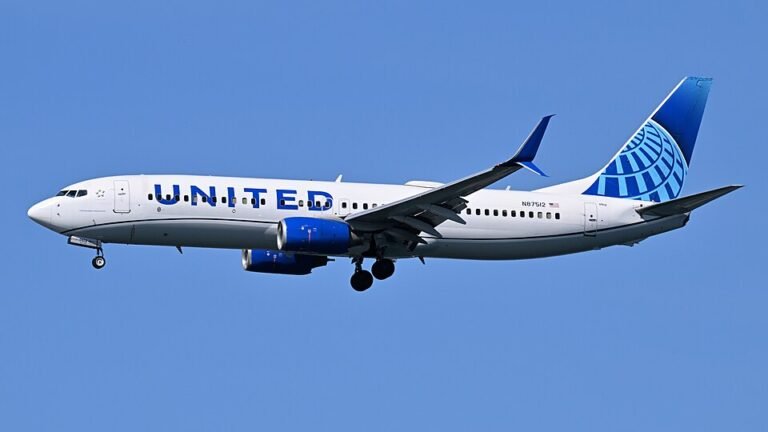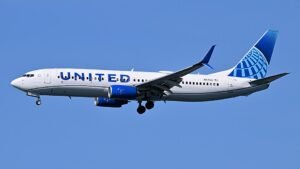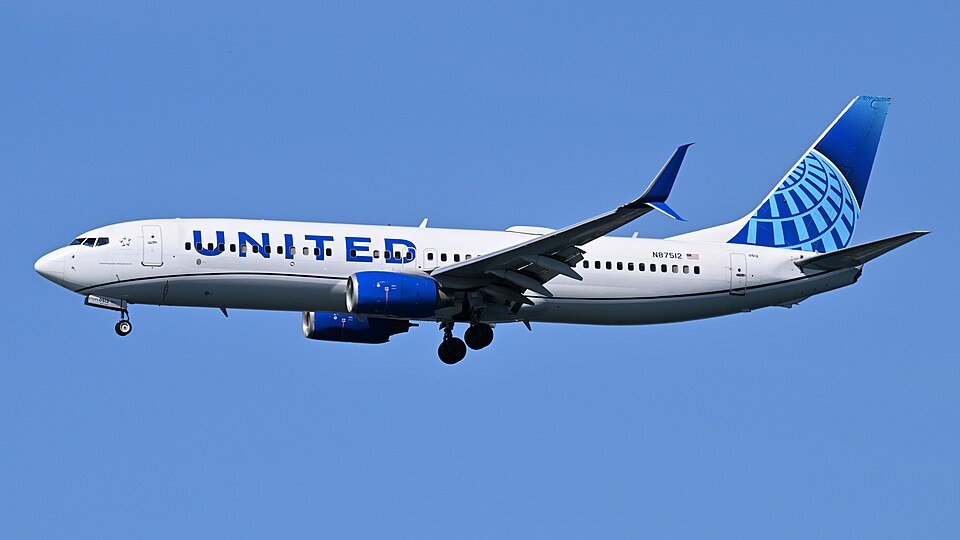
Santa Ana, United States: A United Airlines passenger jet narrowly avoided a mid-air collision with a U.S. Army Black Hawk helicopter while approaching John Wayne Airport on Tuesday night, prompting a federal safety investigation.
The incident occurred at approximately 8:40 p.m. on March 24, 2026, when United Airlines Flight 589, a Boeing 737-800 arriving from San Francisco, was on final approach when a military helicopter crossed directly in front of its flight path, according to the Federal Aviation Administration.
Preliminary radar data shows the two aircraft came within roughly 525 feet vertically and about 1,400 feet horizontally, distances significantly below standard separation requirements.
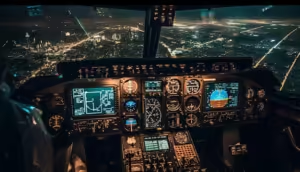
Air traffic controllers had alerted the flight crew to nearby helicopter activity moments before the collision. The pilots visually identified the aircraft and received a Traffic Collision Avoidance System (TCAS) resolution advisory, prompting immediate corrective action. The crew leveled the aircraft and continued the approach, landing safely without incident.
The aircraft was carrying 162 passengers and 6 crew members. No injuries were reported, and the helicopter also landed safely.
The California Army National Guard confirmed the helicopter was conducting a routine training mission and was operating under Visual Flight Rules along a designated route while maintaining communication with air traffic control.
The FAA has launched a formal investigation into the near-miss, focusing on whether existing safety protocols were followed and if the incident violated recently implemented restrictions on “visual separation” between aircraft near major airports.
The agency has increasingly moved away from reliance on pilot visual separation in congested airspace, requiring controllers to ensure radar-based spacing after a series of high-risk incidents involving helicopters and commercial aircraft.
Investigators are also reviewing air traffic control procedures, coordination between military and civilian aircraft, and whether systemic safeguards functioned as intended prior to the activation of onboard collision-avoidance systems.
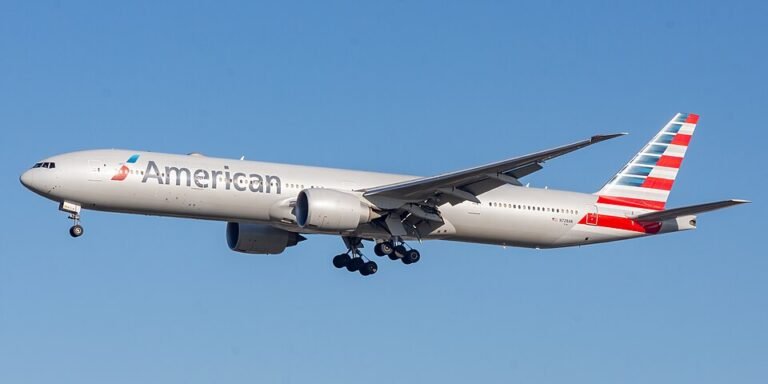
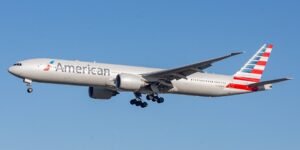
The incident comes after the fatal mid-air collision on January 29, 2025, near Ronald Reagan Washington National Airport involving American Airlines Flight 5342 and a U.S. Army Sikorsky UH-60 Black Hawk during final approach over the Potomac River. The helicopter, on a night training mission, entered the jet’s flight path at around 300 feet, leading to a collision that killed all 67 people onboard both aircraft.
The National Transportation Safety Board concluded the crash resulted from systemic failures and human error, including the helicopter’s altitude deviation, possible misidentification of traffic, communication gaps, and air traffic control’s reliance on visual separation. The report also cited flawed airspace design and inactive tracking systems, stating the accident was entirely preventable and highlighting the need for stricter separation rules and better coordination between military and civilian operations.