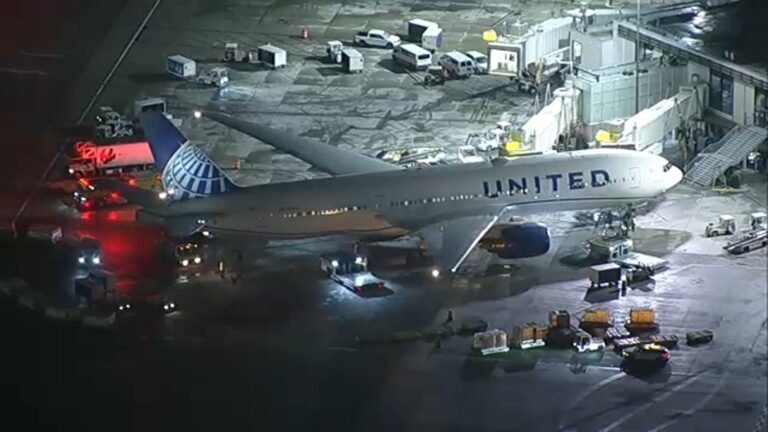
Kansai, Japan: A Japan Airlines Boeing 737 aircraft operating from Shanghai to Tokyo was forced to make an emergency landing on June 30 after a sudden cabin pressurization warning prompted a rapid descent. The flight landed safely at Kansai International Airport with no reported injuries.
Flight JL8696, operated by Spring Japan on behalf of Japan Airlines, departed Shanghai Pudong International Airport (PVG) at approximately 17:55 local time on Sunday, June 30. The aircraft, a Boeing 737-800, was en route to Tokyo Narita International Airport (NRT) carrying 191 people, including passengers and crew.
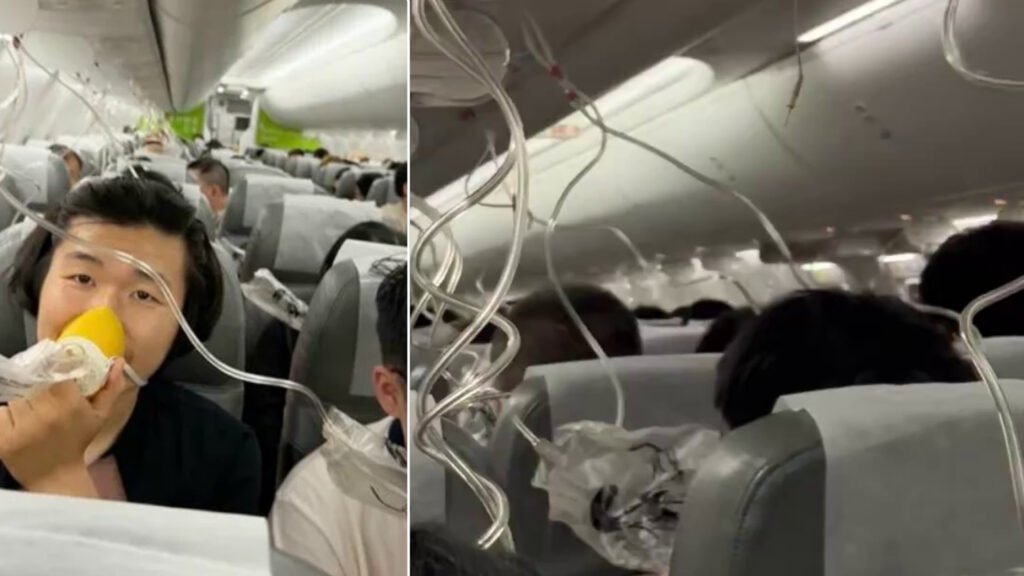
Approximately halfway into the flight, while cruising at 36,000 feet, the flight crew received a warning indicating a cabin pressurization failure. In response, the pilots initiated an emergency descent to 10,500 feet and deployed oxygen masks for passengers.
Emergency Descent and Diversion
Japan Airlines confirmed that the flight diverted to Kansai International Airport (KIX) and landed safely at approximately 20:50 JST. Emergency personnel were dispatched in advance of the landing but no medical intervention was necessary.
Multiple passengers later reported confusion and fear onboard during the descent, with several recounting that oxygen masks dropped from overhead compartments and cabin crew instructed them to remain calm. No injuries were reported.
Airline and Government Response
Japan Airlines issued a statement confirming that the crew followed all standard operating procedures after receiving the pressurization alert. The airline also confirmed that all passengers were accommodated overnight in hotels and provided with compensation of ¥15,000 per person for immediate needs.
The Ministry of Land, Infrastructure, Transport and Tourism (MLIT) has opened an investigation into the incident. Flight data and cockpit voice recorders were retrieved and are currently under analysis. No preliminary findings have been released as of July 3.
The aircraft involved is a Boeing 737-800, a twin-engine narrow-body jet commonly used for regional routes. Spring Japan, a subsidiary of Japan Airlines, operates a small fleet of Boeing 737 aircraft primarily for domestic and short-haul international operations.
Maintenance records for the aircraft are currently under review. The aircraft will remain grounded until the investigation is complete and safety clearance is issued.
The incident comes amid increased scrutiny of Boeing aircraft globally following several unrelated mechanical issues reported in early 2025. However, Japanese aviation authorities have not linked this event to any systemic design flaw, and investigations are currently focused on the aircraft’s pressurization control system and associated sensors.
Ongoing Investigation
Investigators from the Aircraft and Railway Accidents Investigation Commission (ARAIC), under the MLIT, are working in collaboration with Japan Airlines and Boeing representatives. The investigation will examine maintenance logs, pilot actions, and any technical anomalies in the aircraft’s environmental control system.
Further updates are expected in the coming days following a preliminary report from the investigation team.