News
Civil Aviation
Pilot Training
Flight School Analysis
Aviation Jobs
Training
Services
About Us
Contact Us

Sarla Aviation Completes Flight Testing Of India’s Heaviest Electric eVTOL Aircraft

Picture of Aviation Today News Desk

Aviation Today News Desk

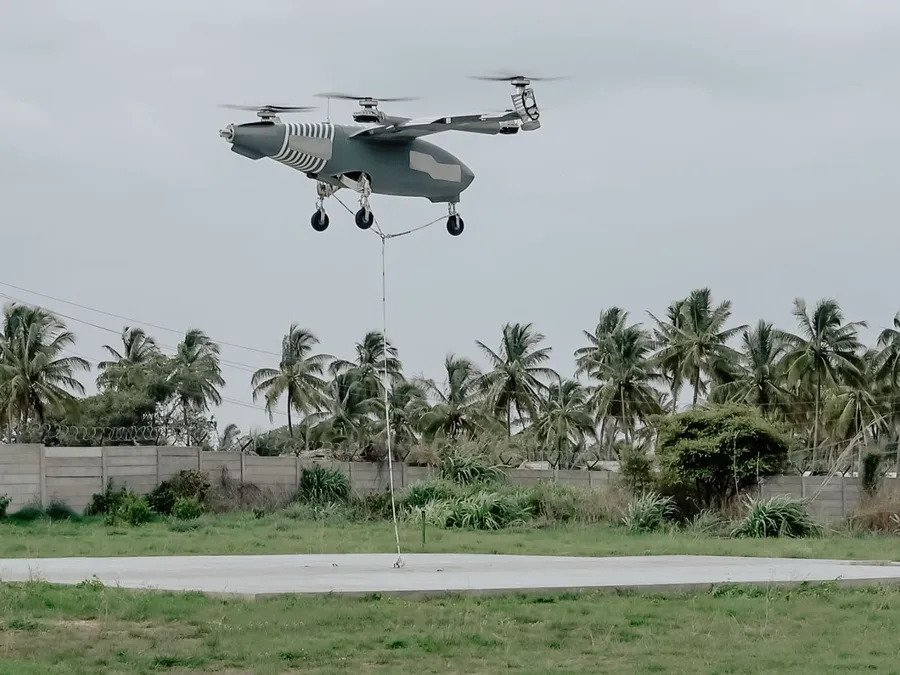
Bangalore, India: In a major milestone for India’s burgeoning electric aviation industry, Bengaluru-based urban air mobility startup Sarla Aviation has successfully wrapped up the flight-test campaign for its half-scale electric vertical take-off and landing (eVTOL) technology demonstrator, Sylla 1.0. Spanning a rigorous six-month schedule, the extensive evaluation program comprised more than 500 tests and over 18 hours of flight testing. Weighing in the 700 kg-class, the Sylla 1.0 aircraft now holds the definitive record as the heaviest fully electric aircraft ever to achieve vertical take-off in the country. Sylla 1.0 was specifically designed as a half-scale technology demonstrator to assess and validate the integration of critical aircraft systems under real-world operating environments before transitioning to a full-scale passenger platform. Throughout the extensive six-month test window, engineers scrutinized the performance and real-time interactions of several foundational elements: the electric propulsion system, distributed propulsion, battery architecture, flight-control software, landing gear, and the overall airframe as a completely integrated unit. According to official disclosures, the campaign comprehensively achieved its technical objectives, logging vital aerodynamic and engineering flight data necessary to de-risk the next stages of vehicle development. Reflecting on the milestone, Rakesh Gaonkar, Co-Founder and Chief Technology Officer (CTO) at Sarla Aviation, underscored the paradigm shift from digital models to physical flight: "Sylla 1.0 was never built simply to hover. It was built to answer engineering questions that simulations alone cannot. Flying Sylla is the moment a thousand simulations become real, validating our aircraft architecture under real flight conditions. We achieved this in under a year, on a fraction of the capital our global peers have spent, with a team that has helped build some of the world's most advanced aircraft. That combination of global engineering expertise and Indian speed of execution is our edge. Sylla has given us the data we set out to capture, and those learnings are already shaping our next-gen aircraft as we move towards transition and sustained wing-borne flight on our journey to our 6+1 air taxi 'Shunya'.” The Sylla 1.0 program has firmly secured several technological "firsts" within India's domestic aerospace sector. According to company metrics, the vehicle has established benchmarks as: The first Indian-engineered and built 700 kg-class electric aircraft capable of vertical take-off. The first domestic aircraft to operate utilizing a high-voltage 400-volt electric powertrain architecture. The first to actively demonstrate a functional distributed-propulsion wing system. Remarkably, the aircraft which features a 7.5-meter wingspan progressed from initial engineering design to being built and flown in under 12 months. Sarla Aviation notes that this aggressive development timeline positions its execution velocity ahead of or highly competitive with leading global eVTOL development tracks. Furthermore, the company successfully executed a full-stack ground testing program aligned with stringent, applicable airworthiness requirements With the data acquisition phase for Sylla 1.0 officially closed, Sarla Aviation is redirecting its engineering focus toward its next-generation technology demonstrator, Sylla 2.0. While the primary objective of the inaugural campaign focused heavily on system integration and controlled hover performance, the Sylla 2.0 platform is slated to tackle the highly complex aerodynamic challenge of "controlled transition" , the pivot between vertical lift-off and sustained, efficient wing-borne forward flight. Achieving this transition is universally viewed as a critical hurdle for future passenger eVTOL certification. All empirical flight logs harvested from the Sylla 1.0 tests will be fed directly into the upgraded demonstrator to actively mitigate technical risks before manufacturing the final commercial iteration. Ultimately, the technical insights refined through the Sylla testing track will underpin the development of "Shunya" Sarla Aviation’s flagship commercial offering. "Shunya" is envisioned as a 6+1 passenger eVTOL air taxi tailored specifically for congested urban corridors and regional mobility networks. Sarla Aviation's operational approach stands out for its high capital efficiency. The company advanced from a conceptual idea to a full-scale mock-up showcased at the Bharat Mobility Global Expo 2025, and subsequently to a fully operational, flying half-scale demonstrator, utilizing a total funding pool of less than USD 13 million. This lean, high-velocity execution framework has increasingly garnered mainstream financial backing. Notably, corporate venture arm IndiGo Ventures recently acquired an equity stake in the startup, signaling deep commercial interest from established legacy aviation players. The underlying engineering engine driving this momentum relies heavily on top-tier global talent. Sarla Aviation revealed that approximately 30% of its core engineering department consists of highly specialized aerospace professionals drawn from premier international eVTOL pioneers, including Wisk, Lilium, and Volocopter. This infusion of veteran electric aviation expertise is expected to serve as a cornerstone as the startup accelerates into its next demanding phase of aerodynamic flight testing.

Image: Sarla Aviation

Bangalore, India: In a major milestone for India’s burgeoning electric aviation industry, Bengaluru-based urban air mobility startup Sarla Aviation has successfully wrapped up the flight-test campaign for its half-scale electric vertical take-off and landing (eVTOL) technology demonstrator, Sylla 1.0.

Spanning a rigorous six-month schedule, the extensive evaluation program comprised more than 500 tests and over 18 hours of flight testing. Weighing in the 700 kg-class, the Sylla 1.0 aircraft now holds the definitive record as the heaviest fully electric aircraft ever to achieve vertical take-off in the country.

Sylla 1.0 was specifically designed as a half-scale technology demonstrator to assess and validate the integration of critical aircraft systems under real-world operating environments before transitioning to a full-scale passenger platform. Throughout the extensive six-month test window, engineers scrutinized the performance and real-time interactions of several foundational elements: the electric propulsion system, distributed propulsion, battery architecture, flight-control software, landing gear, and the overall airframe as a completely integrated unit.

According to official disclosures, the campaign comprehensively achieved its technical objectives, logging vital aerodynamic and engineering flight data necessary to de-risk the next stages of vehicle development.

Reflecting on the milestone, Rakesh Gaonkar, Co-Founder and Chief Technology Officer (CTO) at Sarla Aviation, underscored the paradigm shift from digital models to physical flight: “Sylla 1.0 was never built simply to hover. It was built to answer engineering questions that simulations alone cannot. Flying Sylla is the moment a thousand simulations become real, validating our aircraft architecture under real flight conditions.

We achieved this in under a year, on a fraction of the capital our global peers have spent, with a team that has helped build some of the world’s most advanced aircraft. That combination of global engineering expertise and Indian speed of execution is our edge. Sylla has given us the data we set out to capture, and those learnings are already shaping our next-gen aircraft as we move towards transition and sustained wing-borne flight on our journey to our 6+1 air taxi ‘Shunya’.”

The Sylla 1.0 program has firmly secured several technological “firsts” within India’s domestic aerospace sector. According to company metrics, the vehicle has established benchmarks as:

  • The first Indian-engineered and built 700 kg-class electric aircraft capable of vertical take-off.
  • The first domestic aircraft to operate utilizing a high-voltage 400-volt electric powertrain architecture.
  • The first to actively demonstrate a functional distributed-propulsion wing system.

Remarkably, the aircraft which features a 7.5-meter wingspan progressed from initial engineering design to being built and flown in under 12 months. Sarla Aviation notes that this aggressive development timeline positions its execution velocity ahead of or highly competitive with leading global eVTOL development tracks. Furthermore, the company successfully executed a full-stack ground testing program aligned with stringent, applicable airworthiness requirements

With the data acquisition phase for Sylla 1.0 officially closed, Sarla Aviation is redirecting its engineering focus toward its next-generation technology demonstrator, Sylla 2.0. While the primary objective of the inaugural campaign focused heavily on system integration and controlled hover performance, the Sylla 2.0 platform is slated to tackle the highly complex aerodynamic challenge of “controlled transition” , the pivot between vertical lift-off and sustained, efficient wing-borne forward flight. Achieving this transition is universally viewed as a critical hurdle for future passenger eVTOL certification. All empirical flight logs harvested from the Sylla 1.0 tests will be fed directly into the upgraded demonstrator to actively mitigate technical risks before manufacturing the final commercial iteration.

Ultimately, the technical insights refined through the Sylla testing track will underpin the development of “Shunya” Sarla Aviation’s flagship commercial offering. “Shunya” is envisioned as a 6+1 passenger eVTOL air taxi tailored specifically for congested urban corridors and regional mobility networks.

Sarla Aviation’s operational approach stands out for its high capital efficiency. The company advanced from a conceptual idea to a full-scale mock-up showcased at the Bharat Mobility Global Expo 2025, and subsequently to a fully operational, flying half-scale demonstrator, utilizing a total funding pool of less than USD 13 million.

This lean, high-velocity execution framework has increasingly garnered mainstream financial backing. Notably, corporate venture arm IndiGo Ventures recently acquired an equity stake in the startup, signaling deep commercial interest from established legacy aviation players.

The underlying engineering engine driving this momentum relies heavily on top-tier global talent. Sarla Aviation revealed that approximately 30% of its core engineering department consists of highly specialized aerospace professionals drawn from premier international eVTOL pioneers, including Wisk, Lilium, and Volocopter. This infusion of veteran electric aviation expertise is expected to serve as a cornerstone as the startup accelerates into its next demanding phase of aerodynamic flight testing.


Leave a Comment

Subscribe to our Newsletter

Recent News