Mumbai, India: Navi Mumbai International Airport (NMIA) has officially commenced commercial flight operations, marking a major milestone in India’s aviation infrastructure expansion and easing long-standing capacity constraints in the Mumbai metropolitan region.
On its first full day of scheduled operations, the airport handled 48 domestic flights, collectively serving more than 4,000 passengers, according to officials and airline data. The launch positions Mumbai as India’s first true dual-airport metropolitan region, complementing the existing Chhatrapati Shivaji Maharaj International Airport (CSMIA).
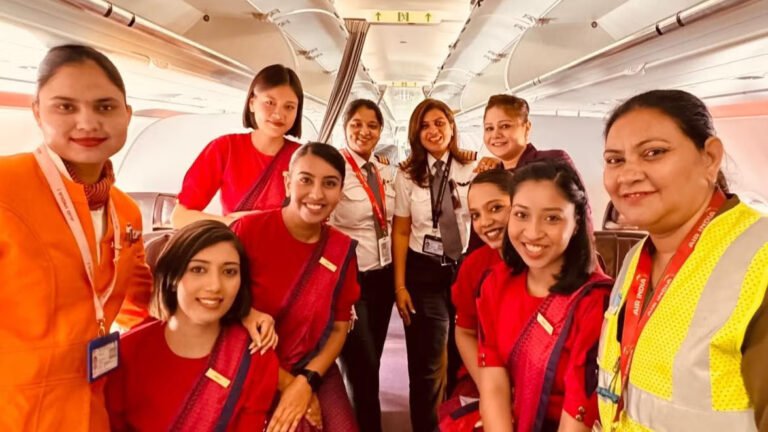
The inaugural commercial arrival was an IndiGo flight from Bengaluru, which landed earlier in the day and received a ceremonial water salute. Other carriers operating from NMIA on day one included Air India Express, Akasa Air, and Star Air, offering connectivity to multiple domestic destinations.
Initial operations at NMIA are being conducted on a limited daily schedule, with authorities confirming that flight volumes and operating hours will be gradually expanded in the coming weeks. The airport is expected to transition to round-the-clock operations once infrastructure readiness and air traffic coordination are fully optimized.
Designed to significantly decongest CSMIA, NMIA will play a central role in accommodating Mumbai’s rapidly growing air travel demand. Once fully developed, the airport is projected to handle tens of millions of passengers annually, with future phases including international passenger services and dedicated cargo operations.
Navi Mumbai International Airport is positioning itself as more than a transport hub by embedding culture, hospitality and leisure into the passenger journey from day one. Its non-aeronautical ecosystem introduces India-first concepts such as locally rooted dining brands, personalised meet-and-greet services, an in-terminal transit hotel and immersive cultural zones, reflecting a shift toward experience-led airport design.
By integrating rest, retail, art and public spaces into its phased rollout, NMIA aims to redefine how airports engage with both travellers and the city, treating the airport as an extension of urban life rather than a standalone transit facility
Aviation and government officials have described the launch as a transformational step for the region’s mobility ecosystem. By redistributing domestic traffic between two airports, authorities expect improved operational efficiency, reduced congestion, and better on-time performance for airlines operating in and out of Mumbai.
The airport is also expected to act as a catalyst for economic development in Navi Mumbai, supporting employment generation, real estate growth, and logistics expansion.