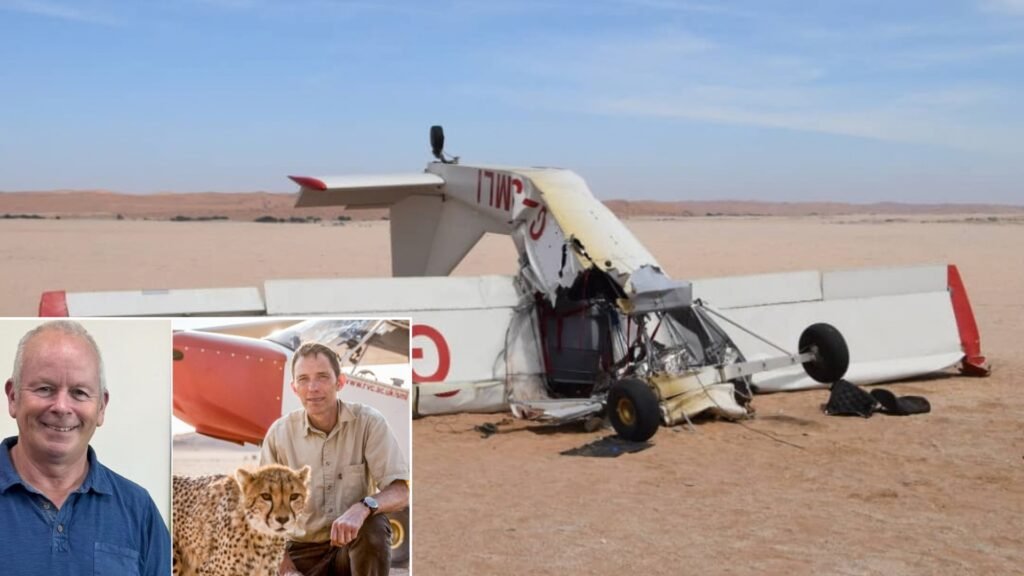
Walvis Bay, Namibia: A British wildlife scientist and a pilot were killed when a light aircraft crashed near a desert research centre in Namibia during a wildlife-tracking mission, authorities confirmed.
The accident occurred on Wednesday, 4 March 2026, near the Gobabeb Research Centre in the Namib Desert, about 100 km from Walvis Bay. The aircraft involved was a British-registered Groppo light aircraft (Groppo-Trail ultralight type) conducting a research observation flight over the dunes.
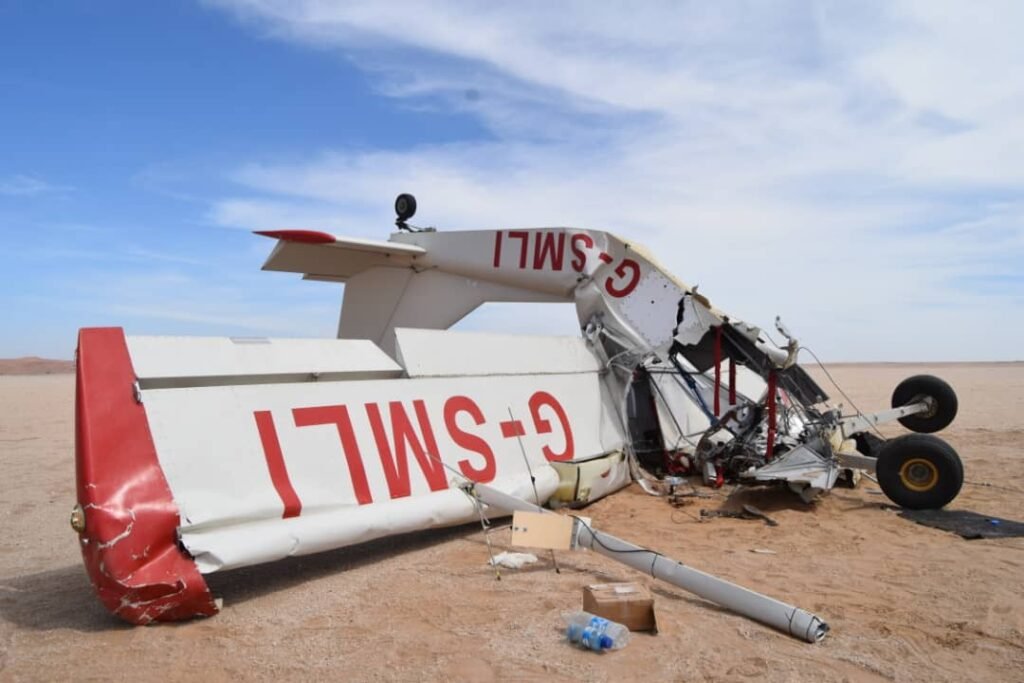
According to Namibian police and investigators, the aircraft took off at around 17:00 local time to locate radio-collared antelope being monitored as part of a wildlife research project. The flight was expected to return shortly afterward.
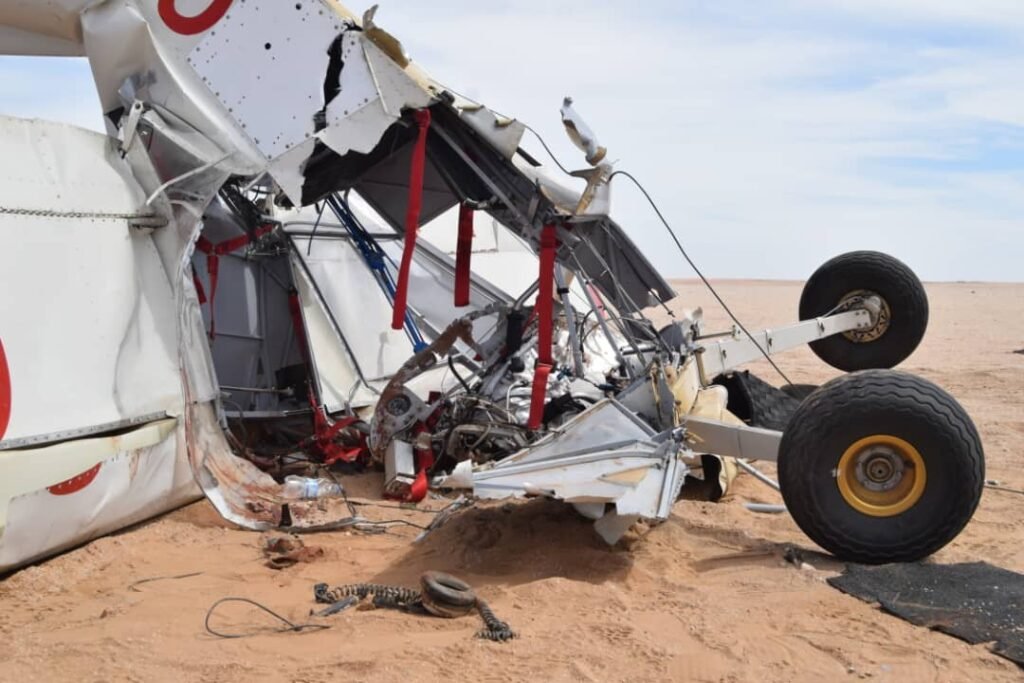
When the aircraft failed to return by about 19:00, a colleague at the research station raised the alarm and initiated a search in the surrounding desert. The wreckage was soon located just metres from the Gobabeb airstrip, with debris scattered around the crash site.
Authorities said the two occupants likely died instantly on impact. Investigators from Namibia’s Directorate of Aircraft Accident Investigations are examining the wreckage and flight circumstances, but a final cause has not yet been determined.
Police identified the victims as Professor Alan Martin Wilson, 62, a British wildlife scientist, and pilot Neil Thomas Oakman.
Wilson was a prominent researcher affiliated with the Royal Veterinary College in the United Kingdom, known internationally for his work on animal biomechanics and wildlife tracking. His research focused on understanding how large animals move and survive in extreme environments, often using tracking collars and aerial observation.
He also appeared in several BBC natural history documentaries, helping explain animal locomotion and wildlife behaviour to broader audiences.
Wilson and his colleagues had arrived in Namibia in February 2026 to conduct field research on oryx and other desert antelope, tracking animals fitted with monitoring collars in the Namib dunes. The flight on 4 March was part of an aerial observation mission linked to the study.
The Gobabeb Research Centre, which collaborated on the project, described the deceased researchers as “outstanding scientists” and expressed shock at the tragedy. In a statement, the centre extended condolences to their families, friends and colleagues following the fatal accident.
Mr. Oakman was a retired airline pilot who had trained commercial pilots for Ryanair. He was the chief pilot of 501 Squadron’s former Battle of Britain Hurricane VZ497 and flew it at displays.
Investigators confirmed the aircraft was registered in the United Kingdom and operated as a small research platform. Officials from Namibia’s accident investigation authority visited the crash site and began examining the wreckage and flight details.
Authorities said a formal investigation report will be released once the examination is completed.
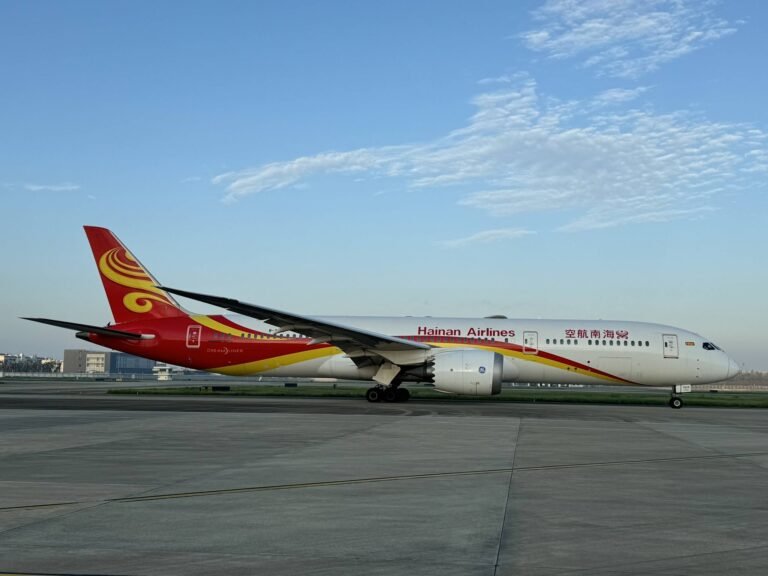

![Washington, United States: A United Airlines flight bound for Guatemala City made an emergency diversion to Washington Dulles International Airport after a passenger allegedly attempted to open a cabin door at cruising altitude and assaulted another traveler, according to air traffic control communications and federal authorities. The incident involved United Airlines Flight 1551, operated by a Boeing 737 MAX 8, which departed from Newark Liberty International Airport on Thursday evening carrying 145 passengers and six crew members. The aircraft had been en route to Guatemala City when the crew declared an emergency and diverted to Washington Dulles International Airport in Virginia. According to audio between the flight crew and air traffic controllers, the pilot informed controllers that the disruptive passenger attempted to open Door 2L while the aircraft was cruising at approximately 36,000 feet. The pilot also reported that the passenger later assaulted another individual onboard. During the exchange, the tower asked the crew which door the passenger had attempted to access. The pilot responded: “Door 2L at 36,000 feet and then [the passenger] assaulted a fellow passenger.” When controllers asked whether there were any injuries onboard, the pilot replied: “Not to our knowledge.” The aircraft landed safely at Washington Dulles at approximately 8:38 p.m. local time. Law enforcement and emergency personnel met the aircraft upon arrival. The FBI later confirmed that agents responded to the incident at the airport, although the agency did not immediately release additional details regarding the passenger’s identity, possible charges, or whether the individual was taken into federal custody. Flight tracking data showed the aircraft remained airborne for a period before diverting toward the Washington region instead of continuing south toward Guatemala. The diversion temporarily disrupted the scheduled international service but no injuries among passengers or crew were officially reported. United Airlines had not issued a detailed public statement at the time of publication regarding the circumstances surrounding the diversion or the status of the passenger involved. Federal authorities are expected to review crew reports, passenger statements, and onboard evidence as part of the investigation.](https://aviationtoday.in/wp-content/uploads/2026/05/AVIATION-TODAY-UNITEDV-AIRLINES-RUDE-PASSENGER-768x432.jpg)


![Washington, United States: A United Airlines flight bound for Guatemala City made an emergency diversion to Washington Dulles International Airport after a passenger allegedly attempted to open a cabin door at cruising altitude and assaulted another traveler, according to air traffic control communications and federal authorities. The incident involved United Airlines Flight 1551, operated by a Boeing 737 MAX 8, which departed from Newark Liberty International Airport on Thursday evening carrying 145 passengers and six crew members. The aircraft had been en route to Guatemala City when the crew declared an emergency and diverted to Washington Dulles International Airport in Virginia. According to audio between the flight crew and air traffic controllers, the pilot informed controllers that the disruptive passenger attempted to open Door 2L while the aircraft was cruising at approximately 36,000 feet. The pilot also reported that the passenger later assaulted another individual onboard. During the exchange, the tower asked the crew which door the passenger had attempted to access. The pilot responded: “Door 2L at 36,000 feet and then [the passenger] assaulted a fellow passenger.” When controllers asked whether there were any injuries onboard, the pilot replied: “Not to our knowledge.” The aircraft landed safely at Washington Dulles at approximately 8:38 p.m. local time. Law enforcement and emergency personnel met the aircraft upon arrival. The FBI later confirmed that agents responded to the incident at the airport, although the agency did not immediately release additional details regarding the passenger’s identity, possible charges, or whether the individual was taken into federal custody. Flight tracking data showed the aircraft remained airborne for a period before diverting toward the Washington region instead of continuing south toward Guatemala. The diversion temporarily disrupted the scheduled international service but no injuries among passengers or crew were officially reported. United Airlines had not issued a detailed public statement at the time of publication regarding the circumstances surrounding the diversion or the status of the passenger involved. Federal authorities are expected to review crew reports, passenger statements, and onboard evidence as part of the investigation.](https://aviationtoday.in/wp-content/uploads/2026/05/AVIATION-TODAY-UNITEDV-AIRLINES-RUDE-PASSENGER-300x169.jpg)