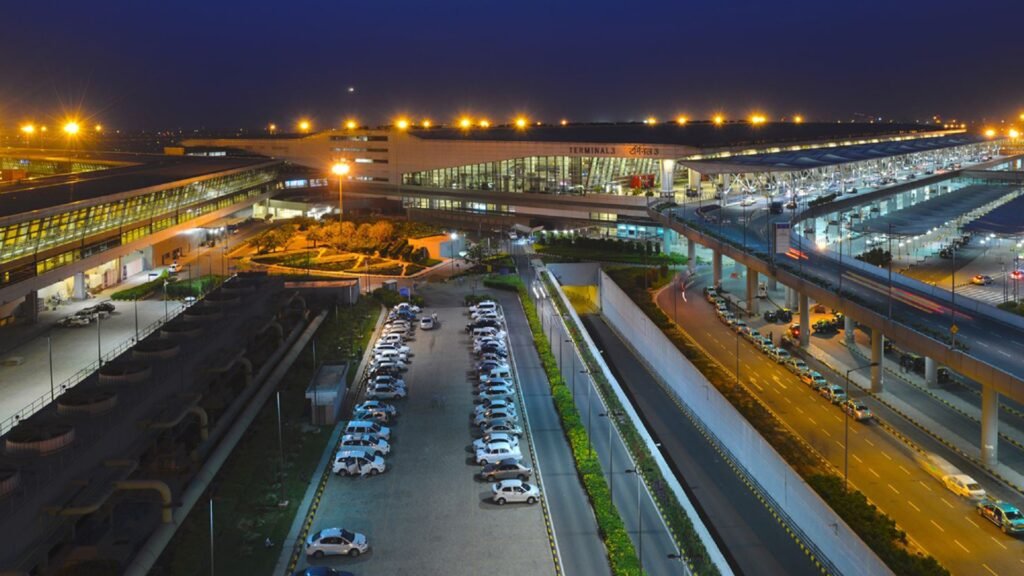
New Delhi, India: Flight operations at Indira Gandhi International Airport (IGI) in New Delhi were severely disrupted on Monday as dense winter fog and hazardous air pollution levels brought visibility to near‑zero and forced widespread cancellations and delays across the aviation network.
According to airport authorities and airline sources, at least 228 flights were cancelled at Delhi alone on Monday due to extremely low visibility, with five additional flights diverted to alternate airports as a safety precaution. Cancellation figures include both departures and arrivals, with reports noting 131 departures and 97 arrivals affected.
Across northern India, analysts estimate that up to 300 flights were cancelled as the disruption spread to other airports in the region and hundreds more were delayed, compounding travel challenges for passengers ahead of the peak winter travel period.
The India Meteorological Department (IMD) issued an orange alert for dense fog across the National Capital Region (NCR) and adjoining states, warning that visibility could remain significantly reduced throughout the day. Early‑morning visibility levels reportedly plunged to just a few metres at several monitoring points in Delhi, complicating both air and ground travel.
The Central Pollution Control Board (CPCB) reported air quality readings in the capital well into the ‘Severe’ category, with some areas registering Air Quality Index (AQI) values above 450. The hazardous smog contributed to the persistence of fog conditions and posed additional health risks to commuters and airport personnel.
Major carriers including IndiGo, Air India, SpiceJet and others issued travel advisories urging passengers to verify flight statuses before traveling to the airport. Some airlines also provided options for refunds or rebooking for affected travellers.
IndiGo reportedly cancelled more than 100 flights from Delhi as part of the disruption, reflecting the scale of impact on airline schedules.
International carriers were also affected, Etihad Airways confirmed that its Delhi–Abu Dhabi service experienced delays due to low visibility conditions.
The prolonged low‑visibility conditions led to significant passenger inconvenience, with travellers facing long waits, flight rescheduling, and uncertainty over departure times. Ground transport in and around Delhi was also affected, with fog contributing to slower vehicular movement and hazards on major road corridors.
Local advisories recommended travellers allow extra time for airport transfers, check updated flight information frequently, and make contingency plans due to the ongoing weather challenges.
Meteorologists indicate that dense fog in northern India could persist into Tuesday and possibly Wednesday, raising the prospect of continued disruptions until visibility improves. Aviation authorities are working to coordinate operations under low‑visibility procedures, but safety considerations remain the primary determinant of flight movements.