Hanoi, Vietnam: Vietnam’s aviation industry is solidly recovering from the pandemic downturn, with sustained increases in passenger and cargo traffic this year and projections pointing toward double-digit growth in 2026.
The Civil Aviation Authority of Vietnam (CAAV) projects that total passenger throughput for 2025 will reach approximately 84 million, an 11.4% rise over 2024, while air cargo is expected to finish the year at around 1.4 million tonnes. Domestic and international travel continue to expand, reflecting strengthening demand both within Vietnam and from abroad.
Passenger volume figures show significant gains across the year: data from the first nine months of 2025 estimate about 64.1 million passengers transported and 1.1 million tonnes of cargo, up 10.7% and 18.7% year-on-year, respectively.
The recovery is consistent with earlier data showing a strong first half of the year, when total air passengers reached 41.3 million, recording 10% growth compared with the same period in 2024. International travel growth outpaced domestic trips, underscoring the return of overseas tourism.
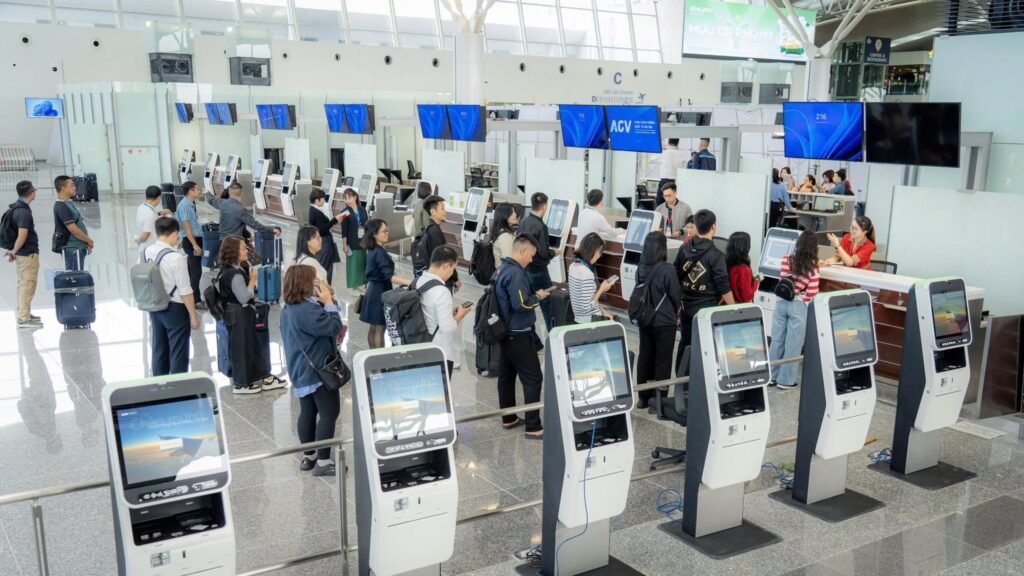
Vietnam’s aviation rebound is underpinned by major infrastructure developments. Expansion projects at key hubs including Tan Son Nhat International Airport’s new Terminal 3 and improved capacity at Noi Bai International Airport aim to relieve congestion and support higher traffic volumes. Terminal 3 at Tan Son Nhat has already become operational in 2025, increasing capacity significantly at the country’s busiest airport.
New airport initiatives are also underway in secondary regions, such as the civil aviation component for Phan Thiet Airport, approved with significant public investment to serve rising passenger demand in the south-central region.
Vietnam’s broader economic resilience bolsters aviation growth. Robust tourism demand and rising consumer travel have contributed to consistent increases in airline traffic. Analysts also note that the return of international markets including resumed flights to Russia and expanded Asian connections is supporting sustained expansion.
Market forecasts suggest the sector’s long-term potential remains strong, with industry research forecasting overall passenger and cargo demand to continue rising through 2030. Vietnam’s position within the Southeast Asian aviation market, already among the fastest-growing in the region, is expected to strengthen further as international connectivity increases and infrastructure improves.
Despite robust growth, the industry faces operational and capacity challenges. On-time performance and cancellations have drawn scrutiny due to schedule disruptions, while some airports operate beyond designed traffic capacity.
Safety and security have also been highlighted as policy priorities. Recent directives from the Prime Minister’s office emphasize that aviation safety systems must meet stringent international standards amid rapid expansion.
Building on 2025’s gains, market analysts and CAAV projections suggest that Vietnam’s aviation industry is poised for double-digit growth next year, with passenger numbers and cargo volumes set to expand further as international demand normalizes and new routes come online.
With continued infrastructure investments, expanding airline networks, and supportive policy frameworks, Vietnam’s aviation sector is expected to sustain its upward trajectory into 2026 and beyond.