News
Civil Aviation
Pilot Training
Flight School Analysis
Aviation Jobs
Training
Services
About Us
Contact Us

Vietnam Grounds 28 Aircraft Amid Global Engine Shortages, Operations Disrupted

Picture of Aviation Today News Desk

Aviation Today News Desk

Hanoi, Vietnam: Vietnam’s civil aviation sector has grounded 28 commercial aircraft as part of a broader global engine shortage that continues to disrupt airline fleet operations and maintenance timelines, industry sources and official data confirm. According to figures released by the Civil Aviation Authority of Vietnam (CAAV) and industry reporting, the affected aircraft represent approximately 13.1 per cent of Vietnam’s operational commercial fleet, underscoring the depth of the ongoing supply chain challenge. The grounding stems from an extended recall and repair cycle for Pratt & Whitney’s PW1000G geared turbofan engines, which power a large portion of narrow‑body jets such as the Airbus A321neo. These engines have been subject to global maintenance and availability constraints, affecting multiple airlines worldwide. Of the aircraft currently out of service in Vietnam: 24 are Airbus A321neo aircraft Three are Airbus A350s One is an Airbus A320ceo Despite reduced fleet availability, carriers based in Vietnam have maintained core route operations, both domestically and internationally. Hanoi (HAN) and Ho Chi Minh City (SGN) continue to serve as major aviation hubs, linking close to 50 domestic routes across 20 airports. On the international front, Vietnamese airlines operate over 110 scheduled routes to more than two dozen countries, while foreign carriers maintain robust connections with Vietnam through over 140 services. Strong travel demand has bolstered resilience across the sector. Preliminary data estimates that international passenger numbers will reach around 46.9 million in 2025, marking roughly a 13.3 per cent increase compared with the previous year. Domestic passenger traffic also rose, with nearly 36.6 million travellers, reflecting sustained demand across segments. Total passenger traffic is seen growing by upwards of 6.7 per cent, while cargo volumes have climbed by 4.6 per cent over the same period. Vietnam’s aviation regulator and airline operators have initiated strategies to mitigate the impact of grounded aircraft, including fleet reallocation, schedule adjustments, and prioritising high‑demand routes. The CAAV has signalled that while the number of grounded jets has eased compared with earlier reports in 2025, supply chain recovery challenges persist. Looking ahead, Vietnam’s air transport sector is pursuing ambitious growth targets for 2026, aiming to accommodate up to 95 million passengers alongside expanded cargo operations, signalling confidence in long‑term traffic growth despite underlying technical challenges

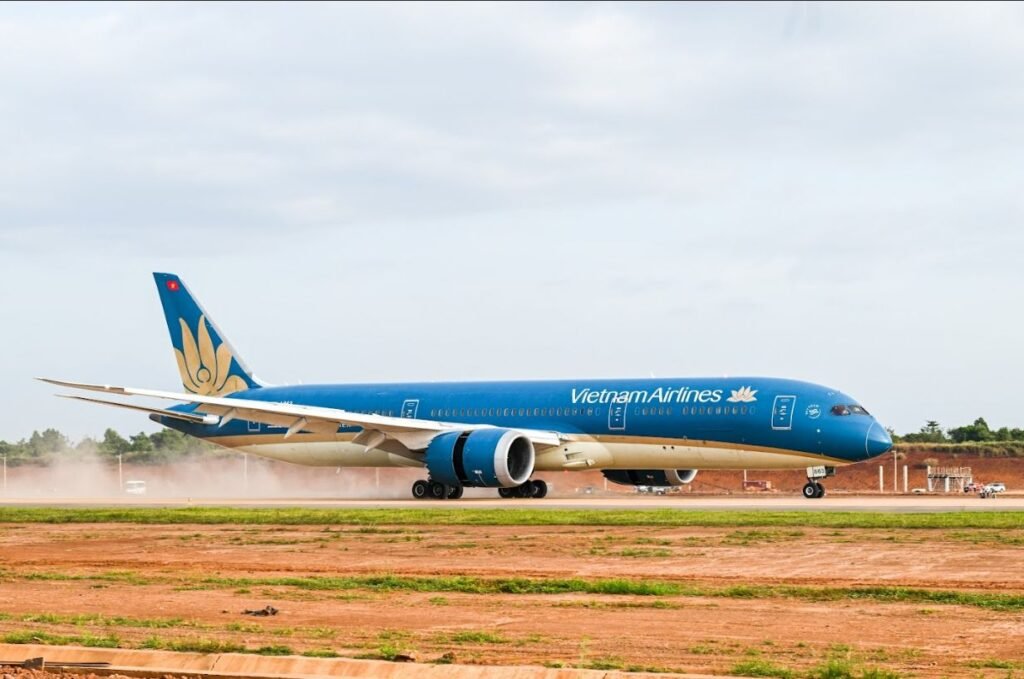
Image: Vietnam Airlines

Hanoi, Vietnam: Vietnam’s civil aviation sector has grounded 28 commercial aircraft as part of a broader global engine shortage that continues to disrupt airline fleet operations and maintenance timelines, industry sources and official data confirm. 

According to figures released by the Civil Aviation Authority of Vietnam (CAAV) and industry reporting, the affected aircraft represent approximately 13.1 per cent of Vietnam’s operational commercial fleet, underscoring the depth of the ongoing supply chain challenge. 

The grounding stems from an extended recall and repair cycle for Pratt & Whitney’s PW1000G geared turbofan engines, which power a large portion of narrow‑body jets such as the Airbus A321neo. These engines have been subject to global maintenance and availability constraints, affecting multiple airlines worldwide. 

Of the aircraft currently out of service in Vietnam:

  • 24 are Airbus A321neo aircraft
  • Three are Airbus A350s
  • One is an Airbus A320ceo

Despite reduced fleet availability, carriers based in Vietnam have maintained core route operations, both domestically and internationally. Hanoi (HAN) and Ho Chi Minh City (SGN) continue to serve as major aviation hubs, linking close to 50 domestic routes across 20 airports. On the international front, Vietnamese airlines operate over 110 scheduled routes to more than two dozen countries, while foreign carriers maintain robust connections with Vietnam through over 140 services. 

Strong travel demand has bolstered resilience across the sector. Preliminary data estimates that international passenger numbers will reach around 46.9 million in 2025, marking roughly a 13.3 per cent increase compared with the previous year. Domestic passenger traffic also rose, with nearly 36.6 million travellers, reflecting sustained demand across segments. Total passenger traffic is seen growing by upwards of 6.7 per cent, while cargo volumes have climbed by 4.6 per cent over the same period. 

Vietnam’s aviation regulator and airline operators have initiated strategies to mitigate the impact of grounded aircraft, including fleet reallocation, schedule adjustments, and prioritising high‑demand routes. The CAAV has signalled that while the number of grounded jets has eased compared with earlier reports in 2025, supply chain recovery challenges persist. 

Looking ahead, Vietnam’s air transport sector is pursuing ambitious growth targets for 2026, aiming to accommodate up to 95 million passengers alongside expanded cargo operations, signalling confidence in long‑term traffic growth despite underlying technical challenges


Leave a Comment

Subscribe to our Newsletter

Recent News