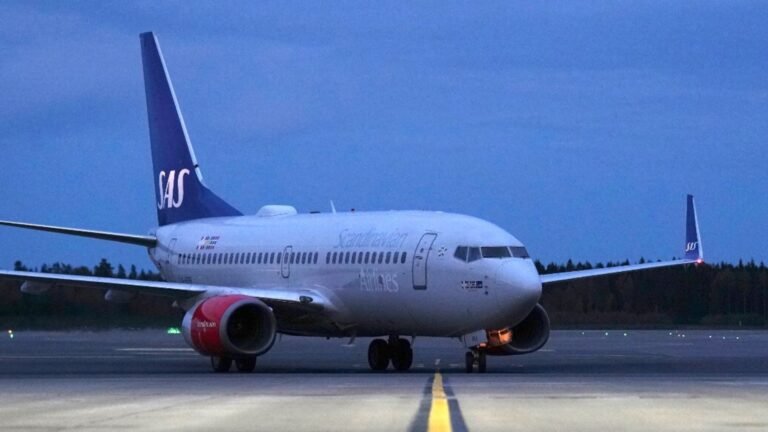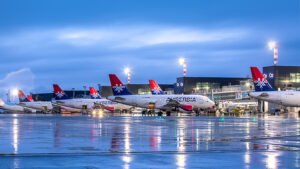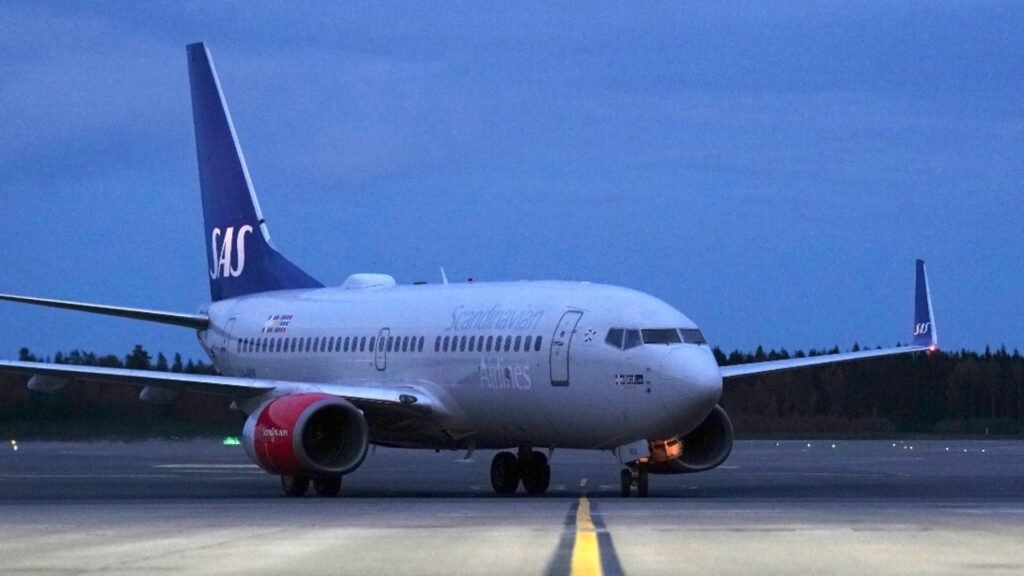
Stockholm, Sweden: Scandinavian Airlines (SAS) will cancel approximately 1,000 flights in April 2026, marking a significant escalation in operational disruptions as airlines grapple with a sharp and sustained surge in jet fuel prices triggered by geopolitical tensions in the Middle East.
The move follows an earlier wave of cancellations in March, when the carrier grounded several hundred services, reflecting the speed at which the cost environment has deteriorated for European airlines.
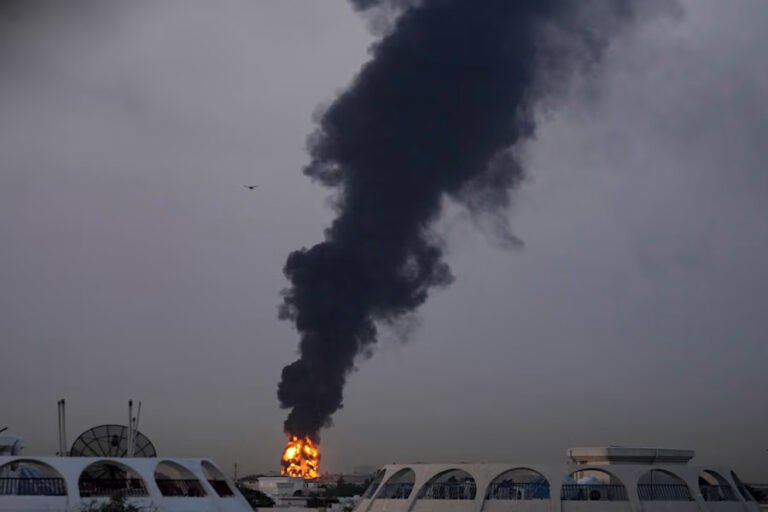
The current aviation fuel crisis began earlier this month after escalating tensions involving Iran disrupted global energy markets. The situation intensified with restrictions around the Strait of Hormuz, a critical maritime corridor that handles nearly one-fifth of global oil and liquefied natural gas shipments.
As supply tightened, oil prices surged rapidly, feeding directly into jet fuel costs. According to Reuters, SAS CEO Anko van der Werff said jet fuel prices doubled within a span of just 10 days, describing the increase as an unprecedented shock for airline economics.
The airline had already reacted on March 10 by raising ticket prices across parts of its network as fuel costs began climbing sharply.
SAS typically operates around 800 flights per day, translating to roughly 24,000 flights per month. Against this baseline, the cancellation of 1,000 flights represents a targeted capacity reduction of about 4–5%, rather than a full-scale network contraction.
However, the impact is expected to be concentrated and visible across specific segments of the airline’s network.
The airline is strategically trimming operations rather than implementing blanket cancellations. The reductions are expected to focus on:
- Short-haul and domestic routes, where margins are thinner
- High-frequency routes, where multiple daily departures allow consolidation
- Off-peak travel periods, particularly in the weeks following the Easter holiday
By reducing frequency instead of eliminating connectivity, SAS aims to preserve network integrity while controlling operating costs.
The airline is also consolidating passenger loads onto fewer flights, improving load factors and reducing fuel burn per passenger.
Fuel remains one of the largest cost components for airlines, typically accounting for 25–30% of total operating expenses. A rapid doubling of fuel prices within days leaves carriers with limited room to absorb the impact.
Unlike some larger European airline groups, SAS has relatively limited fuel hedging protection, making it more exposed to immediate market price fluctuations. This has forced quicker operational responses, including:
- Capacity cuts (flight cancellations)
- Fare increases across multiple routes
- Introduction of fuel surcharges on new bookings
- Passenger Impact and Regulatory Implications
SAS is not alone in responding to the fuel shock. Airlines globally are beginning to adjust capacity and pricing strategies as energy costs rise.
This signals the early stages of a broader aviation industry response to what could become a prolonged fuel crisis if geopolitical tensions persist. SAS has indicated that further schedule adjustments cannot be ruled out if fuel prices remain elevated or continue to rise.