News
Civil Aviation
Pilot Training
Flight School Analysis
Aviation Jobs
Training
Services
About Us
Contact Us

Japan Airlines, ANA Raise International Fuel Surcharges Despite Falling Jet Fuel Prices

Picture of Aviation Today News Desk

Aviation Today News Desk

Tokyo, Japan: Japan's two largest airlines, Japan Airlines (JAL) and All Nippon Airways (ANA), have raised fuel surcharges on international passenger tickets purchased during July and August 2026, with charges exceeding ¥65,000 (around US$400) on some long-haul routes despite a sharp decline in jet fuel prices across Asia. The increase, which took effect on July 1, reflects the airlines' long-standing fuel surcharge calculation methodology that relies on historical average fuel prices rather than prevailing market rates. Both carriers revise their international fuel surcharges every two months. According to JAL, the revised surcharge is based on the average Singapore kerosene-type jet fuel price during April and May 2026, when fuel averaged US$178.21 per barrel. Since then, jet fuel prices have fallen substantially, dropping to US$113 per barrel on July 2, according to LSEG data. The decline follows an unprecedented spike that saw prices surge to a record US$242 per barrel in late March amid heightened geopolitical tensions in the Middle East. Because the surcharge calculation uses a two-month averaging mechanism with a lag, the recent decline in fuel prices will not be reflected until the next revision. As a result, passengers purchasing tickets in July and August will continue to pay significantly higher fuel surcharges despite easing fuel markets. JAL said the surcharge could have been even higher if not for financial support provided by the Japanese government to offset soaring energy costs resulting from the conflict involving Iran. Under the airline's pricing formula, the April-May average fuel price would have placed the surcharge in a higher pricing band. However, government mitigation measures reduced the applicable surcharge level, preventing passengers from paying the maximum allowable amount. For the July-August ticketing period, JAL's highest one-way fuel surcharge is ¥65,000 for flights between Japan and North America (excluding Hawaii), Europe, the Middle East and Oceania. Similar surcharge levels have also been introduced by ANA. The increase marks a sharp rise in travel costs over recent months. According to ANA's published surcharge tables, fuel levies on routes connecting Japan with Hawaii, India and Indonesia have more than tripled since the outbreak of the Iran conflict, increasing from US$94 in April to US$310 in July. JAL's surcharge structure reflects similar increases across comparable international routes. Although crude oil and jet fuel prices have retreated considerably from their March highs, the depreciation of the Japanese yen has continued to add pressure on airline operating costs. The yen fell to a 40-year low against the U.S. dollar earlier this week, making dollar-denominated fuel purchases more expensive for Japanese carriers and pushing the value of the highest surcharge to approximately US$400. JAL calculates its fuel surcharge using two key variables: the average price of Singapore kerosene-type jet fuel and the average exchange rate between the Japanese yen and the U.S. dollar during the applicable assessment period. For the July-August revision, the airline used an average exchange rate of ¥158.85 per U.S. dollar, translating the fuel price into a yen-denominated benchmark used to determine the surcharge band. The airlines review international fuel surcharges every two months, meaning the significant decline in fuel prices recorded during June and July is expected to be reflected in the September-October surcharge revision. If fuel prices remain near current levels, passengers purchasing tickets during that period are expected to benefit from lower fuel surcharges. The surcharge increase comes as international travelers to Japan are already facing higher travel-related costs introduced on July 1. Japan increased its international departure tax from ¥1,000 to ¥3,000 (approximately US$18) per passenger, while visa fees rose from ¥3,000 to ¥15,000 (around US$92), marking the first increase in visa charges since 1978. The combined effect of higher fuel surcharges, increased departure taxes and revised visa fees is expected to raise the overall cost of international travel to and from Japan during the peak summer travel season, even as global aviation fuel prices continue to decline. According to JAL, the current surcharge levels remain temporary and will continue to be reviewed under its bi-monthly pricing mechanism based on prevailing fuel market conditions and exchange rates.

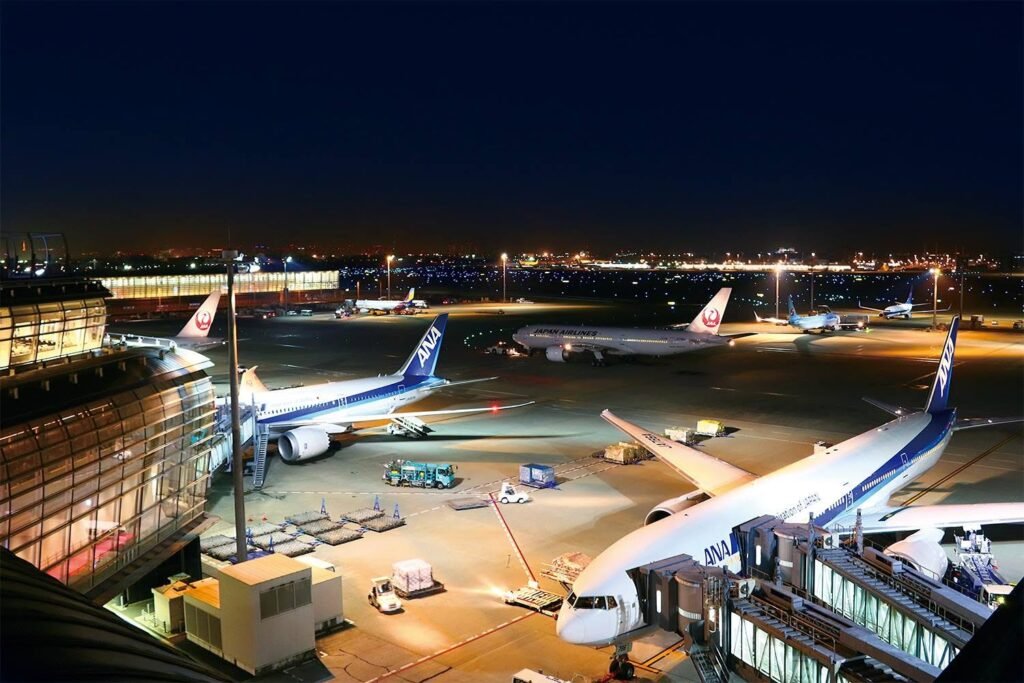
Image: Haneda Airport

Tokyo, Japan: Japan’s two largest airlines, Japan Airlines (JAL) and All Nippon Airways (ANA), have raised fuel surcharges on international passenger tickets purchased during July and August 2026, with charges exceeding ¥65,000 (around US$400) on some long-haul routes despite a sharp decline in jet fuel prices across Asia.

The increase, which took effect on July 1, reflects the airlines’ long-standing fuel surcharge calculation methodology that relies on historical average fuel prices rather than prevailing market rates. Both carriers revise their international fuel surcharges every two months.

According to JAL, the revised surcharge is based on the average Singapore kerosene-type jet fuel price during April and May 2026, when fuel averaged US$178.21 per barrel. Since then, jet fuel prices have fallen substantially, dropping to US$113 per barrel on July 2, according to LSEG data. The decline follows an unprecedented spike that saw prices surge to a record US$242 per barrel in late March amid heightened geopolitical tensions in the Middle East.

Because the surcharge calculation uses a two-month averaging mechanism with a lag, the recent decline in fuel prices will not be reflected until the next revision. As a result, passengers purchasing tickets in July and August will continue to pay significantly higher fuel surcharges despite easing fuel markets.

JAL said the surcharge could have been even higher if not for financial support provided by the Japanese government to offset soaring energy costs resulting from the conflict involving Iran. Under the airline’s pricing formula, the April-May average fuel price would have placed the surcharge in a higher pricing band. However, government mitigation measures reduced the applicable surcharge level, preventing passengers from paying the maximum allowable amount.

For the July-August ticketing period, JAL’s highest one-way fuel surcharge is ¥65,000 for flights between Japan and North America (excluding Hawaii), Europe, the Middle East and Oceania. Similar surcharge levels have also been introduced by ANA.

The increase marks a sharp rise in travel costs over recent months. According to ANA’s published surcharge tables, fuel levies on routes connecting Japan with Hawaii, India and Indonesia have more than tripled since the outbreak of the Iran conflict, increasing from US$94 in April to US$310 in July. JAL’s surcharge structure reflects similar increases across comparable international routes.

Although crude oil and jet fuel prices have retreated considerably from their March highs, the depreciation of the Japanese yen has continued to add pressure on airline operating costs. The yen fell to a 40-year low against the U.S. dollar earlier this week, making dollar-denominated fuel purchases more expensive for Japanese carriers and pushing the value of the highest surcharge to approximately US$400.

JAL calculates its fuel surcharge using two key variables: the average price of Singapore kerosene-type jet fuel and the average exchange rate between the Japanese yen and the U.S. dollar during the applicable assessment period. For the July-August revision, the airline used an average exchange rate of ¥158.85 per U.S. dollar, translating the fuel price into a yen-denominated benchmark used to determine the surcharge band.

The airlines review international fuel surcharges every two months, meaning the significant decline in fuel prices recorded during June and July is expected to be reflected in the September-October surcharge revision. If fuel prices remain near current levels, passengers purchasing tickets during that period are expected to benefit from lower fuel surcharges.

The surcharge increase comes as international travelers to Japan are already facing higher travel-related costs introduced on July 1. Japan increased its international departure tax from ¥1,000 to ¥3,000 (approximately US$18) per passenger, while visa fees rose from ¥3,000 to ¥15,000 (around US$92), marking the first increase in visa charges since 1978.

The combined effect of higher fuel surcharges, increased departure taxes and revised visa fees is expected to raise the overall cost of international travel to and from Japan during the peak summer travel season, even as global aviation fuel prices continue to decline.

According to JAL, the current surcharge levels remain temporary and will continue to be reviewed under its bi-monthly pricing mechanism based on prevailing fuel market conditions and exchange rates.


Leave a Comment

Subscribe to our Newsletter

Recent News