News
Civil Aviation
Pilot Training
Flight School Analysis
Aviation Jobs
Training
Services
About Us
Contact Us

FAA Ends Emergency Flight Cuts At 40 Major U.S. Airports After Shutdown Disruptions

Picture of Aviation Today News Desk

Aviation Today News Desk

Washington, United States: The Federal Aviation Administration (FAA) has officially lifted its emergency order requiring airlines to cut scheduled flights at 40 major U.S. airports, ending one of the most disruptive regulatory measures imposed during the recent 43-day government shutdown. The mandate will cease at 6 a.m. ET on Monday, November 17, restoring normal operations for domestic carriers. The flight-reduction order introduced as air-traffic control staffing deteriorated during the shutdown initially authorized cuts of up to 10 percent across the affected airports. Airlines, however, rarely executed the full reductions, opting instead to maintain most of their schedules even as the FAA warned of fatigue-related risks inside control towers. FAA Administrator Bryan Bedford said the agency removed the restrictions after “a sustained, measurable decline” in staffing-triggered incidents and absenteeism. He added that the system is now “stable enough” to resume full commercial operations. Before its termination, the FAA had gradually eased the mandate, lowering the required cuts from 10 percent to 6 percent on November 13, and then to 3 percent on November 14 as more controllers returned to duty following the shutdown’s end. Despite the emergency order, disruptions remained lower than expected. Aviation analytics firm Cirium reported cancellations on Sunday at just 0.25 percent below typical rates for this time of year raising questions about how strictly carriers followed the FAA’s directives. The agency acknowledged it is reviewing “reports of non-compliance,” noting that unauthorized flights under the order could trigger penalties of up to $75,000 per violation. Airlines, which had argued the cuts were excessive, welcomed the full rollback. The removal of constraints also reinstates standard allowances for general aviation and space-launch operations previously curtailed at select airports. The shutdown’s impact on the air-traffic workforce remains a concern. Industry officials say the FAA is still roughly 3,500 controllers short of its staffing goals, a gap that magnified the shutdown’s effect and prompted the emergency mandate. With the order now lifted, major hub airports including those serving New York, Chicago, Los Angeles and Atlanta are expected to return to normal scheduling patterns from Monday onward.
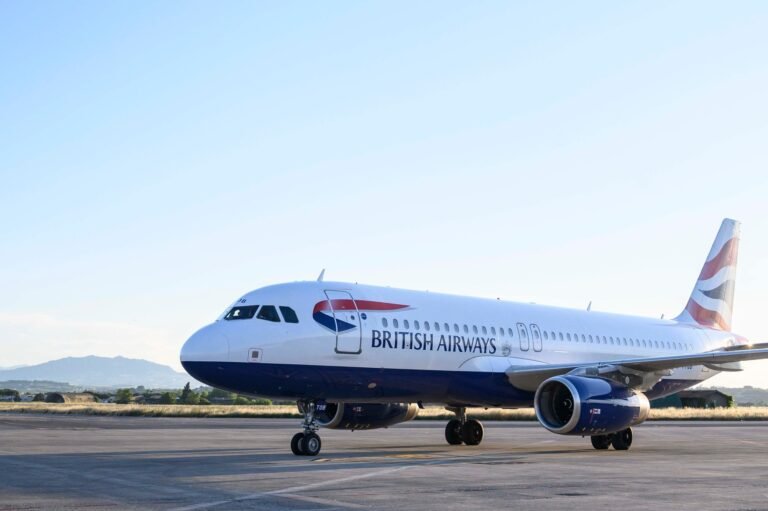
Image: American Airlines

Washington, United States: The Federal Aviation Administration (FAA) has officially lifted its emergency order requiring airlines to cut scheduled flights at 40 major U.S. airports, ending one of the most disruptive regulatory measures imposed during the recent 43-day government shutdown. The mandate will cease at 6 a.m. ET on Monday, November 17, restoring normal operations for domestic carriers.

The flight-reduction order introduced as air-traffic control staffing deteriorated during the shutdown initially authorized cuts of up to 10 percent across the affected airports. Airlines, however, rarely executed the full reductions, opting instead to maintain most of their schedules even as the FAA warned of fatigue-related risks inside control towers.

FAA Administrator Bryan Bedford said the agency removed the restrictions after “a sustained, measurable decline” in staffing-triggered incidents and absenteeism. He added that the system is now “stable enough” to resume full commercial operations.

Before its termination, the FAA had gradually eased the mandate, lowering the required cuts from 10 percent to 6 percent on November 13, and then to 3 percent on November 14 as more controllers returned to duty following the shutdown’s end.

Despite the emergency order, disruptions remained lower than expected. Aviation analytics firm Cirium reported cancellations on Sunday at just 0.25 percent below typical rates for this time of year raising questions about how strictly carriers followed the FAA’s directives. The agency acknowledged it is reviewing “reports of non-compliance,” noting that unauthorized flights under the order could trigger penalties of up to $75,000 per violation.

Airlines, which had argued the cuts were excessive, welcomed the full rollback. The removal of constraints also reinstates standard allowances for general aviation and space-launch operations previously curtailed at select airports.

The shutdown’s impact on the air-traffic workforce remains a concern. Industry officials say the FAA is still roughly 3,500 controllers short of its staffing goals, a gap that magnified the shutdown’s effect and prompted the emergency mandate.

With the order now lifted, major hub airports including those serving New York, Chicago, Los Angeles and Atlanta are expected to return to normal scheduling patterns from Monday onward.


Leave a Comment

Subscribe to our Newsletter

Recent News