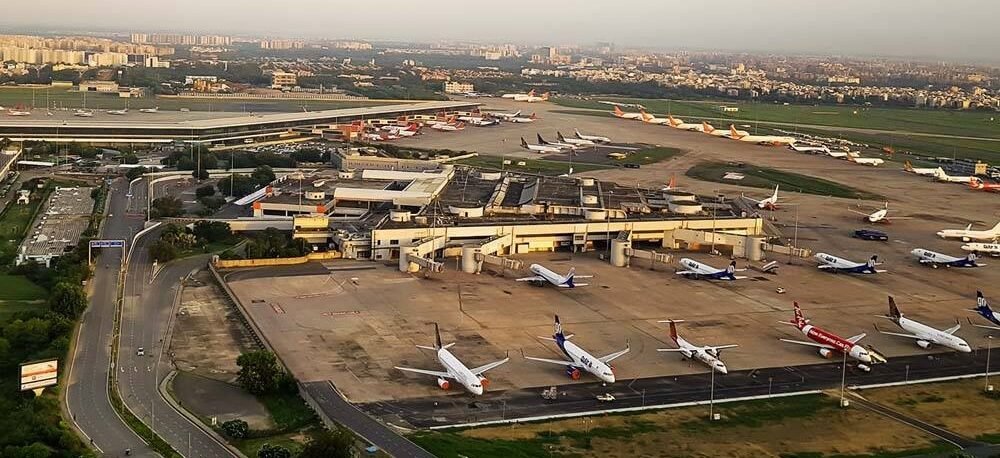
India: A Right to Information (RTI) response from the Directorate General of Civil Aviation (DGCA), as reported by The Times of India, has revealed that Indian airspace recorded 65 in-flight engine shutdowns over the past five years. The data also disclosed 11 Mayday calls between January 1, 2024, and May 31, 2025, four of which were linked to Hyderabad’s air traffic control region.
Engine Shutdowns Involving Multiple Airlines and Aircraft
The incidents spanned both domestic and foreign carriers, with shutdowns occurring during takeoff, in cruise, or as a precautionary measure following cockpit alerts. The DGCA identified key technical causes, including:
- Blocked or contaminated fuel filters
- Interrupted fuel supply
- Oil pressure loss
- Foreign object ingestion
- Turbine control unit malfunctions
All 65 incidents were classified as reportable occurrences under India’s civil aviation regulations and were investigated by the concerned operators under DGCA supervision.
“We continue to witness shutdowns due to recurring causes like fuel contamination or component wear. Every occurrence is tracked and mandates technical review,” said Capt. C. S. Randhawa, President of the Federation of Indian Pilots.
Mayday Calls Highlight Critical Emergencies
The DGCA confirmed that the 11 Mayday calls issued during the 17-month period were in response to severe emergencies requiring immediate crew response. These included engine fires, hydraulic failures, and other situations jeopardizing flight safety.
“A Mayday is the most serious alert. When pilots call one, it means the situation demands urgent intervention be it fire, total engine loss, or system failure,” explained Anil Rao, Executive Member, ALPA-India.
Though the RTI reply did not identify the specific flights or aircraft types, officials confirmed that all events were subject to post-flight safety reviews, many involving the Aircraft Accident Investigation Bureau (AAIB).
BCAS Staffing Vacancies Raise Oversight Concerns
Separately, the Bureau of Civil Aviation Security (BCAS), India’s aviation security watchdog, reported 224 vacancies out of 598 sanctioned posts as of March 2025. The shortfall represents a staffing gap of over 37%. A recent parliamentary standing committee had raised concerns that such vacancies may hinder effective regulatory oversight.
Air India Express Crash Raises Safety Scrutiny
The disclosure comes shortly after the Air India Express Flight IX-171 crash near Ahmedabad on June 12, 2025, in which an engine failure during climb-out was suspected based on preliminary reports. While the DGCA has not confirmed whether the case is counted among the 65 shutdowns, the timeline places it within the scope of the RTI data.
Aviation regulators emphasize that twin-engine aircraft are certified under ETOPS to continue flying with one engine inoperative, but each incident is taken seriously. Investigations may lead to maintenance bulletins, airworthiness directives, or fleet-wide inspections.
Lack of Public Safety Dashboard
India currently does not provide a public-facing aviation safety dashboard like the FAA’s Aviation Safety Information Analysis and Sharing (ASIAS) system. Access to data on technical issues or Mayday calls remains limited, often requiring RTI filings.
Increased transparency in aviation safety has been a growing demand among Indian aviation stakeholders. In its June 2025 report, a civil aviation working group recommended enhanced publication of anonymized safety statistics and the establishment of a centralized digital platform for incident data.



![Washington, United States: A United Airlines flight bound for Guatemala City made an emergency diversion to Washington Dulles International Airport after a passenger allegedly attempted to open a cabin door at cruising altitude and assaulted another traveler, according to air traffic control communications and federal authorities. The incident involved United Airlines Flight 1551, operated by a Boeing 737 MAX 8, which departed from Newark Liberty International Airport on Thursday evening carrying 145 passengers and six crew members. The aircraft had been en route to Guatemala City when the crew declared an emergency and diverted to Washington Dulles International Airport in Virginia. According to audio between the flight crew and air traffic controllers, the pilot informed controllers that the disruptive passenger attempted to open Door 2L while the aircraft was cruising at approximately 36,000 feet. The pilot also reported that the passenger later assaulted another individual onboard. During the exchange, the tower asked the crew which door the passenger had attempted to access. The pilot responded: “Door 2L at 36,000 feet and then [the passenger] assaulted a fellow passenger.” When controllers asked whether there were any injuries onboard, the pilot replied: “Not to our knowledge.” The aircraft landed safely at Washington Dulles at approximately 8:38 p.m. local time. Law enforcement and emergency personnel met the aircraft upon arrival. The FBI later confirmed that agents responded to the incident at the airport, although the agency did not immediately release additional details regarding the passenger’s identity, possible charges, or whether the individual was taken into federal custody. Flight tracking data showed the aircraft remained airborne for a period before diverting toward the Washington region instead of continuing south toward Guatemala. The diversion temporarily disrupted the scheduled international service but no injuries among passengers or crew were officially reported. United Airlines had not issued a detailed public statement at the time of publication regarding the circumstances surrounding the diversion or the status of the passenger involved. Federal authorities are expected to review crew reports, passenger statements, and onboard evidence as part of the investigation.](https://aviationtoday.in/wp-content/uploads/2026/05/AVIATION-TODAY-UNITEDV-AIRLINES-RUDE-PASSENGER-768x432.jpg)


![Washington, United States: A United Airlines flight bound for Guatemala City made an emergency diversion to Washington Dulles International Airport after a passenger allegedly attempted to open a cabin door at cruising altitude and assaulted another traveler, according to air traffic control communications and federal authorities. The incident involved United Airlines Flight 1551, operated by a Boeing 737 MAX 8, which departed from Newark Liberty International Airport on Thursday evening carrying 145 passengers and six crew members. The aircraft had been en route to Guatemala City when the crew declared an emergency and diverted to Washington Dulles International Airport in Virginia. According to audio between the flight crew and air traffic controllers, the pilot informed controllers that the disruptive passenger attempted to open Door 2L while the aircraft was cruising at approximately 36,000 feet. The pilot also reported that the passenger later assaulted another individual onboard. During the exchange, the tower asked the crew which door the passenger had attempted to access. The pilot responded: “Door 2L at 36,000 feet and then [the passenger] assaulted a fellow passenger.” When controllers asked whether there were any injuries onboard, the pilot replied: “Not to our knowledge.” The aircraft landed safely at Washington Dulles at approximately 8:38 p.m. local time. Law enforcement and emergency personnel met the aircraft upon arrival. The FBI later confirmed that agents responded to the incident at the airport, although the agency did not immediately release additional details regarding the passenger’s identity, possible charges, or whether the individual was taken into federal custody. Flight tracking data showed the aircraft remained airborne for a period before diverting toward the Washington region instead of continuing south toward Guatemala. The diversion temporarily disrupted the scheduled international service but no injuries among passengers or crew were officially reported. United Airlines had not issued a detailed public statement at the time of publication regarding the circumstances surrounding the diversion or the status of the passenger involved. Federal authorities are expected to review crew reports, passenger statements, and onboard evidence as part of the investigation.](https://aviationtoday.in/wp-content/uploads/2026/05/AVIATION-TODAY-UNITEDV-AIRLINES-RUDE-PASSENGER-300x169.jpg)