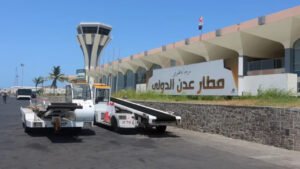
Muan, South Korea: South Korean police on August 11 raided the state-run Korea Airports Corporation (KAC), the Ministry of Land, Infrastructure and Transport and the Busan Regional Office of Aviation as investigators widened their probe into the Jeju Air crash at Muan International Airport that killed 179 people in December 2024. The searches were carried out by a special police investigation team seeking additional evidence over suspected professional negligence resulting in death or injury and possible failures by government agencies and other bodies responsible for airport safety and operations.
Police said the investigation is examining both the cause of the December 29, 2024 crash and whether relevant authorities properly performed their duties. A police official said 45 people are currently facing suspicions of professional negligence resulting in death or injury, while investigators are also considering whether charges linked to causing a serious public disaster could be applied.
The latest searches targeted KAC, which operates most of South Korea’s major airports except Incheon International Airport, along with the Transport Ministry and the Busan Regional Office of Aviation. The action marks another major phase in a criminal investigation that has continued for more than a year as investigators examine decisions surrounding Muan Airport’s construction, safety oversight, airport infrastructure and the response to the crash.
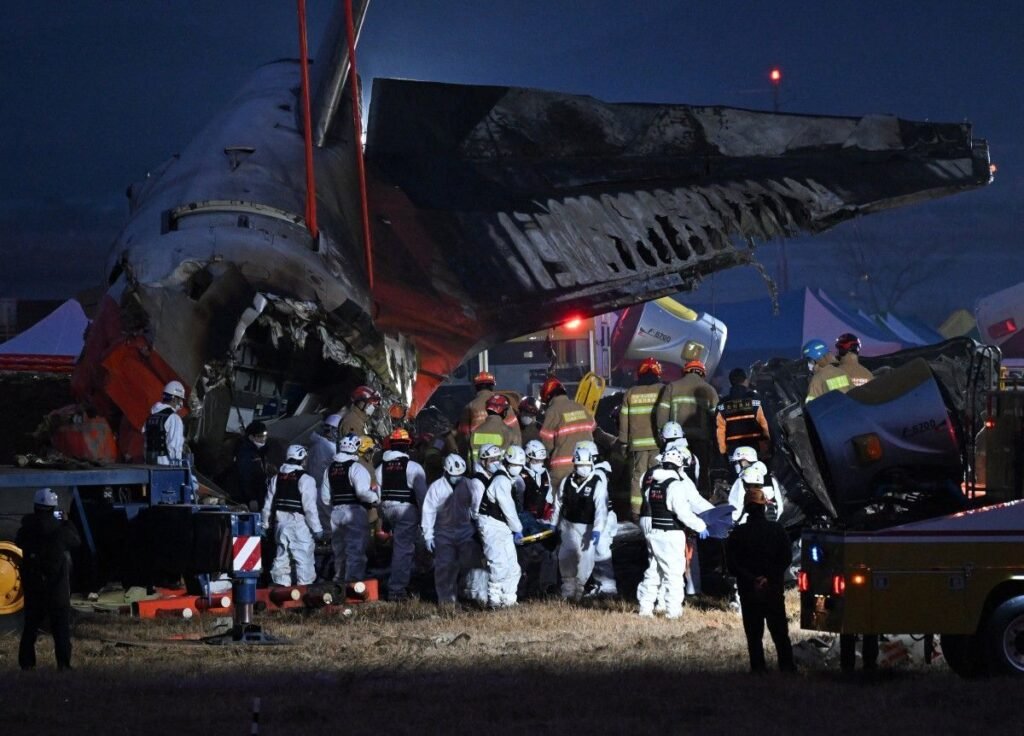
The crash involved Jeju Air Flight 7C2216, a Boeing 737-800 operating from Bangkok to Muan. The aircraft was carrying 181 people when it attempted an emergency landing at Muan International Airport on December 29, 2024. After a bird-strike-related emergency, the aircraft landed without its landing gear deployed, slid along the runway and struck a concrete structure supporting a localizer antenna before breaking apart and catching fire. Only two crew members survived, while 179 passengers and crew members were killed.
The criminal investigation has increasingly expanded beyond the aircraft itself to possible institutional and infrastructure failures. Police have been examining events dating back to the construction of Muan Airport in 1999 to determine whether decisions made during the airport’s development created conditions that contributed to the disaster. In February 2026, the special investigation team raided the Busan Regional Office of Aviation and a company involved in construction at Muan Airport, seeking evidence connected to possible contributing factors. At that stage, police had booked 45 people on suspicion of occupational negligence and were examining whether the Serious Accidents Punishment Act’s provisions concerning a serious public disaster could apply.
The investigation was further expanded in March, when police raided the Transport Ministry to obtain additional material concerning the crash and the conduct of government agencies. Investigators specifically examined whether officials responsible for aviation navigation and airport operations had properly carried out their duties. Police said the probe was looking for factors dating back to the beginning of Muan Airport’s construction.
A major development came in March 2026 when South Korea’s Board of Audit and Inspection identified serious shortcomings in the approval and management of airport safety infrastructure. The state auditor found that the Transport Ministry had approved 14 non-compliant localizer installations at eight airports, including Muan, and that some installations had been certified as meeting frangibility requirements despite not doing so. The audit identified 30 cases of wrongdoing or procedural failure, including shortcomings in bird-strike prevention and aviation safety management.
At Muan, investigators found that a 2.4-metre-high concrete embankment supporting the localizer had been built partly to reduce construction costs because the terrain around the runway and Runway End Safety Area was sloped. The Board of Audit and Inspection said the structure had been approved by the Transport Ministry in 2003 without an adequate vulnerability assessment. Korea Airports Corporation later requested a review of the structure in 2007, but no changes were made. The structure was subsequently reinforced during a modernization project between 2019 and 2024.
International aviation standards call for localizer installations in areas exposed to aircraft impact to be designed so that they can break apart rather than present a rigid obstacle. The state audit found that the ministry had continued to certify such installations and approve inspections that incorrectly indicated compliance for periods extending as long as 22 years.
The Transport Ministry said it “humbly accepted” the audit findings and said it would take strict follow-up measures, including improvements to localizer structures and stronger bird-strike prevention. Korea Airports Corporation also said it was implementing improvements recommended in the audit.
The infrastructure findings have become particularly significant because a separate government-commissioned simulation examined what might have happened had the concrete embankment not been present at the end of the runway. The simulation, cited in January 2026 reporting, suggested the outcome could have been substantially different without the rigid structure. The findings intensified scrutiny of how the localizer installation was designed and approved.
The criminal probe is also unfolding alongside a renewed examination of the accident investigation itself. In May 2026, President Lee Jae Myung visited Muan International Airport after additional human remains were discovered during renewed recovery operations more than a year after the crash. He called for a thorough reinvestigation and criticised shortcomings in the original recovery process. “Given the size and condition (of the additional remains), they should not have been overlooked,” Lee said, adding that “the lax handling of the scene was clearly a problem.” He also instructed officials to consider using outside experts for the reinvestigation.
The renewed investigation followed concerns that the original recovery operation had not fully recovered victims’ remains and that officials lacked adequate procedures and oversight. The discovery of additional remains prompted the government to revisit not only the recovery process but also the wider handling of the disaster.
The technical investigation into the crash had earlier established evidence of a bird strike. A preliminary accident report released in January 2025 found feathers and blood stains in both engines of the Boeing 737-800. DNA testing identified the remains as Baikal teals, migratory ducks that winter in South Korea. The report, however, did not establish that the bird strike alone caused the crash. It also noted that the flight data recorder and cockpit voice recorder stopped recording about four minutes before impact, leaving critical portions of the final sequence unavailable.
The preliminary investigation said authorities would conduct further examinations of the engines, recorders, air traffic control data, bird-strike evidence and the localizer structure. Subsequent reporting in July 2025 cited a source familiar with the investigation as saying there was “clear evidence” that the pilots shut down the less-damaged engine after the bird strike. However, that finding was part of the continuing technical investigation and was disputed by victims’ families, who questioned aspects of the investigation and its transparency.
The crash therefore remains under examination on several fronts: the bird strike and resulting aircraft systems problems, the sequence of cockpit decisions, the loss of recorder data, the runway and airport infrastructure, the approval and maintenance of the localizer structure, bird-strike prevention, regulatory oversight and the actions of government agencies before and after the accident.
The August 11 raids represent the latest step in the separate criminal investigation into potential responsibility and negligence. Police are now seeking additional records from the organisations responsible for airport operation, aviation oversight and infrastructure, while considering whether the conduct of officials and other responsible parties could amount to professional negligence or a serious public disaster offence.
The full accident investigation has yet to provide a final public account resolving all outstanding questions surrounding the crash. The latest police action, coming after the state audit findings and the government’s renewed examination of the crash site, places greater focus on whether failures in airport design, regulatory approval, safety oversight or emergency response contributed to the scale of the tragedy.