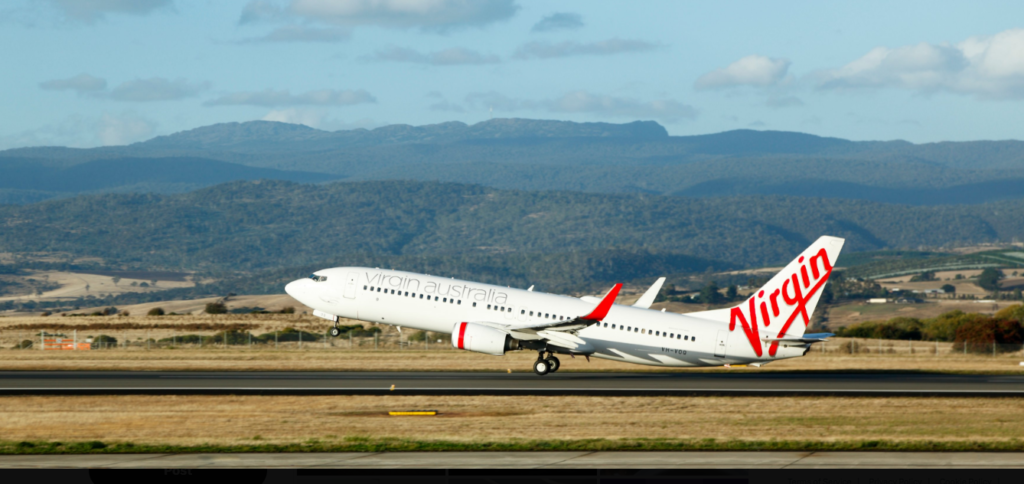
Sydney, Australia: Australia’s domestic aviation sector is struggling to match seat supply with surging passenger demand, with the Australian Competition and Consumer Commission (ACCC) warning that capacity remains below pre-pandemic levels despite a full recovery in travel volumes.
According to the ACCC’s Domestic Airline Competition in Australia report released in August 2025, seat capacity in June was 2.8% lower than in June 2019, even though passenger numbers had fully recovered and, in some cases, exceeded pre-COVID benchmarks. In May 2025, Australian carriers transported 5.20 million domestic passengers, up 1.6% compared with May 2019. The mismatch between supply and demand is evident in the load factor, the proportion of available seats actually sold which rose to 80.7% in June 2025 from pre-pandemic averages of about 78%.
The ACCC noted that the capacity shortfall has kept airfares elevated. Although jet fuel prices dropped by 12.3% year-on-year, average fares in June 2025 were still higher than the same month last year. The regulator attributed this to limited seating availability, which has reduced the scope for last-minute fare discounts, particularly on peak routes. “The lack of significant competition and constrained supply means consumers are seeing fewer low-fare options,” the ACCC said in its report.
The sector has shown notable improvements in operational reliability. April 2025 recorded an on-time arrival rate of 82.4%, the highest in three years and above the long-term average of 80.7%. Cancellations have also remained low, averaging under 2.2% in April and May, with a slight uptick to 2.4% in June. Jetstar and Virgin Australia achieved the best punctuality and cancellation performance, while Qantas reported comparatively higher cancellation rates.
The capacity lag stems from a combination of structural and market factors. The collapse of Tigerair in 2020 removed a substantial share of low-cost capacity from the market. New entrants such as Bonza have struggled to establish sustainable operations, and Rex’s expansion on trunk routes has been limited. Global supply chain disruptions and manufacturing delays have also constrained fleet expansion. Aircraft delivery backlogs, driven by production issues at major manufacturers, have delayed capacity growth plans for both Qantas and Virgin Australia.
Qantas Group is in the process of receiving additional aircraft, including narrowbody jets redeployed from Jetstar Asia. Virgin Australia expects delivery of six Boeing 737 MAX 8 aircraft by December 2025. However, much of the incoming fleet will replace older planes rather than significantly expand seating capacity. Industry analysts note that upcoming infrastructure developments could provide relief. Slot reforms at congested airports and the opening of Western Sydney International (Nancy-Bird Walton) Airport in 2026 are expected to improve access for both existing and new operators.
The ACCC has repeatedly expressed concern over the high level of market concentration, with Qantas Group and Virgin Australia controlling more than 98% of the domestic market. The regulator has urged measures to encourage competition, warning that the duopoly limits consumer choice and pricing flexibility.
While passenger demand has fully recovered from pandemic lows, Australia’s domestic aviation market continues to operate with constrained capacity. The ACCC expects gradual improvement as airlines take delivery of new aircraft and as infrastructure projects come online, but warns that pricing pressure may persist in the near term.

![Washington, United States: A United Airlines flight bound for Guatemala City made an emergency diversion to Washington Dulles International Airport after a passenger allegedly attempted to open a cabin door at cruising altitude and assaulted another traveler, according to air traffic control communications and federal authorities. The incident involved United Airlines Flight 1551, operated by a Boeing 737 MAX 8, which departed from Newark Liberty International Airport on Thursday evening carrying 145 passengers and six crew members. The aircraft had been en route to Guatemala City when the crew declared an emergency and diverted to Washington Dulles International Airport in Virginia. According to audio between the flight crew and air traffic controllers, the pilot informed controllers that the disruptive passenger attempted to open Door 2L while the aircraft was cruising at approximately 36,000 feet. The pilot also reported that the passenger later assaulted another individual onboard. During the exchange, the tower asked the crew which door the passenger had attempted to access. The pilot responded: “Door 2L at 36,000 feet and then [the passenger] assaulted a fellow passenger.” When controllers asked whether there were any injuries onboard, the pilot replied: “Not to our knowledge.” The aircraft landed safely at Washington Dulles at approximately 8:38 p.m. local time. Law enforcement and emergency personnel met the aircraft upon arrival. The FBI later confirmed that agents responded to the incident at the airport, although the agency did not immediately release additional details regarding the passenger’s identity, possible charges, or whether the individual was taken into federal custody. Flight tracking data showed the aircraft remained airborne for a period before diverting toward the Washington region instead of continuing south toward Guatemala. The diversion temporarily disrupted the scheduled international service but no injuries among passengers or crew were officially reported. United Airlines had not issued a detailed public statement at the time of publication regarding the circumstances surrounding the diversion or the status of the passenger involved. Federal authorities are expected to review crew reports, passenger statements, and onboard evidence as part of the investigation.](https://aviationtoday.in/wp-content/uploads/2026/05/AVIATION-TODAY-UNITEDV-AIRLINES-RUDE-PASSENGER-768x432.jpg)


![Washington, United States: A United Airlines flight bound for Guatemala City made an emergency diversion to Washington Dulles International Airport after a passenger allegedly attempted to open a cabin door at cruising altitude and assaulted another traveler, according to air traffic control communications and federal authorities. The incident involved United Airlines Flight 1551, operated by a Boeing 737 MAX 8, which departed from Newark Liberty International Airport on Thursday evening carrying 145 passengers and six crew members. The aircraft had been en route to Guatemala City when the crew declared an emergency and diverted to Washington Dulles International Airport in Virginia. According to audio between the flight crew and air traffic controllers, the pilot informed controllers that the disruptive passenger attempted to open Door 2L while the aircraft was cruising at approximately 36,000 feet. The pilot also reported that the passenger later assaulted another individual onboard. During the exchange, the tower asked the crew which door the passenger had attempted to access. The pilot responded: “Door 2L at 36,000 feet and then [the passenger] assaulted a fellow passenger.” When controllers asked whether there were any injuries onboard, the pilot replied: “Not to our knowledge.” The aircraft landed safely at Washington Dulles at approximately 8:38 p.m. local time. Law enforcement and emergency personnel met the aircraft upon arrival. The FBI later confirmed that agents responded to the incident at the airport, although the agency did not immediately release additional details regarding the passenger’s identity, possible charges, or whether the individual was taken into federal custody. Flight tracking data showed the aircraft remained airborne for a period before diverting toward the Washington region instead of continuing south toward Guatemala. The diversion temporarily disrupted the scheduled international service but no injuries among passengers or crew were officially reported. United Airlines had not issued a detailed public statement at the time of publication regarding the circumstances surrounding the diversion or the status of the passenger involved. Federal authorities are expected to review crew reports, passenger statements, and onboard evidence as part of the investigation.](https://aviationtoday.in/wp-content/uploads/2026/05/AVIATION-TODAY-UNITEDV-AIRLINES-RUDE-PASSENGER-300x169.jpg)