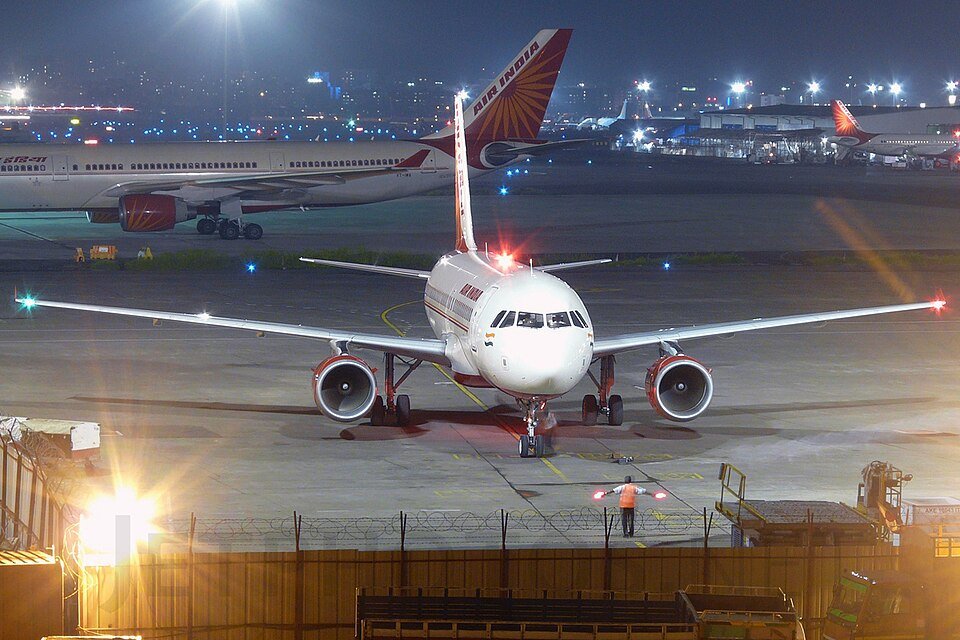
New Delhi, India: Air India has terminated the employment of the Pilot-in-Command of its Phuket-Delhi flight AI2379 with immediate effect after he tested positive for a psychoactive substance, the airline said on September 4, 2026, following the release of the Aircraft Accident Investigation Bureau’s (AAIB) preliminary report into the serious in-flight incident.
In its official statement, Air India said, “The Pilot-in-Command of the Phuket-Delhi flight tested positive for a psychoactive substance. In line with Air India’s zero-tolerance approach to violations of safety, fitness or regulatory requirements, the pilot’s employment has been terminated with immediate effect.”
The airline also acknowledged the release of the AAIB’s preliminary report and said it was continuing to provide the investigators with full cooperation, including access to relevant operational, maintenance and technical records. Air India said safety remained its highest priority and that it would implement applicable safety recommendations arising from the ongoing investigation.
As an additional precautionary measure, Air India has also initiated voluntary 100% psychoactive-substance testing of its pilots, expanding its testing efforts in the wake of the incident and the findings contained in the preliminary investigation. The airline’s action came after the AAIB flagged the Pilot-in-Command’s confirmed non-negative test result as a serious safety concern and recommended that appropriate measures be taken to prevent psychoactive-substance abuse among aviation personnel.
The AAIB preliminary report relates to the August 4, 2026 accident involving Air India flight AI2379, operated by an Airbus A320 from Phuket, Thailand, to Delhi, India. The aircraft was cruising at 36,000 feet when it experienced a near-simultaneous loss of pressure in all three of its hydraulic systems.
The failure led to the disengagement of the autopilot, warnings in the cockpit and a sudden pitch-up and pitch-down sequence. The aircraft briefly climbed before descending, resulting in an altitude upset while the seatbelt signs were switched off. Passengers and cabin crew who were not restrained were thrown upward, with some striking the cabin interior and overhead areas.
A total of 24 people were injured, 20 passengers and four cabin crew members. The preliminary findings also recorded damage inside the aircraft cabin. Despite the serious sequence of events, the hydraulic systems began recovering within seconds, allowing the crew to regain control and continue the flight before landing safely in Delhi.
The AAIB report found that both flight crew members underwent breath-analyser examinations after landing, with satisfactory results. They were also subjected to psychoactive-substance detection tests. While the other pilot tested negative, the Pilot-in-Command’s result was recorded as non-negative and was subsequently confirmed through further testing.
However, the preliminary report has not concluded that the psychoactive substance finding caused the triple hydraulic-system failure or the aircraft’s altitude upset. The technical investigation remains ongoing, with investigators continuing to examine the rare loss of pressure across all three hydraulic systems and the circumstances surrounding the incident.
The AAIB has urged the Directorate General of Civil Aviation (DGCA) to take appropriate action to prevent the abuse of psychoactive substances among aviation personnel.
The investigation into the August 4, 2026 incident remains ongoing, and further findings are expected as the AAIB continues its examination of the aircraft’s technical systems, operational records and other evidence.