Ottawa, Canada: More than four decades after the bombing of Air India Flight 182 killed 329 people in one of the world’s deadliest aviation terror attacks, Canada’s domestic intelligence agency has, for the first time, publicly identified Canada-based Khalistani extremists as the perpetrators, marking a significant shift in the country’s official narrative surrounding the tragedy.
The Canadian Security Intelligence Service (CSIS) made the statement while commemorating the 41st anniversary of the June 23, 1985 bombing, describing the attack as Canada’s deadliest act of terrorism and a defining event in the country’s national security history.
“On June 23, 1985, a bomb planted by Canada-based Khalistani extremists destroyed Air India Flight 182, killing all 329 people on board, most of them Canadians,” CSIS said in its public statement.
The acknowledgment is being viewed as a historic development because previous Canadian government statements had generally referred to the bombing as a terrorist attack without explicitly identifying the perpetrators as Canada-based Khalistani extremists. The latest wording aligns with India’s long-standing position that extremist groups operating from Canadian soil were responsible for the attack.
The timing of the announcement has drawn widespread attention amid renewed discussions over violent extremism, national security, and Canada-India relations.
For decades, India has maintained that Khalistani extremists based in Canada planned and executed the bombing. The latest CSIS statement represents the first official public acknowledgment by Canada’s intelligence agency using that specific terminology, a move analysts say carries diplomatic as well as historical significance.
The statement was released during annual memorial events honouring the victims of Flight 182, whose destruction remains Canada’s worst terrorist attack.
Air India Flight 182, a Boeing 747 named Emperor Kanishka, departed Toronto on June 22, 1985, before continuing from Montreal toward London as part of its scheduled service to Delhi and Mumbai.
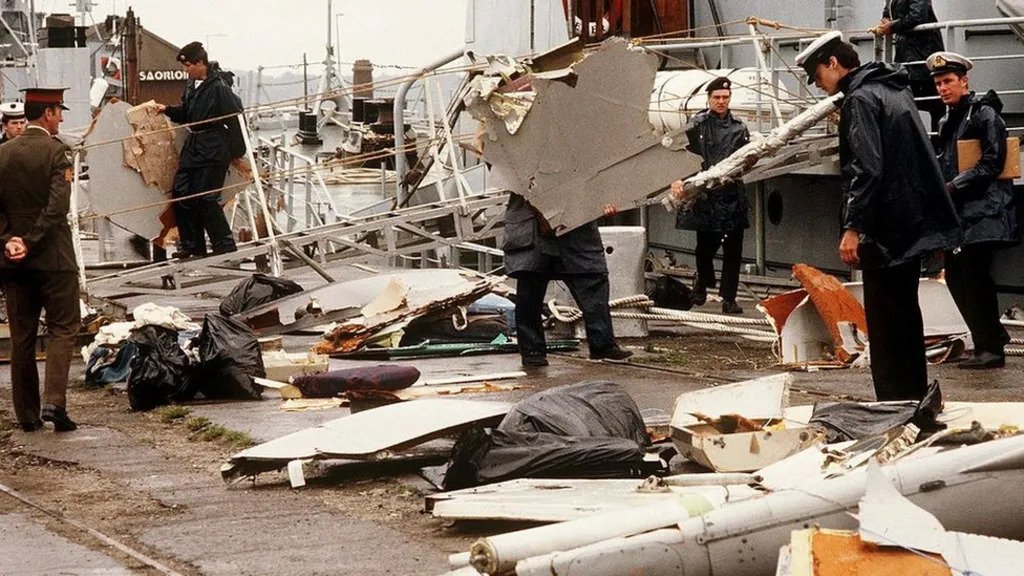
At approximately 7:14 a.m. local time on June 23, while cruising over the Atlantic Ocean southwest of Ireland, a suitcase bomb hidden in checked baggage detonated inside the aircraft’s forward cargo hold.
The explosion caused the aircraft to break apart in mid-air before crashing into the Atlantic, killing all 329 people on board, including 307 passengers and 22 crew members.
Among those killed were 268 Canadian citizens, 27 British nationals and 24 Indian citizens, along with passengers from several other countries.
The bombing remains Air India’s deadliest accident and was the world’s deadliest act of aviation terrorism until the September 11 attacks in the United States.
Investigators later determined that Flight 182 was one part of a coordinated bombing plot.
A second suitcase bomb, intended for another Air India aircraft, exploded prematurely at Narita International Airport near Tokyo while baggage was being transferred to Air India Flight 301.
The blast killed two Japanese baggage handlers. Authorities later concluded that both explosions were part of the same coordinated operation originating from Canada.
Canadian investigators concluded that the conspiracy was orchestrated by extremists linked to the banned Khalistani militant organization Babbar Khalsa.
Talwinder Singh Parmar was identified by investigators as one of the principal architects of the plot.
Only one individual, Inderjit Singh Reyat, was ultimately convicted in connection with the bombings. Reyat admitted to building the explosives used in the attacks and later received an additional conviction for perjury after providing false testimony during the Air India trial. Two other accused men were acquitted after courts ruled that prosecutors had failed to prove the charges beyond a reasonable doubt.
The investigation also exposed significant shortcomings within Canada’s intelligence and law enforcement agencies.
One of the most controversial revelations involved CSIS’s destruction of surveillance recordings.
Before the bombing, CSIS had placed several suspects under electronic surveillance. However, investigators later discovered that 156 of the agency’s 210 intercepted wiretap recordings had been erased under routine evidence-retention procedures, even after the bombing had occurred and several monitored individuals had become primary suspects.
The destruction of the recordings became one of the defining controversies of the investigation.
Justice Ian Josephson later described the handling of the evidence as “unacceptable negligence,” while RCMP documents suggested the recordings could have strengthened criminal prosecutions had they been preserved.
Subsequent inquiries also found that Canadian authorities had received multiple intelligence warnings before the bombing, including alerts from Indian intelligence regarding possible threats against Air India. However, poor coordination between CSIS and the Royal Canadian Mounted Police (RCMP), along with shortcomings in aviation security, prevented authorities from disrupting the plot.
Growing criticism over the investigation eventually led Canada to establish the Commission of Inquiry into the Investigation of the Bombing of Air India Flight 182 under former Supreme Court Justice John Major.
The commission concluded that failures in intelligence sharing, evidence management, aviation security and inter-agency coordination contributed significantly to Canada’s inability to prevent the attack and successfully prosecute those responsible.
The inquiry produced dozens of recommendations that reshaped Canada’s counter-terrorism and aviation security framework.