News
Civil Aviation
Pilot Training
Flight School Analysis
Aviation Jobs
Training
Services
About Us
Contact Us

India’s Supreme Court Pushes Government To Finalise New Aviation Rules Within 3 Weeks

Picture of Aviation Today News Desk

Aviation Today News Desk

New Delhi, India: The Supreme Court of India has pushed the Central Government of India to finalise new aviation rules within three weeks amid concerns over unpredictable airfares, surge pricing, baggage charges and passenger refunds, while warning that airlines failing to comply with applicable government directions could be grounded. The development followed a hearing before a bench of Justices Vikram Nath and Sandeep Mehta on August 17, 2026. The Central Government informed the court that it had fast-tracked the process of framing rules under the Bharatiya Vayuyan Adhiniyam, 2024, and expected the framework to be finalised within three weeks. The government also placed the draft rules before the bench in a sealed cover, saying that some final discussions were still underway. During the hearing, the Supreme Court of India issued a stern warning over airline compliance. “If airlines are not complying, ground them,” the bench said, according to reports of the proceedings. The observation came after the court was told that airlines were allegedly not complying with directions issued by the government of India concerning fares. The remark does not amount to an immediate order grounding any particular airline; rather, it signals that the court expects the existing regulatory directions to be enforced against carriers that fail to comply. The proposed regulatory framework is being prepared under the Bharatiya Vayuyan Adhiniyam, 2024, which replaced the Aircraft Act, 1934 as the principal legislation governing India's civil aviation sector. The new law came into force in January 2025, while the corresponding rules are being framed to operationalise its provisions. According to the latest reports, the draft rules submitted to the Supreme Court of India address several areas directly affecting passengers. These include airline ticket pricing, surge fares, excess baggage charges and passenger refunds. The broader proceedings also involve concerns over cancellation and refund norms, ancillary charges and the need for stronger protection against arbitrary increases in the cost of air travel. The proposed framework is particularly significant because India's airline market currently operates largely on dynamic pricing, under which fares change according to demand, availability and other commercial factors. The latest government proposal is expected to establish clearer rules governing when and how intervention can take place when fares rise sharply. However, the precise mechanism for controlling surge pricing has not yet been publicly finalized, and reports do not establish that the government has approved a permanent fixed airfare cap. The Supreme Court of India also examined whether the proposed framework would provide an effective regulatory mechanism. After examining the draft placed before it, the bench reportedly questioned whether an effective regulator had been provided for. This issue is significant because the proceedings are not limited to ticket prices; they also concern how passenger-protection requirements will be monitored and enforced once the new rules come into force. For airlines, the immediate position remains that existing government directions continue to apply while the new rules are being finalised. The Central Government of India told the court that the Ministry of Civil Aviation has been issuing office memorandums to airlines concerning pricing during the interim period. The petitioners, however, argued that airlines were not following those directions, prompting the Supreme Court's warning that non-compliant carriers should face action, including grounding. The case originates from a petition filed by social activist S. Laxminarayanan seeking tighter regulation of airfares and greater protection for passengers. The plea has raised concerns about steep and unpredictable increases in ticket prices, surge pricing, baggage charges, cancellation and refund practices and other ancillary fees. It has also sought stronger regulatory oversight of the aviation sector. The Supreme Court of India has been examining the issue for several months. In earlier proceedings, the court expressed concern over sharp increases in airfares during periods of high demand and sought a mechanism to provide greater predictability and protection to passengers. On May 15, the court observed that there should be some “rationalisation” of airfares and sought measures to provide relief to air passengers. The latest August hearing follows the court's July direction requiring the Central Government to place the proposed aviation rules before it. The government had said the rules had been framed and were undergoing the statutory process. The court nevertheless required the proposed framework to be produced before it in a sealed cover, even if the rules had not yet completed the parliamentary process. The Central Government of India has now secured three more weeks to complete the rule-making process. The matter has been listed for further hearing on September 7, 2026, when the Supreme Court of India is expected to consider the status of the final rules and the regulatory mechanism proposed for enforcing them. For passengers, the eventual rules could bring greater clarity to how airlines price tickets during periods of unusually high demand, how additional baggage charges are applied and how cancellations and refunds are handled. For airlines, the framework could introduce clearer compliance obligations and potentially stronger enforcement where government directions are breached. The exact obligations, however, will become clear only after the Central Government completes the rule-making process and formally notifies the final rules. The latest development therefore marks a significant step towards a formal regulatory framework for airfare and passenger-related charges, but it does not yet mean that a new airfare cap or a final surge-pricing formula is in force. The Central Government is still completing the rules, and the Supreme Court of India is due to review the matter again on September 7.

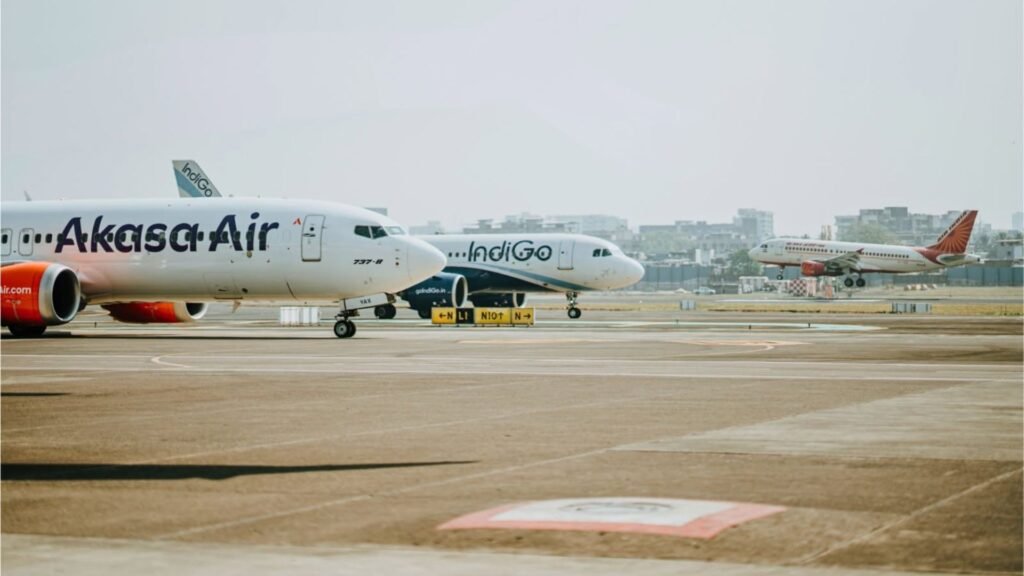
Image: CSMIA

New Delhi, India: The Supreme Court of India has pushed the Central Government of India to finalise new aviation rules within three weeks amid concerns over unpredictable airfares, surge pricing, baggage charges and passenger refunds, while warning that airlines failing to comply with applicable government directions could be grounded.

The development followed a hearing before a bench of Justices Vikram Nath and Sandeep Mehta on August 17, 2026. The Central Government informed the court that it had fast-tracked the process of framing rules under the Bharatiya Vayuyan Adhiniyam, 2024, and expected the framework to be finalised within three weeks. The government also placed the draft rules before the bench in a sealed cover, saying that some final discussions were still underway.

During the hearing, the Supreme Court of India issued a stern warning over airline compliance. “If airlines are not complying, ground them,” the bench said, according to reports of the proceedings. The observation came after the court was told that airlines were allegedly not complying with directions issued by the government of India concerning fares. The remark does not amount to an immediate order grounding any particular airline; rather, it signals that the court expects the existing regulatory directions to be enforced against carriers that fail to comply.

The proposed regulatory framework is being prepared under the Bharatiya Vayuyan Adhiniyam, 2024, which replaced the Aircraft Act, 1934 as the principal legislation governing India’s civil aviation sector. The new law came into force in January 2025, while the corresponding rules are being framed to operationalise its provisions.

According to the latest reports, the draft rules submitted to the Supreme Court of India address several areas directly affecting passengers. These include airline ticket pricing, surge fares, excess baggage charges and passenger refunds. The broader proceedings also involve concerns over cancellation and refund norms, ancillary charges and the need for stronger protection against arbitrary increases in the cost of air travel.

The proposed framework is particularly significant because India’s airline market currently operates largely on dynamic pricing, under which fares change according to demand, availability and other commercial factors. The latest government proposal is expected to establish clearer rules governing when and how intervention can take place when fares rise sharply. However, the precise mechanism for controlling surge pricing has not yet been publicly finalized, and reports do not establish that the government has approved a permanent fixed airfare cap.

The Supreme Court of India also examined whether the proposed framework would provide an effective regulatory mechanism. After examining the draft placed before it, the bench reportedly questioned whether an effective regulator had been provided for. This issue is significant because the proceedings are not limited to ticket prices; they also concern how passenger-protection requirements will be monitored and enforced once the new rules come into force.

For airlines, the immediate position remains that existing government directions continue to apply while the new rules are being finalised. The Central Government of India told the court that the Ministry of Civil Aviation has been issuing office memorandums to airlines concerning pricing during the interim period. The petitioners, however, argued that airlines were not following those directions, prompting the Supreme Court’s warning that non-compliant carriers should face action, including grounding.

The case originates from a petition filed by social activist S. Laxminarayanan seeking tighter regulation of airfares and greater protection for passengers. The plea has raised concerns about steep and unpredictable increases in ticket prices, surge pricing, baggage charges, cancellation and refund practices and other ancillary fees. It has also sought stronger regulatory oversight of the aviation sector.

The Supreme Court of India has been examining the issue for several months. In earlier proceedings, the court expressed concern over sharp increases in airfares during periods of high demand and sought a mechanism to provide greater predictability and protection to passengers. On May 15, the court observed that there should be some “rationalisation” of airfares and sought measures to provide relief to air passengers.

The latest August hearing follows the court’s July direction requiring the Central Government to place the proposed aviation rules before it. The government had said the rules had been framed and were undergoing the statutory process. The court nevertheless required the proposed framework to be produced before it in a sealed cover, even if the rules had not yet completed the parliamentary process.

The Central Government of India has now secured three more weeks to complete the rule-making process. The matter has been listed for further hearing on September 7, 2026, when the Supreme Court of India is expected to consider the status of the final rules and the regulatory mechanism proposed for enforcing them.

For passengers, the eventual rules could bring greater clarity to how airlines price tickets during periods of unusually high demand, how additional baggage charges are applied and how cancellations and refunds are handled. For airlines, the framework could introduce clearer compliance obligations and potentially stronger enforcement where government directions are breached. The exact obligations, however, will become clear only after the Central Government completes the rule-making process and formally notifies the final rules.

The latest development therefore marks a significant step towards a formal regulatory framework for airfare and passenger-related charges, but it does not yet mean that a new airfare cap or a final surge-pricing formula is in force. The Central Government is still completing the rules, and the Supreme Court of India is due to review the matter again on September 7.


Leave a Comment

Subscribe to our Newsletter

Recent News

Aviation Today Perspectives