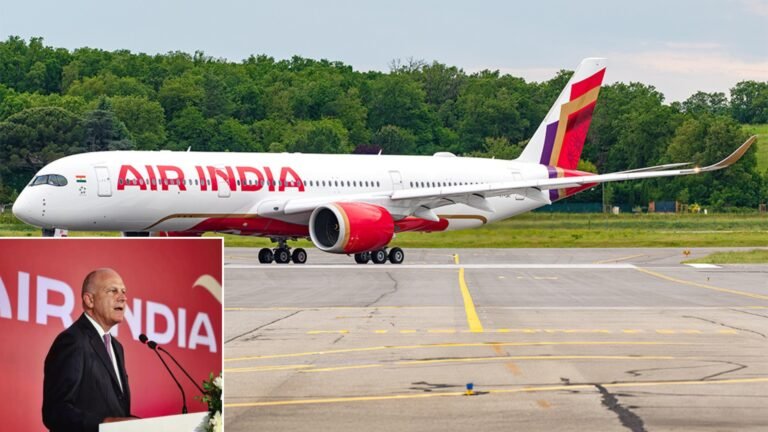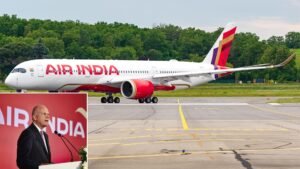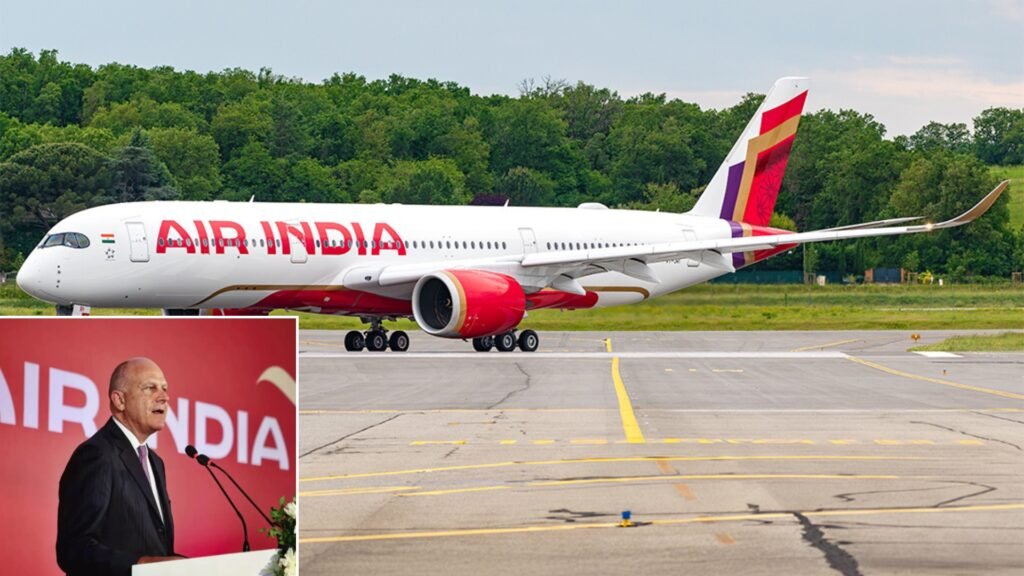
New Delhi, India: Air India has officially announced that its Chief Executive Officer and Managing Director Campbell Wilson has stepped down, marking a major leadership transition at the Tata Group-owned carrier during a period of sustained financial, operational, and regulatory pressures.
The confirmation came through an official press release issued by the airline, a formally acknowledged leadership change.
In its official statement, Air India confirmed that Wilson has resigned from his position and will continue during a transition period until a successor is appointed. The airline’s board has initiated the process of identifying new leadership.
Wilson took charge in July 2022, shortly after the Tata Group reacquired Air India in January 2022, ending decades of government ownership. He brought with him over 26 years of experience at Singapore Airlines, including leadership roles at its low-cost subsidiary Scoot.
He was appointed to lead one of the most ambitious airline turnarounds globally, tasked with rebuilding Air India’s brand, modernising its fleet, improving service quality, and integrating multiple airline businesses under the Tata aviation umbrella.
During his tenure, Air India:
- Announced record aircraft orders exceeding 500 jets
- Initiated fleet refurbishment and cabin upgrades
- Began restructuring operations and engineering functions
Air India has continued to face significant financial stress, reporting a combined loss of ₹98.08 crore ($0.98 billion) along with Air India Express for FY2024–25.
The airline’s turnaround has been slower than expected, with:
- Rising fuel costs due to geopolitical tensions
- Airspace restrictions affecting international routes
- Aircraft delivery delays impacting expansion plans
- Increasing competition in India’s rapidly growing aviation market
Regulatory scrutiny has also intensified, with authorities flagging safety and compliance lapses, including instances of operating aircraft without proper checks.
A major turning point during Wilson’s tenure was the fatal crash of Air India Flight 171 in June 2025, one of the deadliest aviation disasters in recent years.
The Boeing 787-8 aircraft crashed shortly after takeoff from Ahmedabad, killing 260 people, including passengers and individuals on the ground.
The tragedy triggered, global scrutiny of Air India’s safety standards, investigations by Indian and international aviation authorities and regulatory tightening and operational audits
In the aftermath, Wilson described the crash as “the most heartbreaking” event in his career and urged caution against premature conclusions as investigations continued.
Preliminary findings suggested a loss of engine thrust due to fuel control switches being moved to cutoff shortly after takeoff, though the final report is still awaited.
Following the crash, Tata Sons Chairman Natarajan Chandrasekaran stated that the airline’s “primary focus” was on supporting victims and their families while ensuring full cooperation with investigators.
In addition to financial losses and the crash fallout, Air India has faced increased passenger complaints, operational inconsistencies and safety compliance concerns flagged by regulators. These issues have weighed on the airline’s reputation, even as it attempts a large-scale revival under Tata ownership.