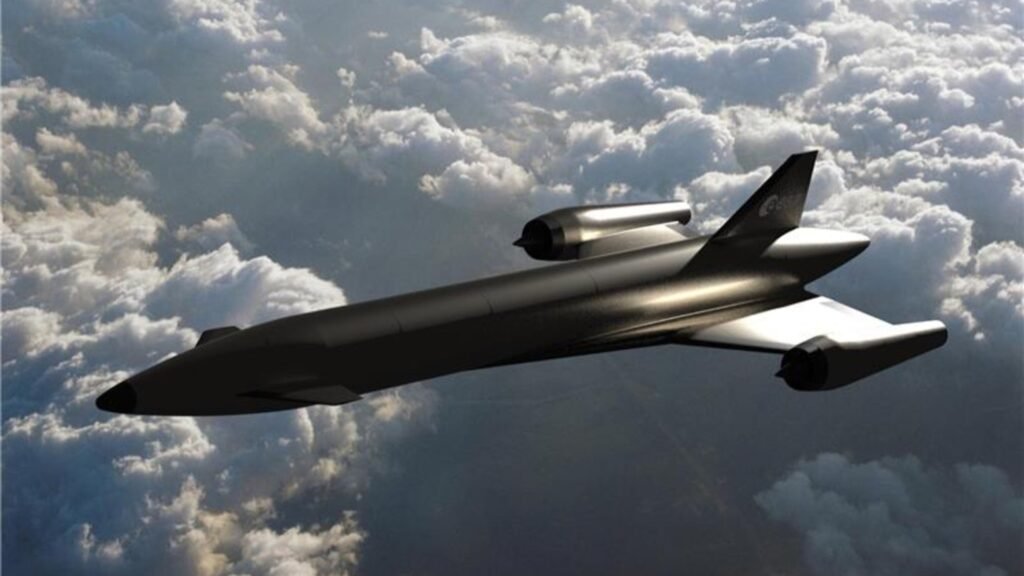
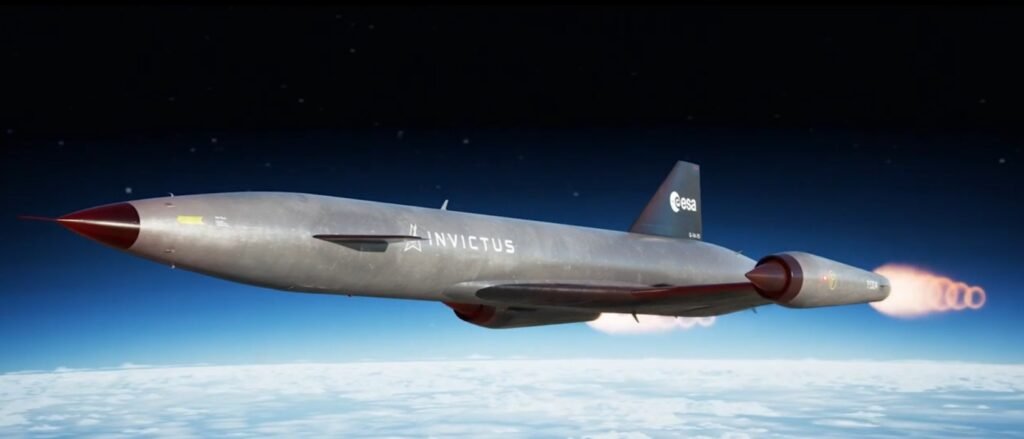
Europe: INVICTUS is funded through ESA’s General Support Technology Programme (GSTP) and Technology Development Element (TDE). It is a fully reusable experimental aerospace vehicle designed to fly at Mach 5 (five times the speed of sound). The programme will demonstrate key technologies for sustained hypersonic flight within the atmosphere and is designed to be upgradable, allowing exchange of materials, software, and propulsion systems between flight test campaigns.
Building on previous ESA technology developments, INVICTUS provides industry, agencies, and academia the opportunity to test future hypersonic technologies in a relevant flight environment. One of the main challenges of hypersonic operation is extreme heating due to shock and surface friction, which requires specialised materials and propulsion systems.
David Perigo, ESA’s chemical propulsion engineer and the programme’s technical lead, explains, “The INVICTUS programme will prove the suitability of a hydrogen-fuelled precooled air-breathing propulsion system for horizontal take-off and hypersonic flight. It will provide an invaluable opportunity to test the complete engine flow path, from intake to afterburner, at full scale in an integrated aircraft.”
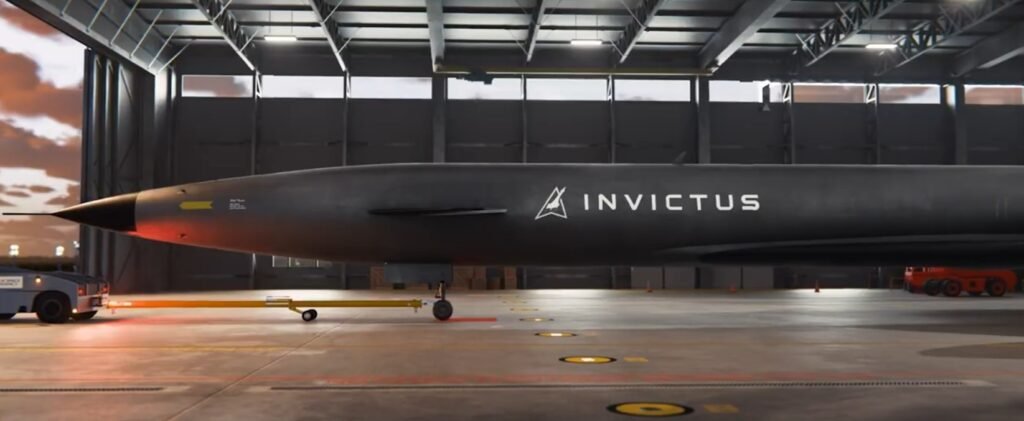
The precooler system, developed by UK-based Reaction Engines Ltd and initially funded through ESA’s GSTP, builds on technology from the SABRE (Synergetic Air-Breathing Rocket Engine) study. This system cools superheated air in a fraction of a second and has been successfully demonstrated with conventional jet engines. The lightweight architecture of a SABRE-like engine also paves the way for spaceplanes capable of horizontal runway take-off, bringing Europe closer to broader access to space.
Mark Ford, Head of ESA’s Chemical Propulsion Section, comments, “INVICTUS is an important next step in developing the technologies required for future spaceplanes and will give Europe a unique asset for exploring this type of flight.”
Sarah Wilkes, Managing Director at Frazer-Nash, adds, “INVICTUS is an exciting opportunity to provide advanced technology for space and realise dual-use capabilities. With strong industry support and deep aerospace expertise, we have all the right ingredients to make this ambitious vision a reality.”
Tommaso Ghidini, Head of ESA’s Mechanical Department, notes, “Hypersonic flight is the gateway to a new paradigm of mobility, defence, and space access. By mastering reusable, air-breathing propulsion, we are laying the foundation for aircraft that take off like planes and reach orbit like rockets revolutionising both terrestrial and orbital transportation.”
Efforts to build hypersonic aircraft date back decades, often with mixed success. In the Cold War era, the North American X-15 rocket plane became the first crewed aircraft to achieve hypersonic speeds, reaching Mach 6.7 in 1967. More recently, projects such as NASA’s X-43 and Boeing’s X-51 Waverider demonstrated scramjet propulsion, setting records for sustained hypersonic flight but remaining experimental.
Reaction Engines’, earlier Skylon space plane concept, featuring the same SABRE technology, was intended as a single-stage-to-orbit vehicle capable of horizontal takeoff and landing but it never advanced beyond prototype testing. These past initiatives, while groundbreaking, lacked the funding or technological maturity to enter commercial service, paving the way for ESA’s Invictus to carry the torch into a new generation.
Within the next 12 months, the INVICTUS consortium led by Frazer-Nash with partners Spirit AeroSystems and Cranfield University will complete the preliminary design for the full flight system.