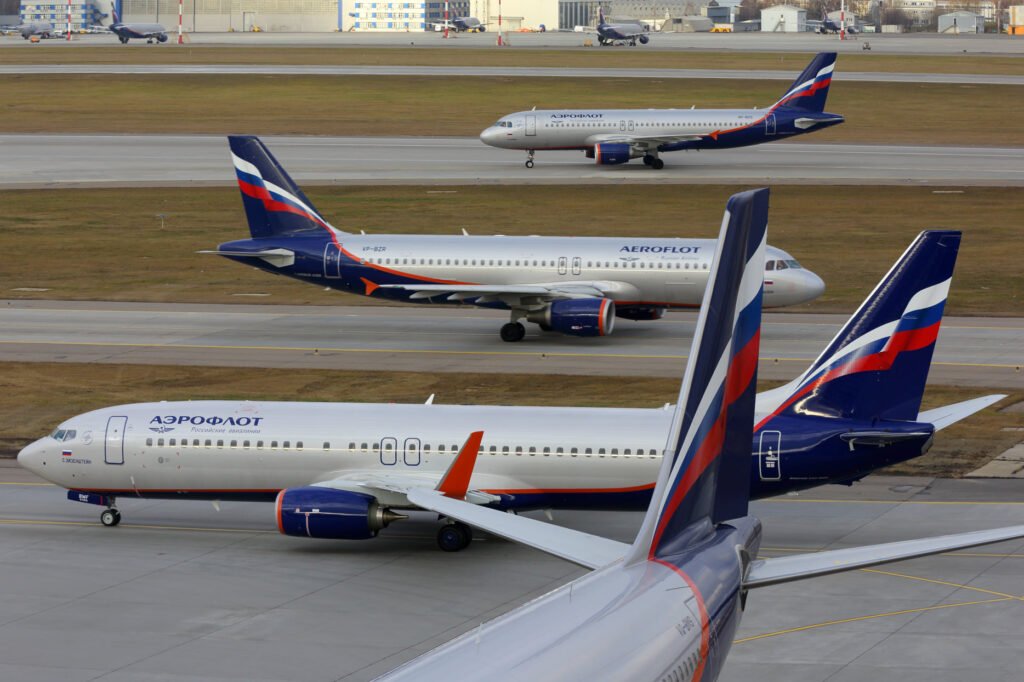
Moscow, Russia: In a development that highlights the complexity and limitations of international sanctions enforcement, Russia has imported more than €1 billion worth of aircraft parts from Western manufacturers since 2022, according to official customs data obtained by Finnish public broadcaster Yle and reviewed in collaboration with The Moscow Times.
The data, which spans from the beginning of 2022 to the first quarter of 2024, reveals that Russia continues to acquire essential spare parts and components for Airbus and Boeing aircraft, despite sweeping sanctions imposed by the European Union and the United States following its invasion of Ukraine in February 2022.
Sanctions and Workarounds
Under the current EU and U.S. sanctions regimes, the export of aircraft, parts, and technology to Russia is strictly prohibited. However, Russian airlines and maintenance firms have relied on intermediary countries to bypass these restrictions. The primary rerouting channels include Turkey, the United Arab Emirates, China, and former Soviet states in Central Asia, which have seen a marked increase in re-exports of aviation parts to Russia.
According to Yle’s analysis, the majority of the parts entering Russia originate from U.S. and EU companies, especially components tied to Boeing and Airbus aircraft models which still make up more than 70% of Russia’s commercial airline fleet.
Commercial Aviation’s Continued Dependence
While Russia has accelerated efforts to domestically manufacture aircraft and substitute Western models with indigenous designs such as the Irkut MC-21 and Sukhoi Superjet 100, its commercial aviation sector remains heavily dependent on foreign-built aircraft. These aircraft require regular maintenance and certified parts to remain operational and meet airworthiness standards.
Industry sources indicate that over 500 Boeing and Airbus aircraft are still active in Russian fleets. Without access to original parts, maintaining these aircraft safely would be nearly impossible. Hence, importing components whether legally or through grey markets has become critical for operational continuity.
Aviation experts have raised concerns about the long-term airworthiness and safety risks associated with importing parts through unauthorized or non-certified channels. In many cases, the parts may lack proper documentation or traceability, potentially exposing operators to quality and safety issues.
Furthermore, several international watchdogs, including the European Union Aviation Safety Agency (EASA) and the U.S. Bureau of Industry and Security (BIS), are actively monitoring global trade flows to identify possible breaches and plug enforcement gaps. However, the use of third-party intermediaries and complex supply chains has made comprehensive oversight difficult.
Geopolitical Implications
The findings come at a time when Western governments are pushing for tighter sanctions enforcement and coordination with countries seen as re-export hubs. In April 2024, the European Commission warned of possible secondary sanctions against non-EU entities facilitating restricted goods to Russia.
Meanwhile, Russian officials maintain that all ongoing aircraft operations comply with domestic aviation standards. Rosaviatsiya, the Russian Federal Air Transport Agency, has not commented on the specific details of the report but has reiterated the country’s intent to achieve aviation self-sufficiency by the end of the decade.