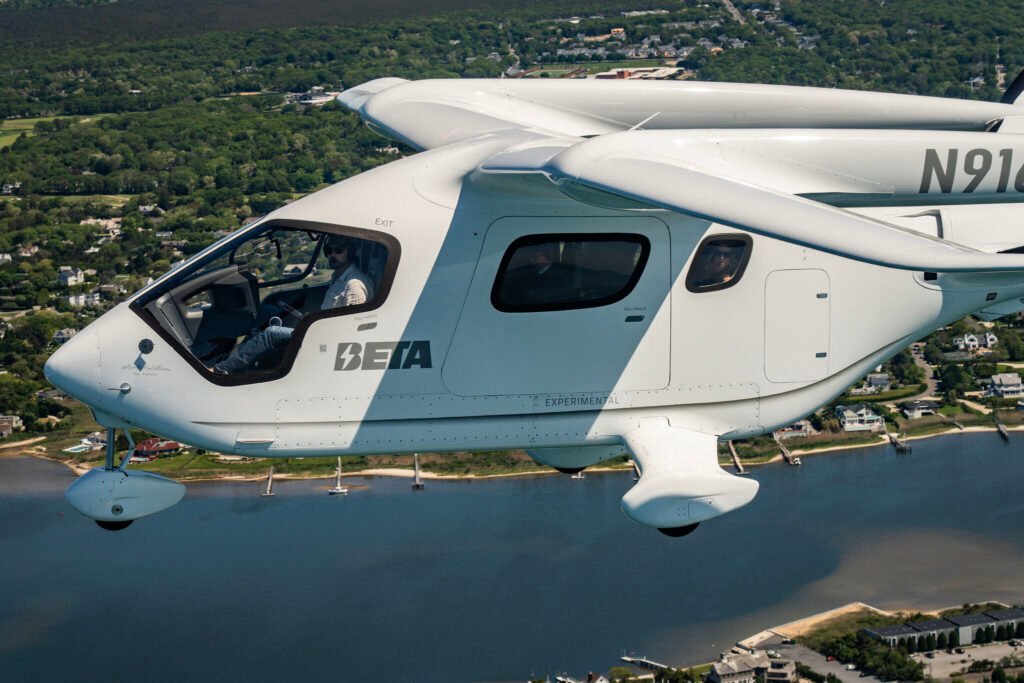
New York, United States: Beta Technologies has achieved a major milestone in electric aviation with the successful passenger flight of its all-electric aircraft, the Alia CX300, to New York’s John F. Kennedy International Airport. The flight marked the first time a fully electric aircraft carrying passengers entered controlled Class B airspace and landed at one of the busiest international airports in the United States.
The aircraft departed from East Hampton Airport and completed the journey to JFK covering a distance of approximately 130 kilometers. The flight lasted around 35 minutes and was completed with a total energy cost of under $8, demonstrating the substantial cost-saving potential of electric propulsion compared to conventional fuel-based aircraft.
The five occupants on board including four passengers and a pilot, reported a smooth and quiet experience, with noise levels significantly lower than traditional turbine aircraft. The flight proceeded under Visual Flight Rules and received full coordination from JFK’s tower and the New York Port Authority.
FAA-Certified
The Alia CX300 is a conventional takeoff and landing (CTOL) electric aircraft with a range of up to 250 nautical miles on a single charge. It received airworthiness certification from the U.S. Federal Aviation Administration, affirming its readiness for deployment in cargo, passenger, and special mission roles.

The aircraft is part of Beta’s broader plan to offer electric solutions that cater to regional travel and logistics, particularly short-haul routes underserved by major airlines. With its proven operational capability and certification in place, the CX300 is being evaluated by multiple agencies, including the U.S. Air Force and Army, for defense and emergency response operations.
Infrastructure and Commercial Expansion
Beta Technologies is also investing heavily in the supporting infrastructure necessary to enable widespread electric flight. The company has established 46 electric aircraft charging stations across the U.S., with dozens more in development. These stations are strategically located at airports and logistics hubs to facilitate cross-country operations.
Beta does not intend to operate its own fleet of aircraft. Instead, the company aims to sell the aircraft and associated charging infrastructure to customers in both civil and government sectors. Key commercial partners include UPS, Bristow Group, Metro Aviation, and Air New Zealand.
In addition to the CX300, Beta is developing the Alia A250, a vertical take-off and landing (VTOL) version for urban and remote operations. Both aircraft share common airframes and power systems, which streamlines maintenance and pilot training requirements.
Global Demonstrations and Future Outlook
Following its high-profile arrival at JFK, Beta Technologies has expanded its demonstration campaign internationally. The company has conducted aircraft showings and test flights in Ireland and has scheduled further demonstrations in Norway. These efforts aim to showcase the feasibility of electric aircraft in diverse climates and regulatory environments.
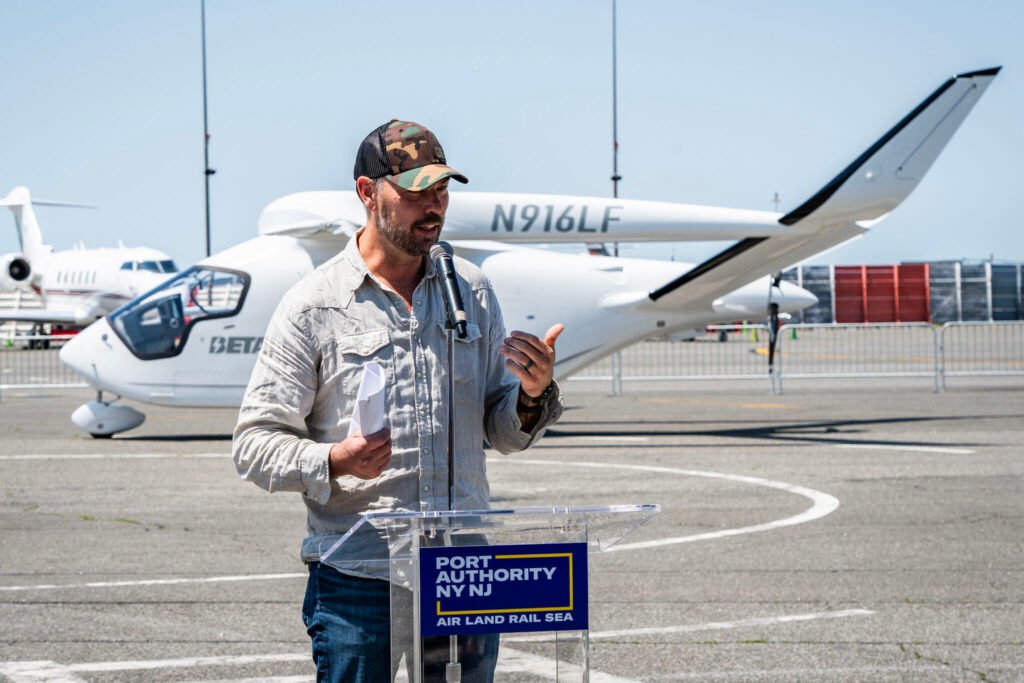
Domestically, the CX300 completed a six-week, 22-state tour to validate its operational capabilities, including successful landings at busy airports under Instrument Flight Rules (IFR).
Beta Technologies has raised over $1 billion in investment funding to support production, certification, and commercialization. The company’s long-term vision includes integrating electric aircraft into public and private transportation networks, particularly for roles where noise, emissions, and operating costs are key concerns.