Picture Credits: Qantas
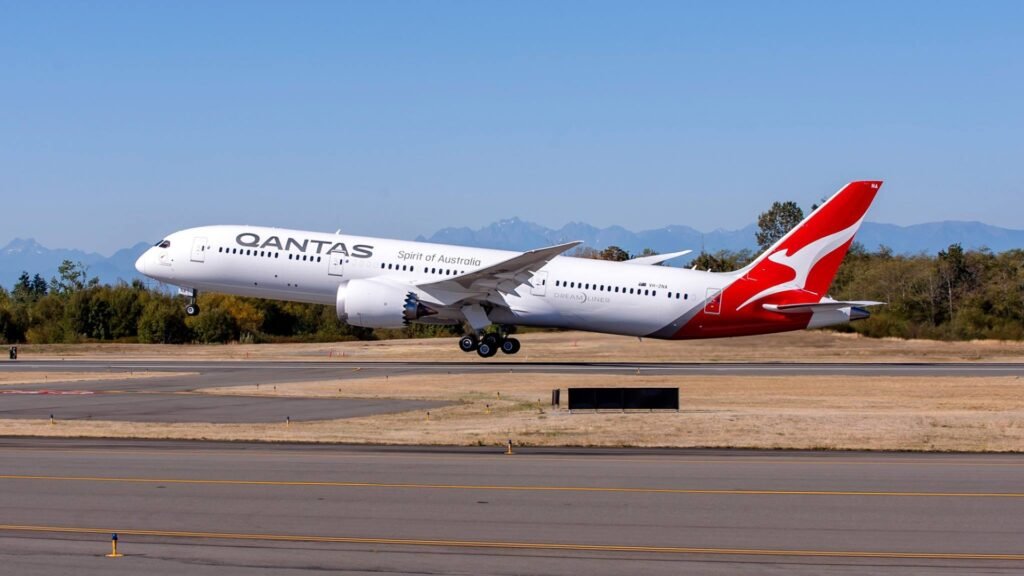
Canberra, Australia: In a landmark decision, Australia’s High Court has ruled that Qantas Airways illegally terminated approximately 1,700 ground staff during the COVID-19 pandemic. The court found that the airline’s outsourcing of these roles in 2020 was a deliberate move to prevent employees from exercising their workplace rights, such as engaging in protected industrial action and collective bargaining, thereby violating the Fair Work Act .
The Legal Journey
Qantas had previously appealed a Federal Court decision that deemed the outsourcing unlawful. However, the High Court unanimously dismissed the appeal, affirming that the airline’s actions were not solely driven by commercial considerations but also aimed at undermining employee rights .
Following the ruling, the Federal Court ordered Qantas to compensate affected workers. In a test case, three former employees were awarded a total of $170,000 for non-economic losses, with individual amounts of $30,000, $40,000, and $100,000 . The total compensation for all affected workers is expected to be substantial, with estimates suggesting it could exceed $100 million .
Corporate Accountability and Cultural Reflection
The Federal Court is now conducting hearings to determine the penalties Qantas must face. The Transport Workers Union (TWU) is pushing for Qantas to pay the maximum penalty of $121 million, labeling the action as the largest violation of the Fair Work Act in Australian history . Justice Michael Lee has expressed skepticism about the sincerity of Qantas’ remorse, noting the airline’s failure to present key decision-makers for scrutiny and its prolonged legal battles .
A Broader Industry Issue
Qantas is not alone in facing scrutiny over labor practices. Wizz Air, a European low-cost carrier, has also been embroiled in labor controversies. In April 2021, a Romanian court ruled that Wizz Air had violated collective dismissal procedures and ordered the reinstatement of four pilots . These cases highlight a troubling trend in the aviation industry, where cost-cutting measures during crises can lead to violations of workers’ rights.
The Qantas case serves as a stark reminder of the importance of upholding labor laws and the potential consequences of corporate decisions that prioritize cost savings over employee rights. As the aviation industry continues to navigate post-pandemic recovery, companies must ensure that their strategies align with legal and ethical standards to maintain trust and integrity.