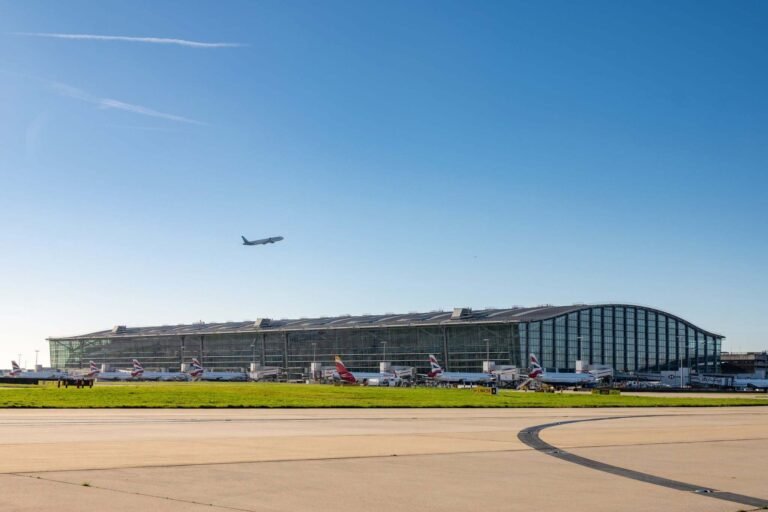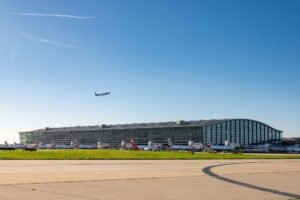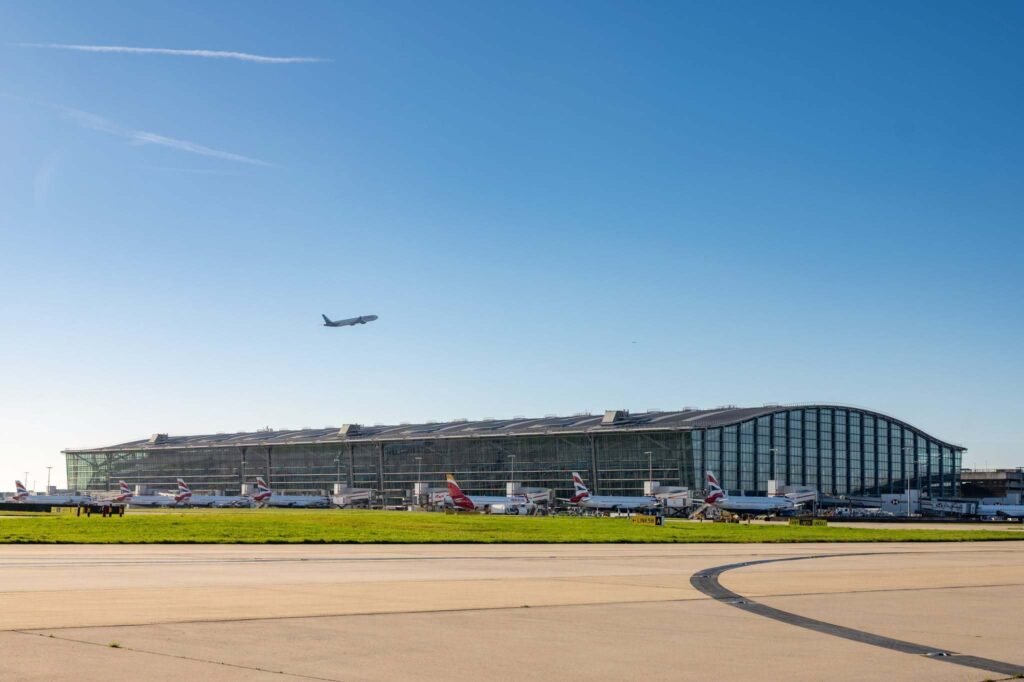
London, United Kingdom: The UK Parliament’s Transport Committee has said the Government has failed to establish a convincing case for a third runway at Heathrow Airport, calling for further economic, environmental and infrastructure assessments before the expansion plans proceed. The findings were announced on November 26, 2026, through an official statement published by the House of Commons Transport Committee, alongside its report examining the Government’s draft Heathrow Expansion National Policy Statement (HENPS).
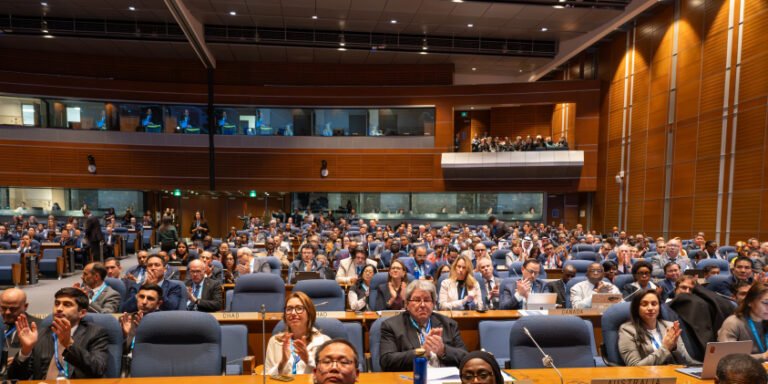
The Committee’s announcement followed a five-month inquiry into the proposed expansion, during which MPs examined evidence from more than 90 written submissions and questioned representatives from the aviation industry, community groups, local authorities, academics, economists, the Climate Change Committee, both third-runway scheme promoters and the Minister for Aviation.
Transport Committee Chair Ruth Cadbury said: “Our report should be a wake-up call for ministers. We found that the government should have set out its overall strategy for aviation before publishing the draft HENPS. It did not do so and now it has failed to make the case for Heathrow expansion.”
Cadbury also said: “Plans for a third runway should be grounded for now and the government should go back to the drawing board before proceeding any further.” She called for more robust analysis, stronger environmental safeguards and clearer plans for funding improvements to public transport and determining the costs for airlines and passengers.
The report challenges the Government’s economic justification for the project, highlighting a gap between the projected contribution to national economic growth and the wider financial, social and environmental costs of expansion.
Department for Transport modelling indicates that a third runway could increase annual real GDP by approximately 0.05% in 2056 compared with the baseline scenario. The Committee described the projected growth as modest and noted that it represents a substantial reduction from earlier estimates.
The Airports Commission’s 2015 assessment had projected that additional Heathrow capacity could increase GDP by 0.65% to 0.75% by 2050. The report also noted that previous Government estimates suggested an increase of almost 0.5% in the UK’s potential GDP by 2050.
The Committee further highlighted the Department for Transport’s Heathrow Expansion Appraisal Report (HEAR), which estimates that the project’s Net Present Value (NPV) would remain negative, at between £14 billion and £53 billion below zero, even after revisions to the original analysis. The assessment indicates that wider societal and environmental costs would outweigh the benefits to passengers and the economy captured by the appraisal.
MPs acknowledged that the separate GDP modelling includes potential benefits from trade and productivity that are not fully captured in the appraisal. However, they said the Government had not yet completed the analytical work needed to combine the two assessments into a comprehensive economic evaluation.
The report recommends that the Government provide Parliament with a further analysis that is independently peer-reviewed and fully assured before the HENPS is finalised.
The Committee also questioned the proposed designation of Heathrow expansion as Critical National Growth Infrastructure, stating that the Government had not demonstrated why the projected economic benefits justified giving the project that status.
It said the Government should either remove the designation from the final HENPS or provide stronger supporting evidence.
Beyond the economic assessment, the Committee criticised the Government for publishing the draft HENPS without first establishing a comprehensive strategy for the UK’s aviation sector.
It said Heathrow’s role must be assessed alongside other UK airports, regional connectivity, international trade, passenger and freight movements, climate commitments and the country’s wider transport network.
The Committee recommended that the Government publish an overarching aviation strategy before Parliament votes on the HENPS. This should explain the role of regional airports, the importance of hub connectivity, the distribution of airport capacity across the country and how aviation’s economic benefits will be balanced against its environmental impacts.
Expansion Costs And Passenger Charges Remain Uncertain
The report also raises concerns about the overall affordability of the proposed third runway and the potential consequences for airlines and passengers.
Heathrow Airport Ltd has estimated the cost of its proposed expansion project at £49 billion, including around £33 billion for airport expansion, mitigation measures, new terminals and surrounding infrastructure, with the remainder allocated to upgrading the existing airport.
Although both shortlisted promoters, Heathrow Airport Ltd and Heathrow West Ltd, have committed to private financing, the Committee said there was insufficient clarity over the final costs, funding responsibilities and safeguards against cost overruns.
It warned that higher landing charges and other airport fees could reduce airline demand and undermine the economic benefits expected from expansion.
The report states: “Expansion should not go ahead at any price, or at any cost to society or the environment.”
The Committee called on the Civil Aviation Authority (CAA) to consult on a likely maximum level of landing charges beyond which the benefits of expansion could be compromised. It also recommended clearer definitions of affordability and stronger independent scrutiny of project costs.
Public Transport And Rail Connectivity Concerns
The Committee also found that the Government had not established sufficiently detailed, committed and funded plans to improve surface transport access to an expanded Heathrow.
Transport for London told the inquiry that expansion would require at least 110,000 additional public transport trips every day. However, the report said existing proposals did not provide sufficient certainty about how the increased demand would be accommodated.
MPs highlighted the need for improved rail connections, including potential routes into Heathrow from the west and south. They also raised concerns that planned improvements to the Elizabeth line and Piccadilly line might not provide enough capacity, with significant elements of the Piccadilly line upgrade still unfunded.
The Committee recommended that the final HENPS identify the rail schemes supported by the Government and require expansion promoters to submit transparent, independently verified funding plans before receiving development consent.
It also called for measurable limits on additional road traffic and clearer consequences if public transport targets are not achieved.
Climate Targets And Emissions Remain A Major Obstacle
The Committee’s climate assessment raises further questions about whether Heathrow expansion can comply with the UK’s legally binding carbon budgets and its commitment to achieve net-zero greenhouse gas emissions by 2050.
The report refers to advice published by the Climate Change Committee (CCC) on September 16, 2026, which concluded that Heathrow expansion was not compatible with the UK’s carbon budgets or net-zero target under current policies.
The CCC estimated that expansion could increase UK carbon dioxide emissions by a further 6.9% by 2050, making it substantially harder to meet the Seventh Carbon Budget and the country’s net-zero commitment.
The Transport Committee stated: “The Climate Change Committee’s advice is a clear signal that, at present, the government is failing that test.”
It also questioned the Government’s reliance on future improvements in sustainable aviation fuel (SAF) and engineered carbon removals to offset the additional emissions. The report highlighted uncertainty over the availability and production capacity of SAF, as well as the cost, scalability and technological challenges associated with engineered carbon removal.
The Department for Transport’s latest forecasts for SAF use in 2050 have also fallen from 50% to 30%, according to the report.
The Committee recommended that the Government establish the necessary policies to accommodate the emissions impact of expansion before granting a Development Consent Order (DCO). It also called for a clear contingency plan outlining what action would be taken if decarbonisation targets were missed.
Air Quality, Noise And Community Protections
The report further recommends strengthening the draft policy’s air quality and noise requirements.
On air quality, MPs said the assessment should consider World Health Organization guidelines, emerging pollutants such as ultrafine particles and future developments in scientific evidence and regulation, rather than relying solely on compliance with existing UK legal limits.
On aircraft noise, the Committee questioned the effectiveness of using 2024 as the baseline for assessing impacts. It said the policy must also address communities that are not currently significantly affected by aircraft noise but could experience increased exposure following the construction of a northwest runway.
MPs called for stronger requirements on promoters to demonstrate how noise impacts would be limited in individual communities, alongside enforceable commitments for mitigation, compensation and monitoring.
The Committee also questioned whether existing compensation proposals adequately reflect current costs and circumstances. It recommended a national approach to community compensation, with standards based on recent airport expansion projects, including Gatwick and Luton, rather than simply carrying forward provisions from the 2018 Airports National Policy Statement.
The Transport Committee’s report is a parliamentary scrutiny document containing recommendations to the Government; it is not a final planning decision or an order cancelling Heathrow’s proposed third runway.
The draft HENPS must undergo parliamentary scrutiny before it can be designated as final Government policy. The report explains that designation would establish the strategic policy framework against which individual development applications would be assessed. A separate Development Consent Order would still be required before construction could proceed.
The Government has two months to respond to the Committee’s report. MPs have called for the outstanding economic analysis, aviation strategy, climate policies, affordability safeguards and infrastructure commitments to be addressed before the draft policy advances.
The Committee’s conclusion is that the draft HENPS, in its current form, has not established a sufficiently robust strategic case for Heathrow’s third runway and requires substantial improvement before the Government proceeds further.