News
Civil Aviation
Pilot Training
Flight School Analysis
Aviation Jobs
Training
Services
About Us
Contact Us

ICAO States Agree On Sweeping Economic Reforms To Drive Global Air Transport Growth

Picture of Aviation Today News Desk

Aviation Today News Desk

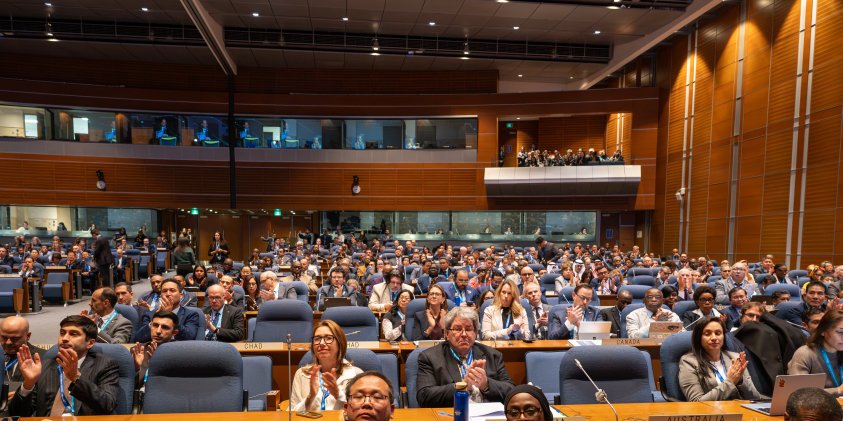
Montréal, Canada: Governments have agreed to far-reaching economic reforms for global air transport at the International Civil Aviation Organization's (ICAO) Seventh Worldwide Air Transport Conference (ATConf/7), reaching a broad consensus on strengthening aviation's contribution to global prosperity and preparing the sector for significant transformations. The agreement was formalized through a Ministerial Declaration at a ceremony on November 20, setting out commitments to advance global air transport growth and connectivity, mobilize investment in civil aviation infrastructure, and strengthen institutional capacity and regulatory effectiveness. ICAO Secretary General Juan Carlos Salazar said the sector must unlock its full potential through “robust and sustainable growth”. He added that the Ministerial Declaration agreed by member states provides a commitment to the development and growth of international air transport. The weeklong conference brought together more than 1,500 delegates, including representatives from 154 ICAO Member States and organizations observing the proceedings. Discussions highlighted the urgent need to modernize economic and legal frameworks, invest in infrastructure and skilled workforces, and ensure innovation keeps pace with rapidly changing technologies and global demands. The reforms identified during the conference are intended to support ICAO's long-term strategic plan, which envisions air transport for all by 2050, with zero fatalities and net-zero carbon emissions. ICAO also highlighted the importance of transforming economic policies and attracting investment into international aviation to support sustainable development. The organization particularly emphasized emerging economies, which are forecast to generate most of the growth in aviation. Addressing delegates at the closing ceremony, Salazar stressed that global connectivity is essential to sustainable economic development. He said the agreement had established an economic framework to advance ICAO's Strategic Vision for 2050. The conference's policy recommendations will now be submitted to the ICAO Council for review and implementation through the organization's global policies, standards and plans. ICAO is a United Nations specialized agency responsible for enabling safe, secure and sustainable air transport. It brings together 193 Member States to develop and adopt Standards and Recommended Practices that provide the global framework for international civil aviation. Through technical guidance and implementation support, the organization works towards global connectivity, zero fatalities and net-zero carbon emissions.
Image: ICAO

Montréal, Canada: Governments have agreed to far-reaching economic reforms for global air transport at the International Civil Aviation Organization’s (ICAO) Seventh Worldwide Air Transport Conference (ATConf/7), reaching a broad consensus on strengthening aviation’s contribution to global prosperity and preparing the sector for significant transformations.

The agreement was formalized through a Ministerial Declaration at a ceremony on November 20, setting out commitments to advance global air transport growth and connectivity, mobilize investment in civil aviation infrastructure, and strengthen institutional capacity and regulatory effectiveness.

ICAO Secretary General Juan Carlos Salazar said the sector must unlock its full potential through “robust and sustainable growth”. He added that the Ministerial Declaration agreed by member states provides a commitment to the development and growth of international air transport.

The weeklong conference brought together more than 1,500 delegates, including representatives from 154 ICAO Member States and organizations observing the proceedings. Discussions highlighted the urgent need to modernize economic and legal frameworks, invest in infrastructure and skilled workforces, and ensure innovation keeps pace with rapidly changing technologies and global demands.

The reforms identified during the conference are intended to support ICAO’s long-term strategic plan, which envisions air transport for all by 2050, with zero fatalities and net-zero carbon emissions.

ICAO also highlighted the importance of transforming economic policies and attracting investment into international aviation to support sustainable development. The organization particularly emphasized emerging economies, which are forecast to generate most of the growth in aviation.

Addressing delegates at the closing ceremony, Salazar stressed that global connectivity is essential to sustainable economic development. He said the agreement had established an economic framework to advance ICAO’s Strategic Vision for 2050.

The conference’s policy recommendations will now be submitted to the ICAO Council for review and implementation through the organization’s global policies, standards and plans.

ICAO is a United Nations specialized agency responsible for enabling safe, secure and sustainable air transport. It brings together 193 Member States to develop and adopt Standards and Recommended Practices that provide the global framework for international civil aviation. Through technical guidance and implementation support, the organization works towards global connectivity, zero fatalities and net-zero carbon emissions.

Leave a Comment

Subscribe to our Newsletter

Recent News

Aviation Today Perspectives