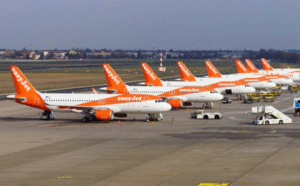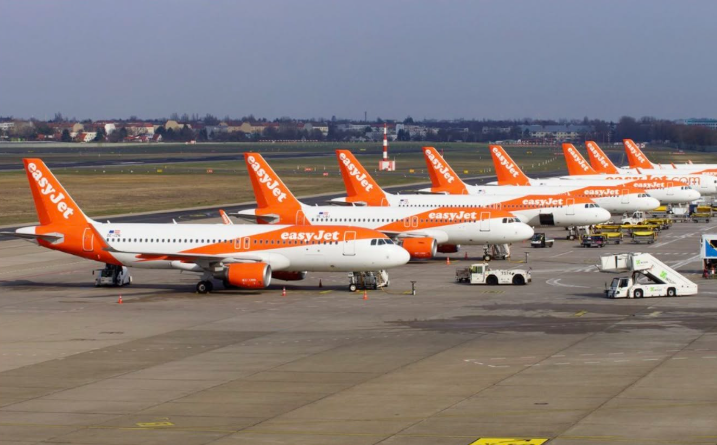
London, United Kingdom: British low-cost carrier easyJet reported an 89% decline in annual headline pre-tax profit to £71 million in its FY2026 Final Results, released on November 25, 2026, compared with £665 million in FY2025, as the prolonged Middle East conflict drove up fuel prices and temporarily weakened customer demand.
The airline’s reported profit before tax fell to £24 million from £658 million a year earlier. Group revenue, however, increased 6% to £10.737 billion, compared with £10.106 billion in FY2025. The company attributed the weaker financial performance primarily to higher fuel costs, inflationary pressures and capacity investments during the winter season, including operations at Milan Linate and Rome Fiumicino airports.
easyJet said the Middle East conflict, which affected operations from March onwards, contributed to an 11% increase in annual fuel costs to £2.497 billion, up £244 million year on year. Group costs increased 13%, outpacing revenue growth. Although demand recovered strongly closer to departure, the improvement was insufficient to offset weaker bookings earlier in the booking period.
Passenger numbers increased 3% to 96.4 million, while the airline maintained an annual load factor of 90%. Seat capacity grew 3% to 107 million seats, and available seat kilometres increased 6%. Airline passenger revenue rose 3% to £6.270 billion, while ancillary revenue increased 6% to £2.758 billion.
easyJet holidays recorded a stronger performance, with revenue rising 19% to £1.709 billion and headline profit before tax increasing to £266 million from £250 million. The business served 3.5 million customers, a 13% increase year on year, and expanded its UK market share to 11%.
Despite the financial decline, the airline reported improvements in operational performance and customer satisfaction. On-time performance increased to 74.2%, compared with 72.3% in FY2025, while airline customer satisfaction reached 82%, up two percentage points. Holiday customer satisfaction rose to 84%.
Commenting on the results, easyJet CEO Kenton Jarvis said: “This year was challenging for airlines due to the Middle East conflict and its effect on demand and fuel prices, which materially impacted our financial performance.” He added that the airline continued to make strategic progress by improving operations, strengthening customer satisfaction and advancing initiatives to support future financial performance.
The airline is also progressing with its fleet and operational development plans. Its loyalty programme is scheduled to launch in FY2027, while installations under its Starlink Wi-Fi partnership are expected to begin in spring 2027. Acquisitions of maintenance facilities IMT Aviation in August 2026 and Adria Tehnika in October 2026 are expected to strengthen in-house heavy maintenance capabilities to approximately 50% of the airline’s requirements.
For FY2027 and FY2028, easyJet plans to retire 54 aircraft, with the remaining A319 fleet scheduled for retirement by FY2029. The fleet changes are expected to generate approximately £250 million in additional annual cost efficiencies, including £110 million in FY2027 and a further £140 million in FY2028.
The board said it would not provide detailed FY2027 financial guidance while the proposed acquisition progresses, although it expects year-on-year revenue per available seat kilometre (RASK) performance to improve sequentially through each quarter. The airline also expects ex-fuel cost per available seat kilometre to improve through fleet modernisation and operational efficiencies.
Separately, shareholders approved the recommended acquisition of easyJet by Eagle Bidco Ltd, an entity indirectly owned by funds managed by affiliates of Apollo Global Management, on November 11, 2026. The proposed cash offer values the airline at 715 pence per share. Completion remains expected in the first quarter of 2027, subject to outstanding regulatory conditions.
The board has not recommended a dividend for FY2026, compared with 13.2 pence per share in the previous financial year, citing the company’s financial performance and the terms of the proposed acquisition.