News
Civil Aviation
Pilot Training
Flight School Analysis
Aviation Jobs
Training
Services
About Us
Contact Us

EXCLUSIVE: RGIA ATC Officers Discuss The Use Of Radar, SOPs And Automation

Picture of Aviation Today Exclusive

Aviation Today Exclusive

Conversation In Details: Aviation Today: How does an air traffic controller help reduce congestion at airports? ATC Officers: Every shift begins with a mandatory briefing before controllers take over operations. They first review meteorological conditions, including cloud cover, rainfall and overall weather, because weather plays a critical role in flight operations. Before assuming control, the incoming controller also receives a detailed handover from the previous controller covering traffic status, aircraft clearances and other operational information. Once in position, controllers manage aircraft by strictly following the separation standards laid down in ATC manuals. Using radar surveillance, controllers normally maintain a minimum lateral separation of five nautical miles between aircraft at the same level. If radar surveillance is unavailable and aircraft cannot be directly monitored, significantly larger procedural separation has to be applied. Radar therefore enables controllers to safely reduce spacing between aircraft, allowing more traffic to be accommodated within the same airspace and helping reduce congestion without compromising safety. Aviation Today: Could you share your experience working as an air traffic controller? ATC Officers: I joined the Air Traffic Control department in 2011 and initially worked as a tower controller responsible for aerodrome control operations. My duties included granting aircraft startup clearance, coordinating pushback, issuing taxi instructions, and providing take-off and landing clearances. Later, I served at Gulbarga, where I continued handling aerodrome control. After joining Shamshabad Airport, I began working in radar control. Earlier, controllers relied entirely on procedural control, where aircraft positions could not be seen on a display, requiring much larger separation standards. Today, radar allows controllers to continuously monitor aircraft, enabling the reduction of lateral separation from around ten nautical miles under procedural control to five nautical miles under radar surveillance. This significantly improves traffic efficiency while maintaining safety. I genuinely enjoy my profession because it demands absolute concentration. In air traffic control, even a single mistake is unacceptable, making focus and responsibility essential at every moment. Aviation Today: How do you respond when an aircraft declares an emergency landing? ATC Officers: Every type of emergency is handled according to established Standard Operating Procedures (SOPs). Controllers follow each procedure step by step while simultaneously keeping senior officials informed about every development and accurately recording the timing of every action and notification. If an aircraft reports a serious emergency such as an engine fire, airport fire services are immediately alerted, followed by city fire services, police authorities and other relevant agencies. Different emergencies require different response mechanisms. In the event of a hijacking, separate contingency procedures are activated, including specialised coordination meetings at the airport level as well as higher-level coordination at Airports Authority of India headquarters in Delhi. Every emergency scenario has its own predefined contingency plan to ensure an organised and timely response. Aviation Today: How has technology reduced the manual workload for air traffic controllers? ATC Officers: Modern radar systems and automation have significantly reduced manual work within air traffic control. Earlier, controllers manually prepared paper flight progress strips by recording aircraft arrival times, positions and operational details by hand. Today, Electronic Flight Progress Strips automatically display operational information, requiring controllers to enter only essential details such as bay number, arrival time, passengers on board, QNH and time. Communication has also become much more efficient through the Voice Communication Control System (VCCS). Previously, controllers depended on multiple landline telephones and manually dialled different numbers. With VCCS, contacts are already stored in the system, allowing controllers to establish communication simply by selecting the required contact, thereby reducing workload and improving operational efficiency.


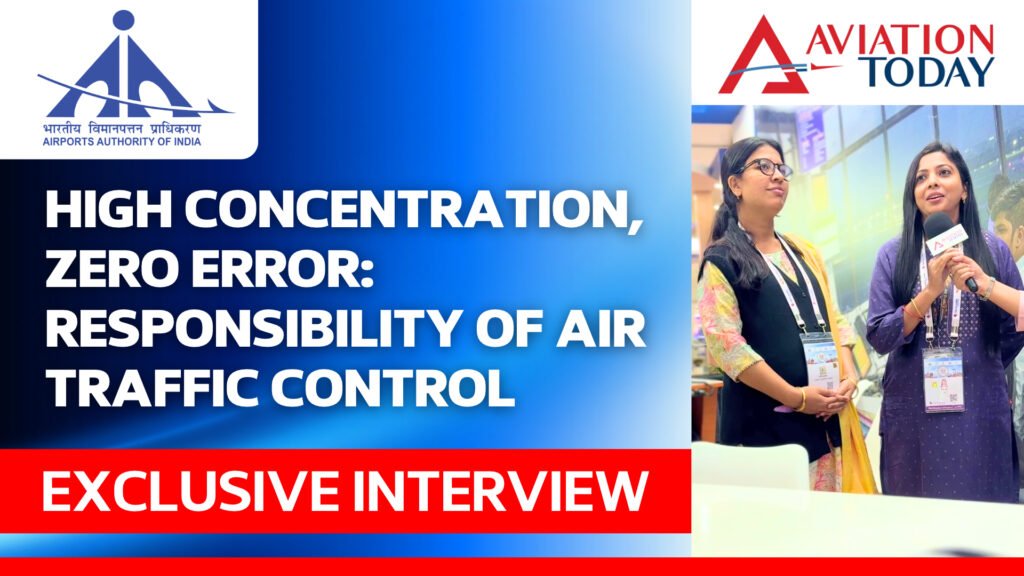
Hyderabad, India: Speaking to Aviation Today during Wings India at Begumpet Airport, Hyderabad, ATC officers from Rajiv Gandhi International Airport (RGIA), Shamshabad, explained how modern air traffic control combines strict procedures, radar surveillance, automation and constant coordination to safely manage increasing aircraft movements. 

They highlighted the importance of weather briefings, maintaining prescribed aircraft separation, handling emergencies through detailed Standard Operating Procedures (SOPs), and using advanced technologies such as radar, Electronic Flight Progress Strips and Voice Communication Control Systems (VCCS) to reduce controller workload while enhancing operational safety. 

Conversation In Details

Aviation Today: How does an air traffic controller help reduce congestion at airports?

ATC Officers: Every shift begins with a mandatory briefing before controllers take over operations. They first review meteorological conditions, including cloud cover, rainfall and overall weather, because weather plays a critical role in flight operations. Before assuming control, the incoming controller also receives a detailed handover from the previous controller covering traffic status, aircraft clearances and other operational information. Once in position, controllers manage aircraft by strictly following the separation standards laid down in ATC manuals. Using radar surveillance, controllers normally maintain a minimum lateral separation of five nautical miles between aircraft at the same level. If radar surveillance is unavailable and aircraft cannot be directly monitored, significantly larger procedural separation has to be applied. Radar therefore enables controllers to safely reduce spacing between aircraft, allowing more traffic to be accommodated within the same airspace and helping reduce congestion without compromising safety.

Aviation Today: Could you share your experience working as an air traffic controller?

ATC Officers: I joined the Air Traffic Control department in 2011 and initially worked as a tower controller responsible for aerodrome control operations. My duties included granting aircraft startup clearance, coordinating pushback, issuing taxi instructions, and providing take-off and landing clearances. Later, I served at Gulbarga, where I continued handling aerodrome control. After joining Shamshabad Airport, I began working in radar control. Earlier, controllers relied entirely on procedural control, where aircraft positions could not be seen on a display, requiring much larger separation standards. 

Today, radar allows controllers to continuously monitor aircraft, enabling the reduction of lateral separation from around ten nautical miles under procedural control to five nautical miles under radar surveillance. This significantly improves traffic efficiency while maintaining safety. I genuinely enjoy my profession because it demands absolute concentration. In air traffic control, even a single mistake is unacceptable, making focus and responsibility essential at every moment.

Aviation Today: How do you respond when an aircraft declares an emergency landing?

ATC Officers: Every type of emergency is handled according to established Standard Operating Procedures (SOPs). Controllers follow each procedure step by step while simultaneously keeping senior officials informed about every development and accurately recording the timing of every action and notification. If an aircraft reports a serious emergency such as an engine fire, airport fire services are immediately alerted, followed by city fire services, police authorities and other relevant agencies. 

Different emergencies require different response mechanisms. In the event of a hijacking, separate contingency procedures are activated, including specialised coordination meetings at the airport level as well as higher-level coordination at Airports Authority of India headquarters in Delhi. Every emergency scenario has its own predefined contingency plan to ensure an organised and timely response.

Aviation Today: How has technology reduced the manual workload for air traffic controllers?

ATC Officers: Modern radar systems and automation have significantly reduced manual work within air traffic control. Earlier, controllers manually prepared paper flight progress strips by recording aircraft arrival times, positions and operational details by hand. 

Today, Electronic Flight Progress Strips automatically display operational information, requiring controllers to enter only essential details such as bay number, arrival time, passengers on board, QNH and time. Communication has also become much more efficient through the Voice Communication Control System (VCCS). 

Previously, controllers depended on multiple landline telephones and manually dialled different numbers. With VCCS, contacts are already stored in the system, allowing controllers to establish communication simply by selecting the required contact, thereby reducing workload and improving operational efficiency.

Leave a Comment

Subscribe to our Newsletter

Recent News

Aviation Today Perspectives