Montreal, Canada: The International Civil Aviation Organization (ICAO) has reported broad consensus among Member States on strengthening national aviation regulatory frameworks and institutions to support the sustainable growth of international civil aviation.
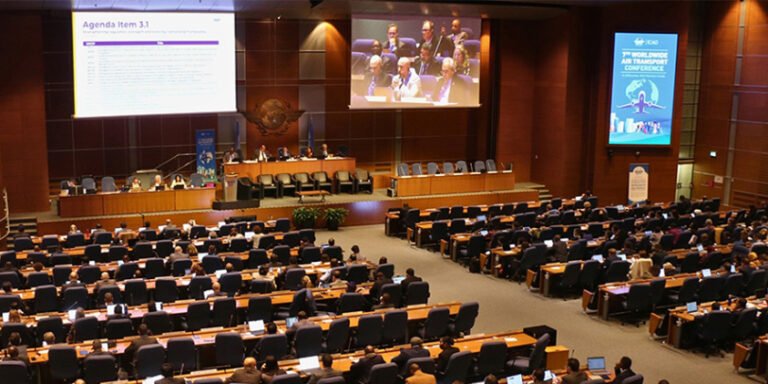
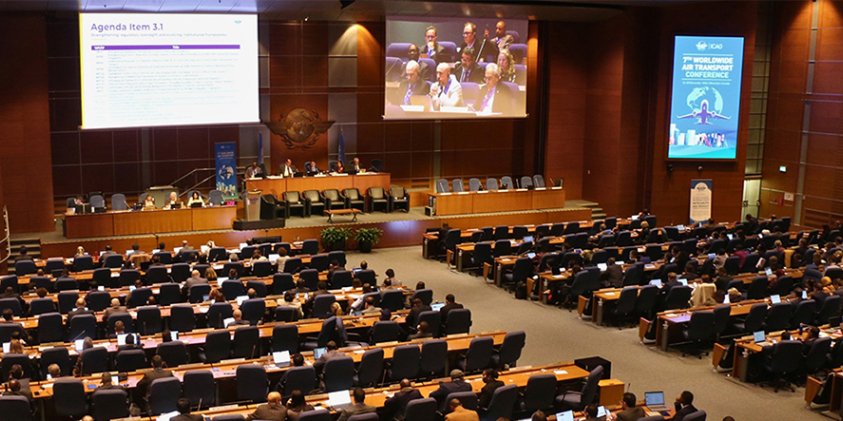
The discussions took place on the third day of the Seventh Worldwide Air Transport Conference (ATConf/7), at ICAO Headquarters in Montréal, Canada. The conference brought together aviation stakeholders to examine regulatory and institutional improvements needed to address changes in the global air transport industry.
According to ICAO, the panel discussions highlighted the importance of well-designed regulations and institutions, with participants identifying institutional capacity development, risk-based regulatory frameworks and evidence-based policymaking as essential measures for strengthening the resilience of global air connectivity.
Member States discussed modernising national regulatory frameworks while maintaining consistency with internationally harmonised aviation standards. Participants supported a balanced approach to aviation liberalisation, combining progressive market opening with strong regulatory safeguards to expand air service connectivity.
The discussions also emphasised the need for flexible and proportionate regulations that reflect individual national circumstances while maintaining safety standards amid rapid technological and market developments.
Among the measures considered was the adoption of risk-based regulations to accommodate emerging technologies, including unmanned aircraft systems and artificial intelligence (AI). Participants also highlighted the need for specific regulatory provisions and support mechanisms to improve air connectivity in remote, underserved and geographically difficult-to-reach areas where flight services remain limited.
Aviation charges and taxation formed another major part of the discussions, with the conference reaffirming the importance of applying ICAO policies consistently, transparently and without discrimination.
Participants called for aviation charges to comply with Article 15 of the Convention on International Civil Aviation (Chicago Convention) and the guidance contained in ICAO Doc 9082, which addresses airport and air navigation service charges.
The framework emphasises that charges should be cost-related, transparent and established through active consultation with aviation users.
Member States also agreed on the importance of carefully assessing the effects of existing and proposed aviation levies on air connectivity, affordability, competition and infrastructure financing. Particular attention was given to the potential impact on developing countries and vulnerable aviation markets.
The conference further highlighted the need for stronger implementation of ICAO’s taxation policies to prevent double, multiple or discriminatory taxation of international air transport. Delegates also supported maintaining residence-based taxation rules for aviation.
To improve policy coordination, participants encouraged closer cooperation between aviation authorities, finance ministries and tax authorities, particularly in response to evolving international taxation developments.
ICAO’s role in monitoring global developments, updating policy guidance, strengthening national capabilities and providing practical implementation tools was recognised as essential to helping countries establish effective aviation charging and taxation frameworks that support connectivity and sustainable growth.
The discussions also addressed the institutional and operational capabilities required to support the long-term development of international aviation.
Participants emphasised the importance of effective workforce strategies, stable funding, capacity-building programmes and technical assistance, particularly for developing countries.
Continuous professional development, modernisation of aviation legislation and stronger emergency coordination protocols were among the measures that received strong support.
These priorities reflect the need for national aviation authorities and institutions to develop the expertise, resources and regulatory capabilities required to manage an increasingly complex global aviation environment.
Passenger protection and the need for effective consumer safeguards also featured prominently in the discussions.
Delegates stressed the importance of establishing clear consumer protection frameworks, effective dispute-resolution mechanisms and accessible procedures to protect passengers when flight disruptions occur.
At the same time, participants highlighted the need for harmonised regulations to maintain a level playing field for airlines operating across international markets.
The discussions recognised that passenger protection measures and consistent regulatory requirements must work together to support consumer confidence while ensuring fair competition across the aviation industry.
The conference concluded its third-day discussions with a shared emphasis on ICAO’s leadership in supporting countries as they modernise their aviation regulatory and institutional systems.
Member States recognised that ICAO’s guidance, practical tools, technical assistance and international cooperation are essential to implementing effective, resilient and modern regulatory frameworks.
The organisation stated that strengthening its leadership and support would be fundamental to sustaining a robust global air transport system.
The discussions form part of ICAO’s broader efforts to modernise the international air transport economic framework and respond to technological developments, changing market conditions and the growing requirements of global connectivity.
The Seventh Worldwide Air Transport Conference is scheduled to conclude on November 20, 2026, at ICAO Headquarters in Montréal.