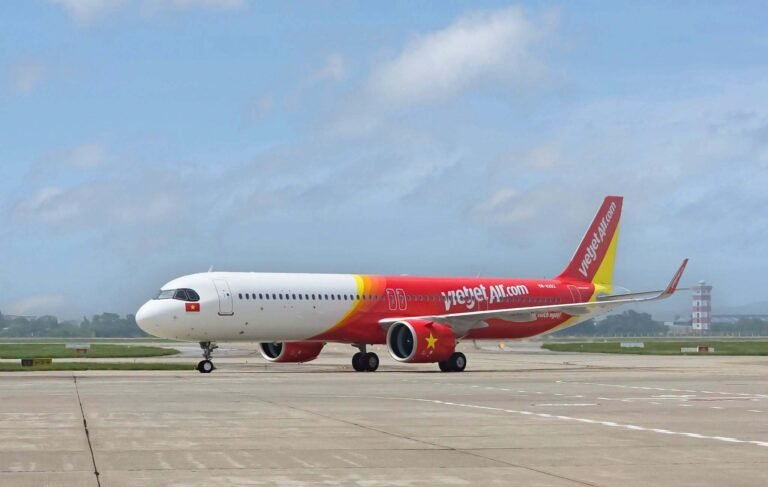
London, United Kingdom: The UK Commercial Court has frozen VietJet Aviation’s worldwide assets in a long-running dispute over more than US$250 million in unpaid aircraft leasing judgments, after finding a real risk that the Vietnamese airline could move assets beyond the reach of its creditor.
Mr Justice Pushpinder Saini granted the worldwide freezing order on October 15, 2026, following a two-day hearing on October 6 and 7. The order was sought by FW Aviation (Holdings) 1 Limited (FWA), an aircraft finance company controlled by London investment firm FitzWalter Capital.
The court found “solid evidence showing a real risk of dissipation” and said the order was necessary to protect FWA ability to enforce judgments already made against VietJet.
The case dates back to four Airbus A321 aircraft delivered to VietJet in 2018 and 2019 under Japanese Operating Lease with Call Option (JOLCO) financing arrangements.
After VietJet failed to continue paying rent during the COVID-19 period, the leases were terminated in October 2021. FWA subsequently acquired the relevant rights and eventually recovered all four aircraft by December 2022.
However, taking back the aircraft did not settle VietJet’s remaining financial obligations.
UK courts subsequently issued three judgments against VietJet. The first, in 2024, was worth about US$18.8 million. A second judgment in April 2025 ordered VietJet to pay around US$181.5 million in termination payments and outstanding rent. A third judgment added about US$18.3 million.
VietJet made only about US$2 million in payments towards the judgments in 2025. With interest and costs, the amount owed to FWA subsequently exceeded US$250 million.
The latest case was not simply about an unpaid debt. FWA had to show that there was a genuine risk VietJet could move or dispose of assets before the debt could be enforced.
The court focused heavily on transactions involving Angelica Holding Limited (AHL), a Cayman Islands company linked to VietJet.
Under agreements known as PDP Participation Agreements, VietJet transferred essentially the value of its future aircraft order book, as it stood in December 2024, to AHL.
The court questioned what VietJet received in return. Justice Saini described the receivables VietJet was supposed to receive from AHL as “wholly illusory”.
The judge also described the arrangements as “bizarre arrangements” and said he “struggled to find any cogent explanation” for them, according to legal advisers to FWA.
The court also raised concerns about earlier evidence provided by VietJet, describing parts of it as “questionable” in light of the later-disclosed transactions.
VietJet’s aircraft order book was particularly important because it represents substantial future economic value.
The court considered the value of aircraft purchase rights, pre-delivery payments and potential gains on aircraft ordered at earlier prices. FWA argued that transferring the economic value of those future aircraft to AHL could make it harder to enforce the outstanding judgments.
The court accepted that the transactions provided evidence supporting a real risk of asset dissipation. Importantly, the freezing order does not cancel VietJet’s aircraft orders.
The judge considered VietJet’s conduct after FWA obtained a Singapore court order to seize nine VietJet aircraft.
The aircraft were due to operate to Singapore, but VietJet subsequently reduced and then appeared to stop flying the targeted aircraft there, preventing the seizure from taking place.
Justice Saini considered this part of VietJet’s wider efforts to resist enforcement.
He wrote that VietJet had taken “extensive steps in a number of jurisdictions to delay or defeat enforcement efforts by FWA”.
The judge also described VietJet as a “won’t pay” debtor rather than a “can’t pay” debtor, saying the airline appeared able to pay but had resisted doing so. He further said VietJet seemed to “resent having to pay” the judgment debt.
Justice Saini added that he had “little sympathy” for disruption that could result from the freezing order, saying any disruption would stem from VietJet’s refusal to satisfy the judgment and its anti-enforcement efforts rather than a genuine inability to pay.
The court did not accept all of FWA’s allegations. It rejected arguments concerning certain Wilmington Trust finance leases, finding insufficient evidence that VietJet had improperly dissipated assets through those arrangements.
The court also rejected FWA’s arguments concerning maintenance reserves, finding that the evidence did not establish that VietJet had improperly moved or dissipated those funds.
The freezing order was therefore based principally on the evidence surrounding the PDP Participation Agreements, AHL and the wider risk of dissipation.
The order freezes VietJet assets up to about US$251.6 million. It extends beyond the four aircraft at the centre of the original dispute and covers assets including VietJet’s existing leased fleet, aircraft ordered but not yet delivered, Airbus A321neo and A330-900 aircraft, pre-delivery payments, maintenance reserves, lease deposits, cabin equipment, engines on order and certain ticket-sale proceeds.
The order does not mean VietJet’s fleet has been grounded or that its aircraft orders have been cancelled.
The airline can continue ordinary business activities, but the order restricts dealings with covered assets outside the permitted course of business.
The freezing order follows another important court development. On September 30, 2026, Mr Justice Butcher ruled that appointing receivers over certain VietJet assets outside Vietnam was appropriate in principle. A further ruling on October 15 dealt with the terms of the receivership.
The receivership and worldwide freezing order serve different purposes: the freeze prevents assets from being moved beyond reach, while receivership is intended to help FWA identify and potentially realise assets to satisfy the judgments.
FWA has been seeking stronger enforcement measures after earlier attempts to obtain a worldwide freezing order were rejected in July 2025. The latest application succeeded because the court considered the new evidence concerning VietJet’s transactions and asset arrangements materially different.
The ruling comes as VietJet is seeking to expand further in Australia.
The airline has applied to Australia’s Civil Aviation Safety Authority (CASA) for an Air Operator’s Certificate for a proposed domestic operation, reportedly under the Cherrie Air name.
The carrier registered its first Boeing 737 MAX 8 in Australia in September, while reports have linked the planned operation to a potential fleet of up to 10 aircraft.
CASA has confirmed that financial viability is considered during the AOC process. The asset-freezing order could therefore add scrutiny to VietJet’s Australian domestic ambitions, although the court order itself does not automatically prevent the airline from obtaining an Australian AOC.
VietJet is also preparing to launch flights between Western Sydney International Airport and Ho Chi Minh City in January 2027, initially with two weekly services.
The latest order marks a significant escalation in the dispute. FWA has already recovered the four aircraft involved in the original leases, but more than US$250 million remains outstanding after years of litigation.
The court’s latest decision does not declare VietJet insolvent, cancel its aircraft orders or stop its normal operations. Instead, it restricts the airline’s ability to deal freely with assets while FWA continues enforcement.
For VietJet, the immediate challenge is now to defend its remaining assets and its international expansion plans while dealing with a judgment debt that the UK court has found it has repeatedly failed to satisfy.