News
Civil Aviation
Pilot Training
Flight School Analysis
Aviation Jobs
Training
Services
About Us
Contact Us

IndiGo A321 Diverts To Hyderabad After Smoke Detected From Passenger’s Electronic Device

Picture of Aviation Today News Desk

Aviation Today News Desk

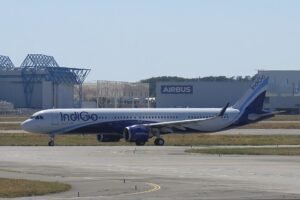
Hyderabad, India: An IndiGo flight operating from Delhi to Chennai was diverted to Hyderabad on 11 October after smoke was detected from a passenger’s personal electronic device, with media reports identifying the device as a power bank that caught fire inside the aircraft’s overhead storage compartment. The aircraft landed safely at Rajiv Gandhi International Airport (RGIA), Hyderabad, and an alternative aircraft was arranged to take passengers to Chennai. The flight, numbered 6E 6115, was operated by an Airbus A321, media reported that 191 people were aboard the aircraft. The exact breakdown of passengers and crew has not been independently confirmed through an official airline statement. No injuries were reported in connection with this flight. In a statement IndiGo said: “IndiGo flight 6E 6115, operating from Delhi to Chennai on October 11, 2026, was diverted to Hyderabad after smoke was detected from a customer’s personal electronic device. The cabin crew responded promptly and the situation was brought under control. In line with established protocols, the pilots diverted the flight and landed safely at Rajiv Gandhi International Airport, Hyderabad. An alternate aircraft has been arranged to continue the journey to Chennai.” The airline added: “We regret the inconvenience caused to our customers due to this unforeseen situation and are making all efforts to minimise it, including offering refreshments and sharing timely updates.” Visuals circulated on social media and published by news outlets appeared to show flames and smoke coming from an overhead compartment, with passengers attempting to contain the fire. However, IndiGo’s statement did not specify the device involved, confirm the exact location of the fire or explain what caused the smoke. The power bank identification and details of the fire were reported by media outlets. The incident has renewed attention on the carriage and use of lithium-ion batteries aboard aircraft. IndiGo’s published baggage policy states that power banks and spare or loose lithium batteries are permitted only in hand baggage. They must remain within the passenger’s personal reach, such as under the seat, in a seat pocket or carried on the person. The policy explicitly states that these items must not be stored in overhead compartments or checked baggage. The airline’s policy also says that, subject to applicable security clearance, passengers may carry up to two spare or loose lithium-ion batteries, including power banks, rated up to 100 watt-hours (Wh). Batteries between 100 Wh and 160 Wh may be permitted under specified approval conditions for portable medical devices. Battery terminals must be insulated to prevent short circuits, and power banks must not be recharged or used to charge another device while aboard the aircraft. IndiGo’s boarding information also instructs passengers not to use or charge power banks during flights. The airline’s restrictions apply to both domestic and international services. The reported location of the fire is significant because the airline’s policy specifically prohibits storing power banks in overhead compartments. However, the available reporting does not establish how the device came to be stored there or whether any passenger or airline procedure was breached. The Directorate General of Civil Aviation (DGCA) issued a Dangerous Goods Advisory Circular on 11 November 2025, advising airlines to prohibit the use of power banks to charge portable electronic devices during flights because of safety concerns involving lithium batteries. In a written answer to Rajya Sabha Unstarred Question No. 1801, answered on 9 March 2026, the Ministry of Civil Aviation confirmed the advisory’s date and purpose. The government stated that the DGCA issued the circular “advising airlines to prohibit the use of power banks for charging portable electronic devices during flight, in view of safety concerns arising from lithium battery-related incidents.” The government also stated that the first such instance was reported to the DGCA on 19 October 2025. The parliamentary answer referred to the advisory and the Aircraft (Carriage of Dangerous Goods) Rules, 2026. Lithium-ion batteries can overheat and enter a process known as thermal runaway, potentially causing smoke, fire and the release of hot gases. Such events can be difficult to manage in an aircraft cabin, making prompt detection and crew intervention important. The precise mechanism behind the reported fire on flight 6E 6115 has not been established in the airline statement or the reports cited here. Earlier IndiGo power bank incidents: The latest incident follows an earlier power bank fire aboard IndiGo flight 6E 108, which operated from Hyderabad to Chandigarh on 5 May 2026. The aircraft had landed in Chandigarh and was taxiing when a passenger’s power bank caught fire in a seat pocket. Two fire extinguishers were used, and passengers were evacuated. Another incident occurred on 19 October 2025, when a passenger’s power bank reportedly caught fire in a seat-back pocket aboard IndiGo flight 6E 2107 from Delhi to Dimapur while the aircraft was taxiing for take-off. The flight returned to its parking bay. These incidents have highlighted the importance of keeping power banks accessible, avoiding their use during flights and informing cabin crew immediately if a device becomes unusually hot, emits smoke or produces an unusual smell. For the 11 October incident, the airline’s publicly reported statement confirms the smoke detection, crew response, diversion and safe landing. The precise cause of the fire, the device’s specifications and the circumstances in which it was stored remain unconfirmed.
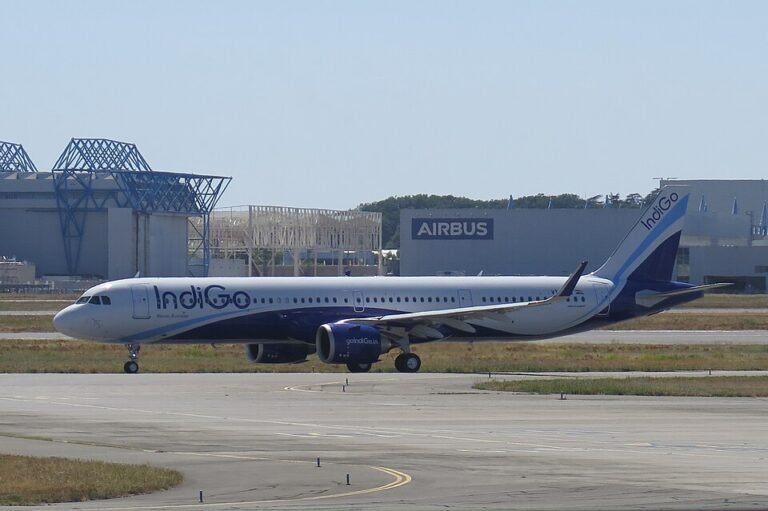
Image: Zima Savolainen (wikimedia)

Hyderabad, India: An IndiGo flight operating from Delhi to Chennai was diverted to Hyderabad on 11 October after smoke was detected from a passenger’s personal electronic device, with media reports identifying the device as a power bank that caught fire inside the aircraft’s overhead storage compartment. The aircraft landed safely at Rajiv Gandhi International Airport (RGIA), Hyderabad, and an alternative aircraft was arranged to take passengers to Chennai.

The flight, numbered 6E 6115, was operated by an Airbus A321, media reported that 191 people were aboard the aircraft. The exact breakdown of passengers and crew has not been independently confirmed through an official airline statement. No injuries were reported in connection with this flight.

In a statement IndiGo said: “IndiGo flight 6E 6115, operating from Delhi to Chennai on October 11, 2026, was diverted to Hyderabad after smoke was detected from a customer’s personal electronic device. The cabin crew responded promptly and the situation was brought under control. In line with established protocols, the pilots diverted the flight and landed safely at Rajiv Gandhi International Airport, Hyderabad. An alternate aircraft has been arranged to continue the journey to Chennai.”

The airline added: “We regret the inconvenience caused to our customers due to this unforeseen situation and are making all efforts to minimise it, including offering refreshments and sharing timely updates.”

Visuals circulated on social media and published by news outlets appeared to show flames and smoke coming from an overhead compartment, with passengers attempting to contain the fire. However, IndiGo’s statement did not specify the device involved, confirm the exact location of the fire or explain what caused the smoke. The power bank identification and details of the fire were reported by media outlets.

The incident has renewed attention on the carriage and use of lithium-ion batteries aboard aircraft. IndiGo’s published baggage policy states that power banks and spare or loose lithium batteries are permitted only in hand baggage. They must remain within the passenger’s personal reach, such as under the seat, in a seat pocket or carried on the person. The policy explicitly states that these items must not be stored in overhead compartments or checked baggage.

The airline’s policy also says that, subject to applicable security clearance, passengers may carry up to two spare or loose lithium-ion batteries, including power banks, rated up to 100 watt-hours (Wh). Batteries between 100 Wh and 160 Wh may be permitted under specified approval conditions for portable medical devices. Battery terminals must be insulated to prevent short circuits, and power banks must not be recharged or used to charge another device while aboard the aircraft.

IndiGo’s boarding information also instructs passengers not to use or charge power banks during flights. The airline’s restrictions apply to both domestic and international services.

The reported location of the fire is significant because the airline’s policy specifically prohibits storing power banks in overhead compartments. However, the available reporting does not establish how the device came to be stored there or whether any passenger or airline procedure was breached.

The Directorate General of Civil Aviation (DGCA) issued a Dangerous Goods Advisory Circular on 11 November 2025, advising airlines to prohibit the use of power banks to charge portable electronic devices during flights because of safety concerns involving lithium batteries.

In a written answer to Rajya Sabha Unstarred Question No. 1801, answered on 9 March 2026, the Ministry of Civil Aviation confirmed the advisory’s date and purpose. The government stated that the DGCA issued the circular “advising airlines to prohibit the use of power banks for charging portable electronic devices during flight, in view of safety concerns arising from lithium battery-related incidents.”

The government also stated that the first such instance was reported to the DGCA on 19 October 2025. The parliamentary answer referred to the advisory and the Aircraft (Carriage of Dangerous Goods) Rules, 2026.

Lithium-ion batteries can overheat and enter a process known as thermal runaway, potentially causing smoke, fire and the release of hot gases. Such events can be difficult to manage in an aircraft cabin, making prompt detection and crew intervention important. The precise mechanism behind the reported fire on flight 6E 6115 has not been established in the airline statement or the reports cited here.

Earlier IndiGo power bank incidents:

The latest incident follows an earlier power bank fire aboard IndiGo flight 6E 108, which operated from Hyderabad to Chandigarh on 5 May 2026. The aircraft had landed in Chandigarh and was taxiing when a passenger’s power bank caught fire in a seat pocket. Two fire extinguishers were used, and passengers were evacuated. 

Another incident occurred on 19 October 2025, when a passenger’s power bank reportedly caught fire in a seat-back pocket aboard IndiGo flight 6E 2107 from Delhi to Dimapur while the aircraft was taxiing for take-off. The flight returned to its parking bay.

These incidents have highlighted the importance of keeping power banks accessible, avoiding their use during flights and informing cabin crew immediately if a device becomes unusually hot, emits smoke or produces an unusual smell.

For the 11 October incident, the airline’s publicly reported statement confirms the smoke detection, crew response, diversion and safe landing. The precise cause of the fire, the device’s specifications and the circumstances in which it was stored remain unconfirmed.


Leave a Comment

Subscribe to our Newsletter

Recent News

Aviation Today Perspectives