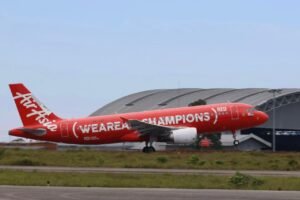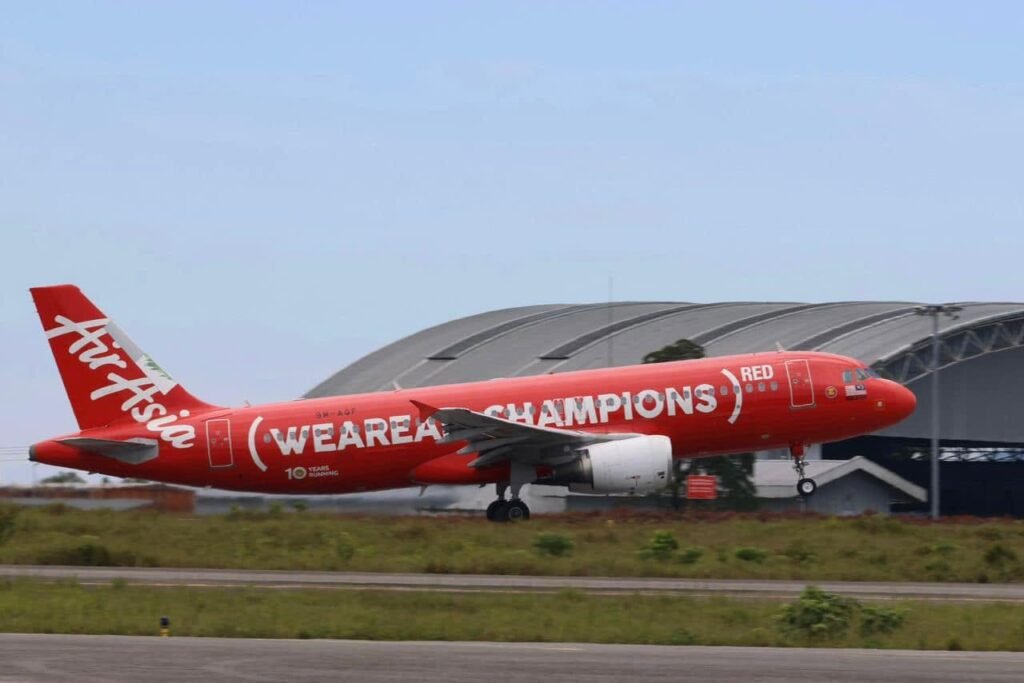
Kuala Lumpur, Malaysia: Malaysia’s government has asked Malaysia Airlines and Batik Air whether they could absorb AirAsia’s domestic market share as authorities monitor the financial position of Southeast Asia’s largest low-cost airline. The discussions on 16 September 2026 are part of contingency and scenario planning rather than a confirmed takeover or transfer of AirAsia’s operations. The talks involve Malaysia’s Finance Ministry and state-linked airport operator Malaysia Airports Holdings Berhad (MAHB) and have increased in recent weeks amid concerns over AirAsia’s financial pressures.
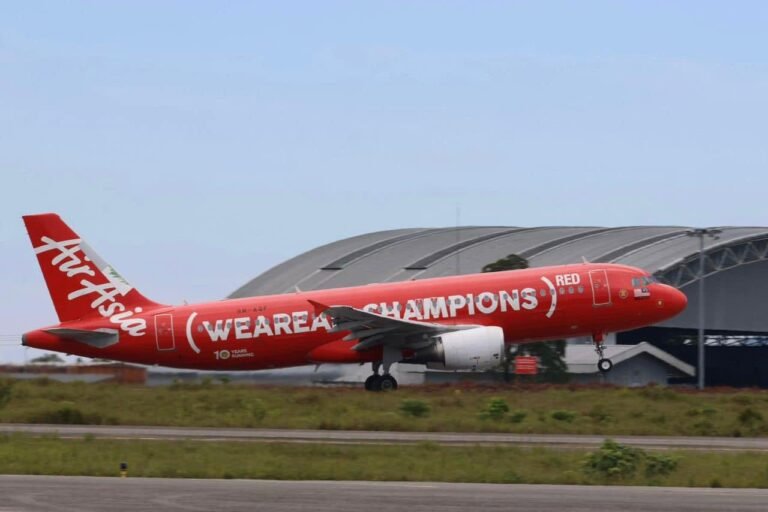
AirAsia has said it accounts for about 60% of Malaysia’s domestic flying and about 40% of the country’s overall aviation market, making any major disruption to its operations significant for the domestic network. Malaysia Airlines and Batik Air have indicated that, if a large-scale absorption were required, they would need access to AirAsia’s aircraft leases because taking over routes and passenger volumes without additional aircraft would be considerably more difficult.
Both carriers have also expressed willingness to expand organically and absorb routes and passengers rather than acquire AirAsia’s entire business. Batik Air CEO Datuk Chandran Rama Muthy separately said on 16 September that the airline was “able to bring in aircraft quickly to absorb or help with domestic market share if required.” Batik Air currently operates 51 aircraft, including seven Airbus A330s, and serves more than 60 destinations in 20 countries.
The contingency discussions come against a difficult financial backdrop for AirAsia. The carrier’s current liabilities stood at RM18.4 billion as of 30 June 2026. AirAsia had RM954 million in cash and bank balances at the end of June. The airline is seeking up to US$1 billion through international debt markets and RM700 million in local credit facilities, primarily for debt restructuring and refinancing.
AirAsia’s second-quarter results, released on 13 August 2026, showed a net loss of RM830.5 million for the three months ended 30 June, including a RM331 million foreign-exchange loss. Revenue was RM5.1 billion, down 1% year on year despite an 11% capacity reduction, while average jet-fuel prices reached US$183 per barrel. Fuel expenses increased 58% year on year. AirAsia said it recovered about 70% of the higher fuel-cost burden through fare adjustments and reductions in non-fuel costs. Its non-fuel cost per available seat kilometre fell 7% year on year to 11.02 Malaysian sen.
The group has responded by cutting underperforming capacity, suspending weaker long-haul routes, delaying the launch of its Bahrain hub, restructuring operations in the Philippines and Indonesia, and returning 25 older aircraft to lessors. AirAsia said in its 2 September 2026 clarification that its planned fundraising of up to US$1 billion in international debt markets and RM700 million in local facilities is primarily intended for debt restructuring, refinancing and balance-sheet consolidation rather than simply covering operating shortfalls. The group also said it had raised about US$300 million in March 2026 to extend debt maturities and reduce principal obligations.
AirAsia has also adjusted its fleet and network strategy for the remainder of 2026. The company said its 20–25% third-quarter capacity reduction was a deliberate response to the seasonally weaker travel period and that it intended to restore capacity towards peak and pre-war levels in the fourth quarter. It has temporarily suspended some routes, including Kuala Lumpur–Sydney and Kuala Lumpur–Delhi, while reallocating aircraft between widebody and narrowbody operations. New Airbus A220 and A321XLR deliveries are scheduled to begin from 2028.
AirAsia Deputy Group CEO Farouk Kamal said the company would not comment on operational or financial speculation or unannounced corporate arrangements. He said: “All material updates regarding our business and fleet strategy are disclosed transparently through official exchange filings and corporate announcements at the appropriate time.” He added: “We also wish to reiterate that AirAsia remains focused on maintaining business continuity and stable operations across all its markets and we continue to see strong underlying demand across our network.” Kamal said the company was also working with stakeholders on its financial and operational requirements.
MAHB said it regularly engages with airline partners as part of normal network and route-development activities, including discussions on “potential capacity and route opportunities where there are gaps in the market or unmet demand.”
The developments triggered a sharp market reaction on 17 September. AirAsia Group shares fell as much as 21%, reaching their lowest level since December 2022, while affiliated Capital A shares fell as much as 18%. AirAsia had already lost almost 70% of its share value during 2026, according to the report.
Separately, AirAsia Group has been seeking changes to a US$200 million private-credit loan from Ares Management and Indies Capital Partners. The airline has reportedly asked lenders to allow some route revenue currently pledged against the loan to be shared with aircraft lessors that are also owed money. The move would provide lessors greater certainty over payments while AirAsia works through its broader financing requirements.
For now, there is no announced decision to transfer AirAsia’s routes to Malaysia Airlines or Batik Air, and neither airline has announced an acquisition of AirAsia’s operations. The government discussions are being framed as contingency planning while AirAsia works to raise capital, restructure debt, optimize its fleet and maintain operations.