London, United Kingdom: A technical fault on a British Airways aircraft after landing at London Gatwick Airport in the early hours of 15 July 2026 triggered significant disruption across southern England, forcing the temporary closure of the airport’s single runway and leading at least nine inbound passenger flights to declare emergencies as fuel levels became critical following prolonged airborne holding.
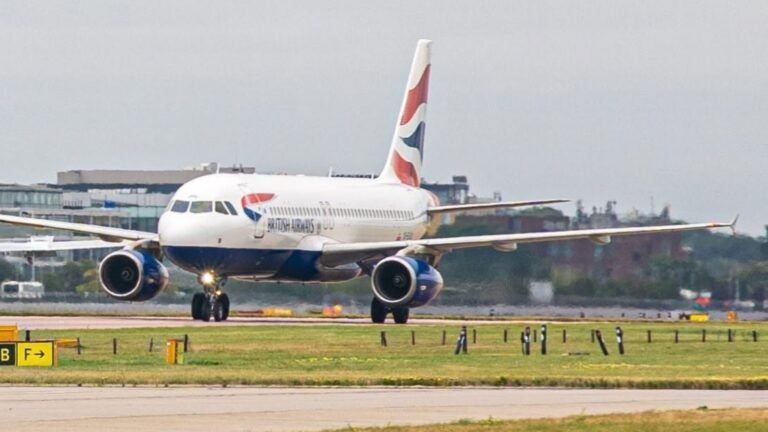
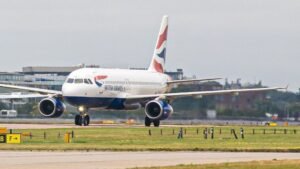
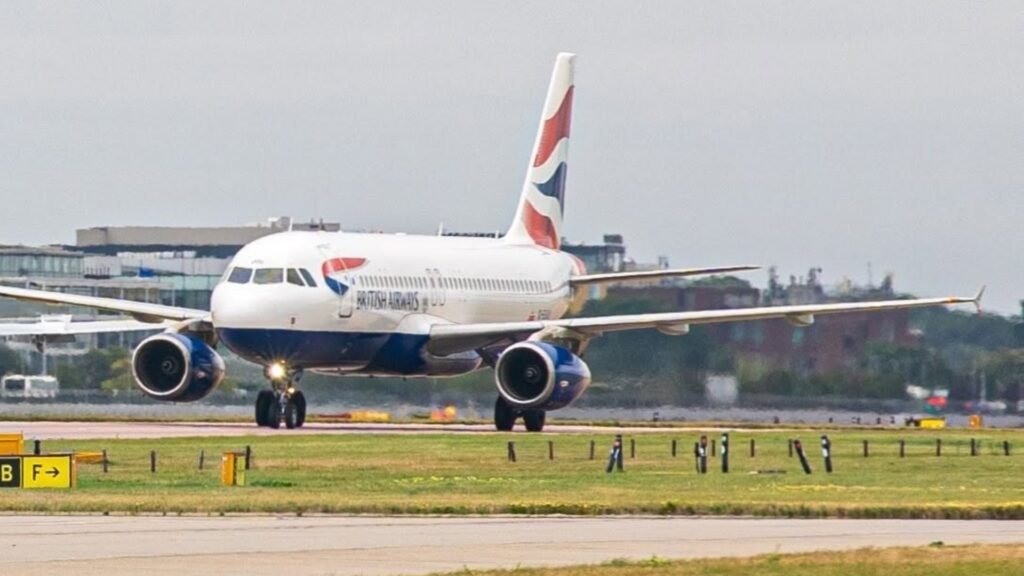
The disruption began shortly after midnight when a British Airways flight arriving from Palma de Mallorca, Spain, landed safely at Gatwick at approximately 00:12 BST. After touchdown, the aircraft experienced what the airline later described only as a technical fault, leaving it unable to immediately vacate the runway. Airport rescue and firefighting vehicles were dispatched as a precaution while the aircraft remained stationary on the runway.
British Airways confirmed that the aircraft landed safely and that passengers were not placed in danger. “Our flight landed safely and customers disembarked normally following reports of a technical fault with the aircraft,” a British Airways spokesperson said.
Although the airline has acknowledged the technical issue, it has not disclosed the nature of the fault, the aircraft type, or the aircraft registration. Gatwick Airport has likewise not released further technical information regarding the incident.
Because Gatwick operates with a single main runway, the disabled aircraft temporarily prevented arriving flights from landing while emergency responders assessed the situation and efforts were made to clear the runway. During the closure, aircraft already inbound to Gatwick were instructed to enter holding patterns while air traffic controllers worked to manage the growing congestion.
As delays lengthened, at least nine inbound flights declared emergency or urgency conditions after fuel reserves fell to operationally critical levels. Flight tracking data cited by multiple media outlets indicated the declarations were associated with low-fuel situations resulting from the extended airborne holding rather than mechanical problems aboard the affected aircraft.
Nine flights squawked the 7700 emergency transponder code, reportedly due to low fuel after extended holding. An additional five flights were also diverted to alternate airports. Of the 14 affected flights, five landed at London Luton Airport, four at London Stansted Airport, and one at London Heathrow Airport. The remaining diversions were outside London, with three flights landing at Birmingham Airport and one at Bristol Airport.
Several of the affected flights had departed popular Mediterranean holiday destinations, including Lanzarote, Rhodes and Tenerife, before being forced to abandon their approaches to Gatwick. Some aircraft diverted to London Stansted Airport, while others were rerouted to London Luton Airport after determining they no longer had sufficient fuel to continue holding safely.
One passenger travelling from Tenerife, whose flight diverted to Stansted instead of Gatwick, posted on social media that passengers remained on board awaiting instructions while airline staff determined the next steps. The traveller said the journey had become considerably longer than normal because of the diversion.
The runway was eventually reopened after the British Airways aircraft was moved, allowing Gatwick to resume normal operations. However, the temporary closure caused knock-on delays affecting arrivals and departures during the overnight and early morning operating period.
No injuries have been reported in connection with either the British Airways aircraft or any of the diverted flights.
Authorities have not announced an investigation beyond the airline’s technical inspection of the aircraft, and the exact cause of the fault remains unknown. As of the latest available updates, British Airways has not released additional operational details.