Twenty passengers have filed a lawsuit against Delta Air Lines, alleging the carrier and its flight crew negligently flew an international flight into dangerous thunderstorm activity despite multiple weather warnings, causing severe turbulence that left dozens of passengers and crew injured.
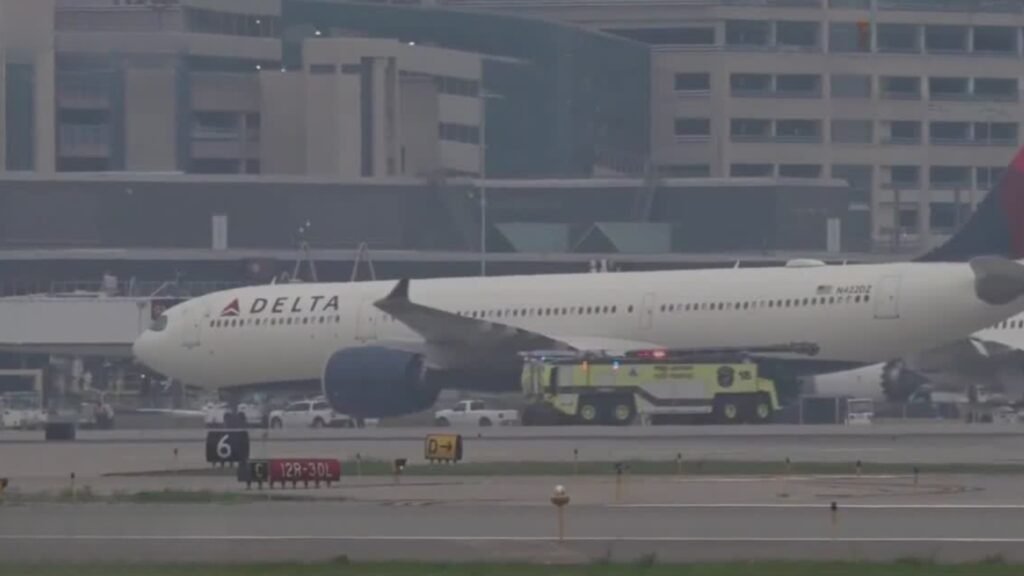
The lawsuit, filed on June 26, 2026, in Utah, stems from the events aboard Delta Flight 56 on July 30, 2025, when the Airbus A330-900 operating from Salt Lake City, Utah, to Amsterdam, Netherlands, encountered severe turbulence while cruising at 37,000 feet near Creston, Wyoming. The aircraft, carrying 246 passengers, diverted to Minneapolis–Saint Paul International Airport following the incident.
According to the complaint, Delta and its pilots failed to act on multiple weather alerts before and during the flight, including forecasts issued by the U.S. National Weather Service (NWS), a SIGMET (Significant Meteorological Information) warning covering the planned route, and air traffic control advisories warning of “moderate, heavy to extreme convective activity” ahead of the aircraft. The plaintiffs contend that although controllers approved a route deviation, the flight continued directly toward the hazardous weather instead of avoiding it.
The lawsuit alleges the flight crew either ignored or failed to properly use onboard weather radar information that showed the thunderstorm cells ahead and claims the incident “could have been prevented” had the aircraft diverted around the weather.
Passengers describe the encounter as approximately two-and-a-half minutes of violent turbulence, during which the aircraft experienced repeated vertical and lateral movements well beyond those encountered during normal commercial operations.
The complaint alleges restrained passengers suffered bruising, whiplash and abdominal injuries from their seatbelts, while unrestrained passengers and cabin crew were thrown into the ceiling with enough force to shatter interior fixtures inside the aircraft.
Passenger Leslie Woods described the incident as terrifying. “We all thought we were goners.” She added, “To be honest with you I really thought we were going to die. It was that scary. I was pretty sure we were crashing; it went down that hard and that fast.” Woods also recalled comforting a frightened child seated across the aisle who repeatedly screamed, “We’re going to die.”
Following the turbulence encounter, the aircraft diverted to Minneapolis–Saint Paul International Airport rather than continuing to Amsterdam.
According to the National Transportation Safety Board (NTSB), 18 passengers were transported to hospitals following landing. Among the 10 cabin crew members, two flight attendants sustained serious injuries, while five others suffered minor injuries. Earlier reports also noted that 25 people in total, including passengers and crew, were evaluated or treated after the diversion.
However, the lawsuit argues Delta should have declared an emergency and landed at a closer suitable airport, such as Salt Lake City or Denver, instead of continuing for more than an hour to Minneapolis after the injuries occurred.
The NTSB’s preliminary investigation found that the aircraft encountered severe turbulence while cruising at 37,000 feet near Creston, Wyoming.
Investigators reported that the flight crew had discussed expected weather conditions before departure and anticipated some turbulence along the route. Shortly before the encounter, the seatbelt sign had been switched off, allowing cabin crew to begin meal and beverage service when the aircraft suddenly encountered severe turbulence. The investigation remains ongoing, and the agency has not issued a final probable cause.
The passengers accuse Delta of negligence and claim the airline violated provisions of the Montreal Convention, the international treaty governing airline liability for injuries sustained during international air travel.